

What are the top alternatives to ameliasnannies.com?
If you're looking beyond Amelia's Nannies, you have real options. The nanny service market has grown considerably, and several platforms now offer stronger vetting, broader geographic reach, and more transparent pricing than a single regional agency can provide. Whether you need a full-time nanny, a part-time sitter, or something in between, the right platform depends on your family's specific situation.
| Platform | Availability | Pricing Model | Screening | User Ratings | Ease of Use |
|---|---|---|---|---|---|
| Sittercity | Nationwide | Subscription + per-hire | Background checks, references | High | Very easy |
| Care.com | Nationwide | Subscription tiers | Background checks, reviews | High | Very easy |
| UrbanSitter | Major metros | Per-booking or subscription | Background checks, social trust | High | Easy |
| Bambino | Select cities | Per-booking | Neighbor referrals, reviews | High | Very easy |
| SitterTree | Nationwide | Free to post, per-hire | Background checks, profiles | Moderate | Easy |
| Nannyhire | Nationwide | Transparent, flexible | Age-adaptive, three-perspective scoring | High | Very easy |
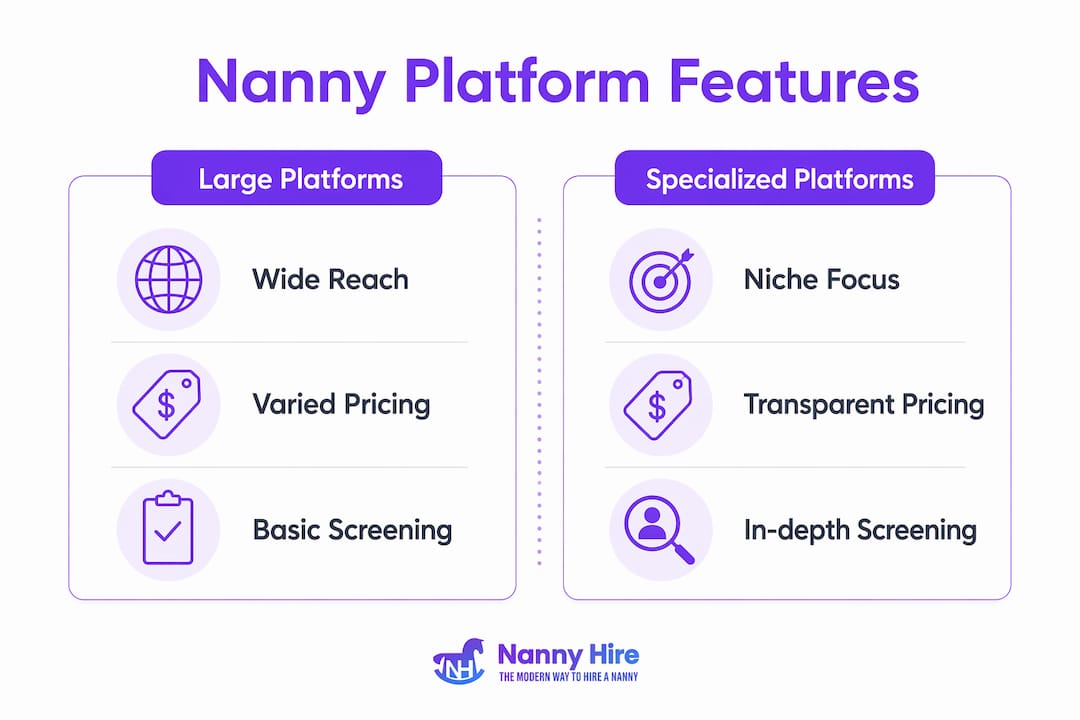
Each platform above covers a distinct niche. Sittercity and Care.com dominate on sheer volume. UrbanSitter leans on social trust signals. Bambino builds on neighborhood networks. SitterTree keeps costs low for families posting jobs. Nannyhire brings a structured scoring system that most platforms simply do not offer.

Table of Contents
- Detailed review of leading nanny and babysitting platforms
- How to choose the right nanny or babysitting service for your family
- How these platforms were evaluated
- Nannyhire gives you a smarter path to trusted childcare
- Key takeaways
- What the shift in nanny platforms actually means for your family
Detailed review of leading nanny and babysitting platforms
Sittercity

Sittercity is one of the longest-running nanny platforms in the United States, connecting families with sitters and nannies through a searchable database. Families pay a subscription to access caregiver profiles and message candidates directly. Background checks are available as add-ons, and the platform encourages reference verification as part of the hiring process.
The platform's strength is its depth of listings across all 50 states, complemented by related offerings listed on Lifestyle Blogs that provide families with comprehensive childcare solutions. Jada Rashawn, a professional nanny and child care consultant for Sittercity, advises parents to require that all caregiver candidates hold current CPR and first aid certifications before the first interview. That standard alone filters out a meaningful portion of unqualified applicants.
- Availability: All 50 states
- Pricing: Monthly subscription required to contact caregivers
- Screening: Background checks available; reference checks encouraged
- Best for: Families who want a large candidate pool and prefer to manage their own vetting
Care.com
Care.com is the largest childcare marketplace in the country by volume, covering nannies, babysitters, senior care, and pet care under one roof. Families can post a job for free, but messaging caregivers requires a paid membership. Premium tiers unlock more detailed background check reports.
The platform's review system lets families read verified feedback from other parents, which adds a layer of social proof to the hiring process. Transparent user rating systems and responsive support provide greater hiring confidence, and Care.com's review infrastructure is one of the more developed in the industry. The main trade-off is that the sheer size of the database means quality varies widely, and families need to do their own filtering.
- Availability: Nationwide, with international presence
- Pricing: Free to post; subscription required to message
- Screening: Background checks available at multiple tiers; user reviews visible
- Best for: Families who want maximum candidate volume and built-in social proof
UrbanSitter
UrbanSitter differentiates itself through social trust. When you log in, the platform shows you which sitters have been hired by people in your network, including parents from your child's school or neighborhood groups. That social layer adds a dimension of confidence that a standard background check alone cannot replicate.
Pricing is flexible: families can pay per booking or subscribe for unlimited bookings. UrbanSitter operates primarily in major metropolitan areas, so rural families may find limited options. The platform's interface is clean and mobile-friendly, making last-minute bookings straightforward.
- Availability: Major metros, including New York, Los Angeles, Chicago, San Francisco, and more
- Pricing: Per-booking fee or monthly subscription
- Screening: Background checks, social network trust signals
- Best for: Urban families who value peer recommendations alongside formal screening
Bambino
Bambino takes a hyper-local approach. The platform connects parents with sitters who live in their neighborhood, often recommended by other parents they already know. Every sitter on Bambino is referred by a parent in the community, which creates a built-in accountability layer that most platforms lack.
The booking process is app-based and fast, designed for families who need a sitter on short notice. Bambino operates in select cities and is expanding, but coverage is not yet nationwide. Pricing is per-booking with no subscription required, which suits families who need occasional rather than regular care.
- Availability: Select cities; expanding
- Pricing: Per-booking, no subscription
- Screening: Community referrals, parent reviews
- Best for: Parents who prioritize neighbor-vetted sitters for occasional bookings
SitterTree
SitterTree positions itself as a lower-cost alternative for families who want to post a job and receive applications from local caregivers. Posting is free, and families review profiles and initiate contact without a mandatory subscription. Background checks are available through the platform for an additional fee.
The candidate pool skews toward college students and part-time sitters rather than career nannies, which makes SitterTree a better fit for babysitting needs than full-time nanny placement. Coverage is nationwide, though the density of candidates varies by region.
- Availability: Nationwide
- Pricing: Free to post; background checks are paid add-ons
- Screening: Background checks available; profile-based filtering
- Best for: Families seeking part-time or occasional babysitting at lower cost
Nannyhire
Nannyhire was built by a working mom who found traditional agencies too expensive and too opaque. The platform uses age-adaptive screening and a three-perspective scoring system that evaluates candidates from the family's view, the child's developmental needs, and the caregiver's own profile. That structure gives you a clearer picture of fit before you ever schedule an interview.
The job board lists vetted candidates nationwide, and the platform's transparency tools let you see exactly what each candidate's background check covers. Pricing is flexible, with no long-term agency commitment required. For families who want more control over the process without paying agency-level fees, Nannyhire is a genuinely different kind of option.
- Availability: Nationwide
- Pricing: Flexible, transparent; no agency commission
- Screening: Age-adaptive screening, three-perspective scoring, background checks, reference verification
- Best for: Families who want structured, transparent vetting without the cost of a traditional agency
How to choose the right nanny or babysitting service for your family
The right platform depends on more than price. Here are the factors that actually move the needle when you're making this decision.
Safety and screening depth
Thorough pre-employment screening includes background checks, reference calls, driving record reviews, and certifications like CPR and first aid. Not every platform runs all of these by default. Some offer background checks as paid add-ons, which means families who skip the upgrade are hiring with incomplete information. Always confirm what a platform's standard screening actually covers before you assume it's thorough.
Cost and pricing models
Live-out nannies cost tens of thousands of dollars per year, depending on location and the number of children. That range is wide, and platform fees sit on top of it. Subscription-based platforms charge monthly regardless of whether you hire, while per-booking models only cost you when you actually use the service. For families who need regular, full-time care, a subscription often makes more financial sense. For occasional babysitting, per-booking pricing keeps costs lower.
One tax benefit worth knowing: the Dependent Care FSA covers up to $7,500 of eligible childcare expenses on a pre-tax basis, typically saving up to $2,400 per year at a 32% marginal rate. It applies to nanny costs, daycare, and au pair stipends alike, so it's worth exhausting before you compare net costs across options.
Family-specific needs
- Child's age: Infants and toddlers need caregivers with specific developmental experience. Ask candidates directly about their experience with your child's age group.
- Special needs: If your child has a disability, chronic condition, or medical requirement, look for caregivers with relevant training or certifications. Platforms that allow detailed profile filtering make this easier.
- Schedule flexibility: Standard daycare closes at 6 PM. If you work shifts, travel, or have irregular hours, a nanny is the only option that can realistically cover your schedule.
- Number of children: Nanny costs rise with each additional child, typically by $2–$5 per hour. For families with three or more children under five, the per-child math shifts significantly.
Geographic availability
Some platforms are strongest in major metros. Others have nationwide reach but thinner candidate pools in rural areas. If you live outside a major city, check candidate density in your zip code before committing to a subscription.
Pro Tip: Before you pay for any platform subscription, post a free job listing or browse available profiles in your area first. Thin local results are a signal to look elsewhere before spending money on access.
Going beyond platform screening
No platform's background check replaces a real conversation. Call references yourself, ask specific situational questions in the interview, and arrange a trial session where you're home to observe. Rocket Lawyer's guidance on nanny screening recommends watching for red flags like reluctance to consent to a background check, a lack of verifiable references, or troubling social media activity. Those signals matter regardless of which platform you use.
How these platforms were evaluated
The platforms in this article were assessed across five consistent dimensions: geographic availability, pricing transparency, screening and safety features, user ratings and review quality, and ease of use for families. Here's what that looked like in practice.
- Availability: Does the platform serve families outside major cities? Is the candidate pool dense enough to be useful in your area?
- Cost transparency: Are pricing tiers clearly listed? Are there hidden fees for background checks or messaging?
- Screening depth: What does the standard background check cover? Are reference checks built in or optional?
- User reviews: Does the platform publish verified reviews from real families? Is the rating system transparent?
- Platform usability: Can you filter candidates by experience, certifications, and availability without a steep learning curve?
Platforms were included based on their national recognition, the quality of their safety infrastructure, and their relevance to families seeking childcare service alternatives beyond a single regional agency. User feedback from parenting communities and published nanny agency reviews informed the reliability assessments. For additional context on how nanny hiring platforms compare across different regional markets, the Seattle nanny alternatives guide and the Kindred.family alternatives roundup offer useful regional and national perspectives.
Nannyhire gives you a smarter path to trusted childcare
Most nanny platforms hand you a list of profiles and leave the hard work to you. Nannyhire is built differently. The platform's age-adaptive screening evaluates candidates against your child's specific developmental stage, not a generic checklist. The three-perspective scoring system factors in the family's needs, the child's profile, and the caregiver's background together, so you're comparing candidates on what actually matters for your home.
There's no agency commission and no long-term contract. You get full visibility into what each background check covers, what references said, and how each candidate scored. Families who want that level of transparency without paying traditional agency fees will find Nannyhire a genuinely different experience. Browse available vetted candidates today and see who's ready to work in your area.
Key takeaways
The strongest childcare service alternatives to ameliasnannies.com combine transparent screening, clear pricing, and genuine geographic reach rather than relying on any single factor alone.
| Point | Details |
|---|---|
| Screening depth varies widely | Always confirm what a platform's standard background check covers; many treat reference checks as optional. |
| Nanny costs scale with children | Live-out nannies cost $30,000–$72,000 per year, rising with each additional child. |
| Tax savings are available | The Dependent Care FSA covers up to $7,500 pre-tax, saving up to $2,400 per year at a 32% marginal rate. |
| Platform fit depends on location | Urban families have more platform options; rural families should verify local candidate density before subscribing. |
| Nannyhire offers structured vetting | Age-adaptive screening and three-perspective scoring give families more hiring confidence than a standard profile search. |
What the shift in nanny platforms actually means for your family
The nanny platform market has changed more in the past three years than in the decade before. What's driving it isn't just technology. It's a fundamental shift in what families expect from a childcare service.
For a long time, the agency model held because families had no other way to access vetted candidates. You paid a premium for the agency's rolodex and trusted their judgment. That made sense when information was scarce. It makes less sense now, when background check infrastructure is accessible, reference verification can happen in a day, and matching tools can surface candidates based on your child's specific age and needs rather than whoever the agency had available that week.
What I find genuinely interesting about this moment is that the best platforms aren't just digitizing the old agency process. They're rethinking what vetting actually means. A criminal background check is a floor, not a ceiling. The families I see making the most confident hiring decisions are the ones using platforms that score candidates across multiple dimensions and then still conduct their own interviews and trial sessions. The platform does the filtering; the family does the final judgment. That combination is more reliable than either approach alone.
The rise of neighborhood-based platforms like Bambino points to something real: parents trust people their neighbors have already vetted. That's not a technology insight. It's a social one. The platforms that understand this are building trust infrastructure, not just databases. Families looking at childcare service alternatives in 2026 have more genuinely good options than ever, but the ones who hire well are the ones who treat platform screening as the starting point, not the finish line.