

Child safety nanny requirements are the essential qualifications, certifications, and screenings that confirm a nanny can provide a genuinely safe environment for your child. These standards span CPR and First Aid certification through organizations like the American Heart Association and the American Red Cross, specialized credentials such as the Newborn Care Specialist (NCS) designation, and compliance with federal frameworks like the Child Care and Development Fund (CCDF) regulations. Whether you are hiring for a newborn or a school-age child, understanding these requirements is the single most effective way to protect your family.
1. CPR and First Aid certification: the non-negotiable baseline
Every nanny you consider must hold current CPR and First Aid certification before spending a single unsupervised hour with your child. This is not a preference. It is the baseline standard recognized across every credible child care safety framework in the United States.
The American Heart Association and the American Red Cross both offer pediatric CPR and First Aid courses that include hands-on practice with mannequins and real-time feedback. Infant CPR technique differs significantly from adult CPR, covering chest compression depth, two-finger placement, and rescue breathing for airways smaller than a finger. A nanny caring for children under one year old must be trained specifically in infant CPR, not just general adult certification.
Certification renewal matters as much as initial training. Expired certifications represent a real safety gap, and hands-on practice sessions during renewal courses measurably increase skill retention and emergency response effectiveness. Ask every candidate for their physical certificate and check the expiration date before the first interview ends.
- Confirm certification covers both infant and child CPR
- Verify the training included hands-on skills practice, not just an online video module
- Check the expiration date. Most certifications are valid for two years
- Ask whether the nanny has ever used CPR or First Aid in a real situation
Pro Tip: Ask candidates to walk you through the steps they would take if your infant stopped breathing. A nanny with genuine hands-on training will answer with specific, confident detail. Vague answers are a red flag regardless of what the certificate says.
2. Specialized certifications for infant and newborn care
For families with newborns or infants under 18 months, basic CPR certification is not enough. Specialized credentials signal that a caregiver has invested in deep, age-specific training that goes well beyond general child care.

The Newborn Care Specialist (NCS) credential is the most recognized advanced designation in this space. NCS certification requires 2,000 to 4,000 documented hours of hands-on newborn care experience plus a passing score on a proficiency exam, with training program costs ranging from $300 to $2,000. NCS-certified nannies earn $5 to $15 more per hour than average, which reflects the genuine market premium families place on verified newborn expertise.
The US Nanny Institute offers the Newborn and Infant Care Professional (NICP) credential, which covers newborn to 18-month care including feeding methods, sleep science, developmental milestones, and safe sleep practices. The NICP exam requires an 80% passing score, and candidates must already hold CPR and First Aid certification plus a high school diploma. This credential is particularly valuable because it is structured, exam-based, and tied to documented competency rather than self-reported experience.
The table below compares the most relevant credentials for parents evaluating infant and newborn care safety:
| Credential | Issuing body | Age focus | Key requirements | Training cost range |
|---|---|---|---|---|
| NCS (Newborn Care Specialist) | Various accredited programs | Newborn (0 to 3 months) | 2,000 to 4,000 hours experience, proficiency exam | $300 to $2,000 |
| NICP (Newborn and Infant Care Professional) | US Nanny Institute | Newborn to 18 months | CPR/First Aid, high school diploma, 80% exam pass | Varies by program |
| NCP (Certified Nanny) | US Nanny Association | General child care | Documented hours, background check, CPR/First Aid | Varies |
| PNCP (Professional Nanny) | US Nanny Association | General child care (advanced) | Higher hour requirements, additional training modules | Varies |
One important distinction: not all night nurses are medically trained, and the title "night nurse" carries no regulated credential requirement. Parents seeking verified newborn expertise should specifically request NCS or NICP credentials rather than accepting a job title as proof of competency.
3. Background checks and screening: what a thorough check actually covers
A background check is not a single database query. Thorough screening for child safety nanny requirements covers multiple distinct record types, and skipping any one of them creates a gap that a basic check will not catch.
All caregivers with unsupervised access to children must pass comprehensive background checks that include criminal record history, sex offender registry checks, and child abuse and neglect registry checks. Fingerprinting adds a layer of identity verification that name-based searches cannot replicate. Reference verification, meaning direct phone calls to former employers rather than written references alone, rounds out a complete screening picture.
State licensing rules in most states mandate background checks as a condition of legal childcare work. Federal CCDF standards reinforce this requirement for any provider receiving public funding. Even for private household nannies outside the licensing framework, these same standards represent the professional baseline you should expect.
- Criminal record check across federal, state, and county databases
- National sex offender registry search
- Child abuse and neglect registry check in every state where the candidate has lived
- Fingerprint-based identity verification
- Direct reference calls to at least two former employers
Pro Tip: Use a third-party professional screening service rather than running checks yourself. Services like Sterling, Checkr, or HireRight access multi-state databases that consumer-facing tools miss. The cost is typically $30 to $100 and is worth every dollar.
4. Federal and state childcare safety standards that shape nanny qualifications
The Child Care and Development Fund (CCDF) is the federal framework that sets minimum health and safety standards for childcare providers across the United States. While CCDF rules technically apply to licensed and funded providers rather than private household nannies, they define the professional standard that any qualified nanny should meet.
CCDF-funded caregivers must complete pre-service or orientation training on health and safety topics before working unsupervised with children. Required training topics include first aid, CPR, emergency preparedness, and child abuse recognition and reporting. Annual unannounced inspections are federally mandated for licensed childcare providers receiving CCDF funding, which means the standards are actively enforced rather than aspirational.
Safe sleep is one of the most specific federal mandates. Federal CCDF rules require infant safe sleep practices consistent with American Academy of Pediatrics guidelines: back sleeping on firm surfaces with no soft bedding, pillows, or positioners. This is a mandatory condition for providers, not optional guidance. Any nanny caring for infants should know and follow these guidelines without being prompted.
Hygiene protocols are also part of the federal standard. Caregivers must follow specific handwashing protocols, including washing for at least 20 seconds, to reduce infection transmission. Emergency preparedness documentation, including written evacuation plans and clear parent communication procedures, is a required component of compliant childcare practice.
| Requirement | Federal standard | Applies to private nannies? |
|---|---|---|
| CPR and First Aid training | Mandatory pre-service | Best practice standard |
| Background checks | Mandatory for all unsupervised caregivers | Strongly recommended |
| Safe sleep practices | AAP-consistent, mandatory | Mandatory for infant care |
| Hygiene protocols | 20-second handwashing minimum | Best practice standard |
| Emergency preparedness plan | Written plan required | Strongly recommended |
5. What to ask a nanny during the interview to assess safety knowledge
The interview is where certifications get tested in practice. A candidate can present a valid CPR card and still lack the judgment to use it under pressure. Your questions need to surface real knowledge, not rehearsed answers.
Start with scenario-based questions. Ask what the nanny would do if your toddler choked on food while you were unreachable. Ask how they would handle a febrile seizure in an infant. Ask what their first three steps are if a child falls and loses consciousness. Candidates with genuine nanny safety training will answer in sequence, with specific detail, without hesitation.
Ask directly about their experience with your child's age group. A nanny with five years of experience caring for school-age children may have limited newborn care knowledge, and that gap matters enormously for infant nanny requirements. Request a detailed resume that lists each role, the ages of children cared for, and any specialized training completed during that time.
Discuss emergency preparedness explicitly. Ask whether they have a written emergency plan they use, whether they know the location of the nearest pediatric urgent care to your home, and how they document incidents. Emergency preparedness documentation must include evacuation plans and clear parent communication protocols. A nanny who has never thought about this is not prepared for your home.
Finally, observe how the candidate interacts with your child during a trial visit. Safety awareness shows up in small behaviors: checking the temperature of bath water, keeping cabinet doors closed, staying within arm's reach of a crawling infant. These instincts are harder to teach than certifications and equally important.
Key takeaways
Qualified child safety nanny requirements combine verified certifications, thorough background screening, age-specific training, and demonstrated safety judgment. No single credential replaces the full picture.
| Point | Details |
|---|---|
| CPR and First Aid are non-negotiable | Verify current certification with hands-on training from the American Heart Association or American Red Cross. |
| Specialized credentials matter for infants | NCS and NICP credentials confirm verified newborn and infant care competency beyond basic first aid. |
| Background checks must be multi-layered | Criminal, sex offender, and child abuse registry checks plus fingerprinting form a complete screening. |
| Federal standards set the professional baseline | CCDF rules on safe sleep, hygiene, and emergency preparedness define what qualified care looks like. |
| Interview questions reveal real knowledge | Scenario-based questions expose whether a nanny's safety knowledge is practical, not just certified. |
Why certifications are just the starting point
I have reviewed hundreds of nanny profiles and spoken with dozens of families who hired based on credentials alone, only to discover gaps that no certificate covered. A nanny can hold a valid CPR card and still freeze in a real emergency because their training was a 45-minute online module with no hands-on component. That is a real and common problem.
The families I have seen hire most confidently are the ones who treat certifications as the floor, not the ceiling. They verify credentials, yes. But they also ask scenario questions, check references with actual phone calls, and run a supervised trial period before leaving a nanny alone with their child. That combination catches what paperwork misses.
I also think parents underestimate how much the regulatory landscape has shifted. Childcare safety standards are continuously evolving, and a nanny who completed training three years ago may not be current on updated safe sleep guidelines or revised child abuse reporting protocols. Ongoing education is not a bonus. It is part of what separates a safe caregiver from a qualified-on-paper one.
For newborn and infant roles specifically, I would not hire without an NCS or NICP credential. Specialized newborn care certifications distinguish nannies in the market and give parents real reassurance about safety and developmental knowledge. The credential gap between a general nanny and a certified newborn specialist is not small. It represents thousands of hours of documented experience and a passed competency exam.
Stay engaged throughout the hiring process. Ask hard questions. Verify everything. Your instincts about a candidate matter, and so does the paper trail.
— Chantel
Find pre-vetted nannies who meet every safety standard
Hiring a nanny who genuinely meets child safety nanny requirements takes time, knowledge, and access to the right tools. Nannyhire was built specifically to give families that access without the cost and friction of a traditional agency.
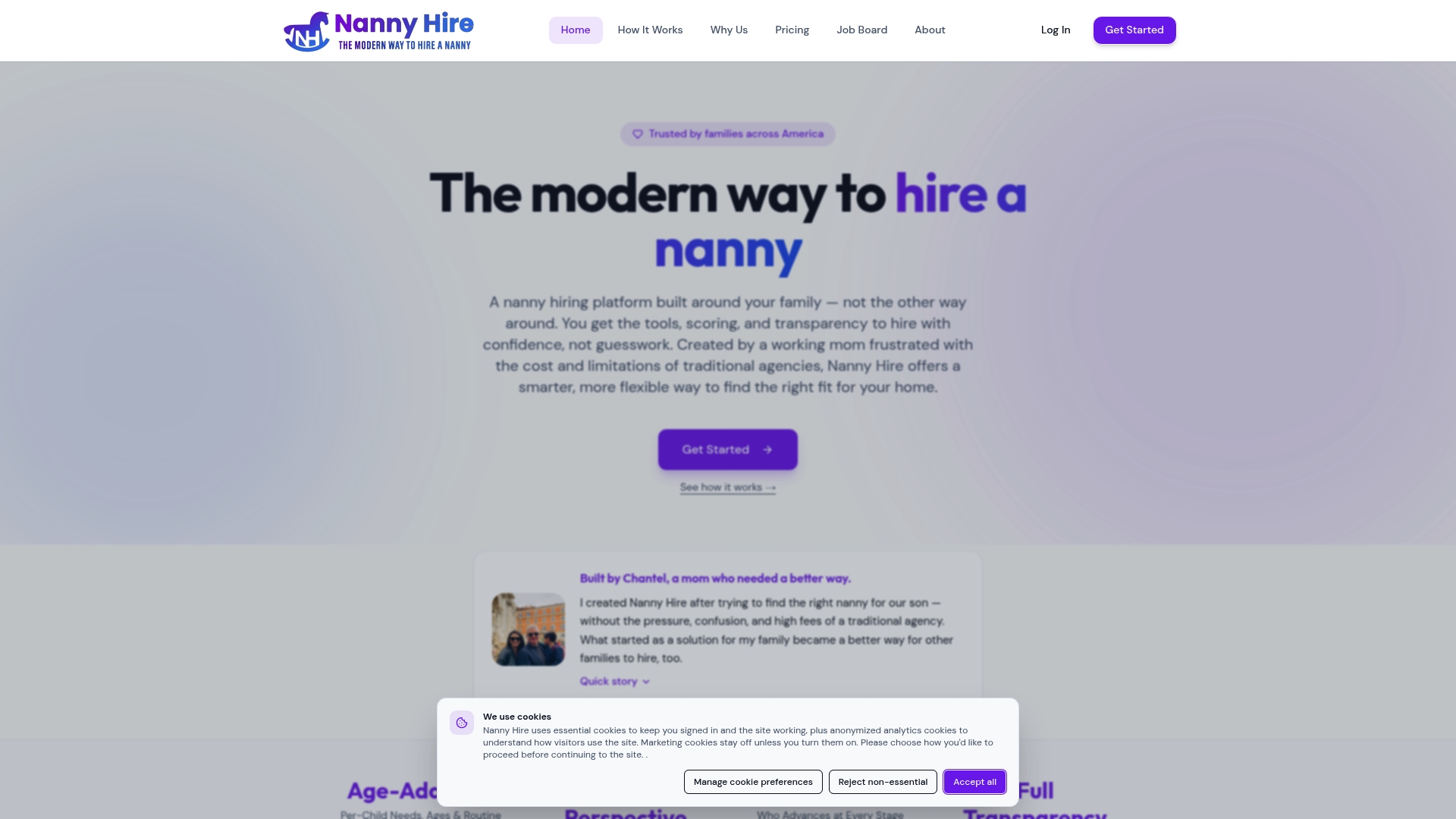
Every candidate on Nannyhire goes through certification verification, multi-layer background screening, and reference checks before you ever see their profile. The platform's age-adaptive scoring and three-perspective evaluation means you see a complete picture of each candidate's qualifications, not just a resume. If you are ready to hire with confidence rather than guesswork, get started with Nannyhire and find a safety-qualified nanny matched to your family's specific needs.
FAQ
What certifications should every nanny have?
Every nanny should hold current CPR and First Aid certification from a recognized provider like the American Heart Association or the American Red Cross, with training that includes hands-on infant CPR practice. Nannies caring for newborns or infants should also hold an NCS or NICP credential.
What does a thorough nanny background check include?
A complete background check covers criminal record history, sex offender registry, and child abuse and neglect registry searches, plus fingerprint-based identity verification and direct reference calls to former employers.
Are federal childcare safety standards relevant to private nannies?
CCDF federal standards technically govern licensed and funded providers, but they define the professional baseline for all qualified caregivers, covering safe sleep practices, CPR training, hygiene protocols, and emergency preparedness documentation.
What is the difference between NCS and NICP credentials?
The NCS credential requires 2,000 to 4,000 hours of newborn care experience and a proficiency exam, while the NICP credential from the US Nanny Institute covers newborn to 18-month care with an 80% exam pass requirement and existing CPR certification.
How do I verify a nanny's certifications are real?
Request the physical certificate and check the issuing organization's name, the candidate's name, and the expiration date. Contact the issuing organization directly if you have any doubt, and use a professional screening service to cross-reference credentials against verified records.