

A live-in nanny is a professional childcare provider who resides in the employer's home, offering consistent, on-site care under clearly defined working terms and boundaries. This role differs from a standard nanny position in one critical way: your workplace is also your home. That overlap creates unique rewards and unique challenges. This become live-in nanny guide walks you through everything you need to start strong, from the qualifications and daily duties to contract essentials and boundary strategies that protect your well-being long term.
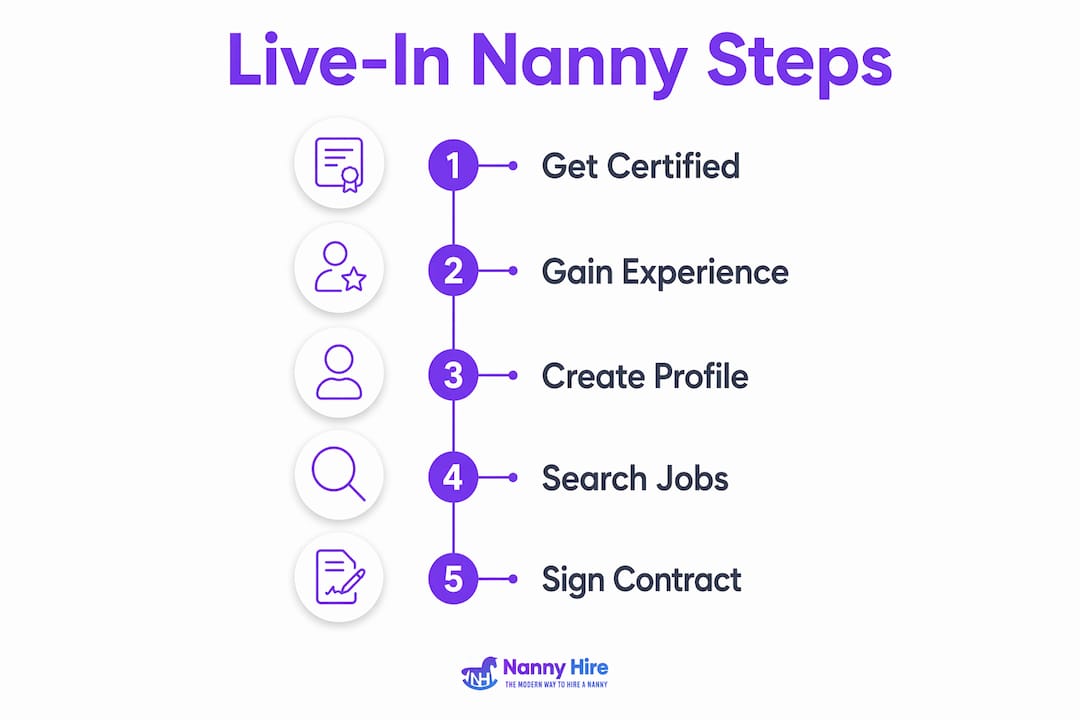
What are the qualifications needed to become a live-in nanny?
Becoming a live-in nanny does not require a college degree, but it does require a credible foundation of childcare knowledge and hands-on experience. Most families expect candidates to hold current CPR and First Aid certifications, which you can obtain through the American Red Cross or the American Heart Association in a single weekend course. Child safety qualifications like these are non-negotiable for competitive applications in 2026.

Experience matters more than credentials alone. Indeed recommends gaining 1 to 3 years of childcare experience through babysitting, camp counseling, or assistant roles before applying for live-in positions. That range gives you exposure to different age groups, behavioral challenges, and family dynamics, all of which families will ask about directly in interviews.
References are your most powerful asset at the application stage. Verifiable references from prior childcare employers signal professionalism and build trust before a family ever meets you in person. Collect at least three references from families or supervisors who can speak to your reliability, communication, and care quality.
Here is a practical checklist of qualifications to build before applying:
- Current CPR and First Aid certification (renew every two years)
- Minimum one year of documented childcare experience
- Three professional references with contact information
- A clear background check through a service like Checkr or Sterling
- Basic knowledge of child development milestones by age group
- A driver's license if the role involves transporting children
Pro Tip: Create a one-page professional profile that lists your certifications, experience timeline, and references. Families using platforms like Nannyhire can review this at a glance, which speeds up the screening process significantly.
What does a typical live-in nanny job description look like?
A live-in nanny job description covers far more ground than simply watching children. Understanding the full scope of duties before you accept a position prevents mismatched expectations on both sides. Duties vary by the age of the children and the family's lifestyle, but the core responsibilities follow a consistent pattern.
A typical weekday schedule for a live-in nanny caring for two children aged 2 and 5 might look like this:
- 7:00 AM Prepare breakfast, help children dress, and manage the morning routine
- 8:30 AM School drop-off or structured learning activities at home
- 10:00 AM Educational play, outdoor time, or age-appropriate activities
- 12:00 PM Prepare and serve lunch, tidy the kitchen and play areas
- 1:00 PM Nap supervision for younger children, quiet activities for older ones
- 3:00 PM School pickup or afternoon activities
- 5:30 PM Prepare children's dinner, assist with homework
- 7:00 PM Bedtime routine: bath, stories, and settling children for sleep
- 8:00 PM Off-duty time begins
Household duties in a live-in role are typically limited to tasks directly related to the children. That means children's laundry, tidying toy areas, and preparing children's meals, not general housekeeping for the entire family. This distinction matters and should be spelled out clearly in your contract.
The table below shows how duties shift based on child age:
| Child age | Primary focus | Key tasks |
|---|---|---|
| Infant (0–12 months) | Safety and feeding | Bottle prep, tummy time, sleep schedules |
| Toddler (1–3 years) | Development and routine | Potty training, sensory play, nap schedules |
| Preschool (3–5 years) | Learning and socialization | Pre-literacy activities, park outings, craft projects |
| School age (6–12 years) | Homework and independence | After-school pickup, homework support, activity transport |
How to set and maintain healthy boundaries as a live-in nanny
Boundaries are the single most important factor in whether a live-in arrangement succeeds or breaks down. Off-duty time must be treated as genuinely personal, with no expectation of 24/7 availability from the family. When families blur this line, even unintentionally, burnout follows quickly.
Your private living space is your first line of protection. Private bedroom and bathroom arrangements are critical boundary elements that should be agreed upon before you move in. Treat your room as a true retreat. Experienced live-in nannies who maintain psychological separation between work and personal life report significantly better job satisfaction and longevity in their roles.
Here are the key boundaries to establish from day one:
- Working hours: Define your start and end time in writing. "On call" arrangements require additional compensation.
- Common area use: Clarify when and how you can use shared spaces like the kitchen and living room during off-duty hours.
- Personal guests: Agree in advance on whether you can have friends or family visit your private space.
- Phone and communication: Set expectations for after-hours contact. A family texting at 10 PM about tomorrow's schedule is a boundary issue if it happens regularly.
- Meals: Clarify whether you prepare your own food, share family meals, or receive a food allowance.
When a boundary is crossed, address it calmly and directly. Effective boundary enforcement includes addressing violations in a composed conversation, requesting a formal meeting if the issue persists, and documenting any agreements that follow. Avoid letting small violations accumulate. They compound fast in a live-in environment.
"Lack of enforced privacy and unclear boundaries on common area use are among the leading contributors to live-in nanny burnout." — Westside Nannies
Pro Tip: During your first week, write a short summary of the boundaries you discussed during hiring and share it with the family by email. This creates a paper trail and signals professionalism without confrontation.
What legal and contract terms must live-in nannies understand in 2026?
A written contract is not optional. Proper documentation protects both the nanny and the employer legally and financially, and it is the clearest signal that the arrangement is a professional employment relationship, not an informal favor. Treating it as anything less creates disputes that are difficult to resolve.
Live-in nanny contracts in 2026 must specify working hours, pay rate, overtime policy, time-off provisions, and accommodation conditions. They should also include a clear trial period, typically two to four weeks, and a notice period for resignation or termination. Standard notice periods range from 2 to 4 weeks, though legal minimums can be as short as 24 to 72 hours. A longer notice period protects you from sudden displacement, which matters significantly when your housing is tied to your job.
The table below compares what a weak contract leaves out versus what a strong contract includes:
| Contract element | Weak contract | Strong contract |
|---|---|---|
| Working hours | "Flexible as needed" | Specific daily start and end times |
| Overtime | Not mentioned | Rate specified per FLSA guidelines |
| Notice period | "Reasonable notice" | 2 to 4 weeks in writing |
| Accommodation | Verbal agreement | Written terms including vacate timeline |
| Tax documentation | Informal cash payment | W-2 issued, payroll taxes withheld |
On the tax side, live-in nannies are classified as household employees by the IRS. This means the family is responsible for withholding Social Security and Medicare taxes, and you should receive a W-2 at year end, not a 1099. Understanding your nanny compensation structure including stipends, benefits, and tax treatment helps you negotiate accurately and avoid surprises at tax time.
What practical tips help live-in nannies thrive long term?
Thriving in a live-in role requires more than childcare skill. It requires intentional self-management, clear communication, and a plan for professional growth. The nannies who stay in live-in positions for two or more years share a common set of habits.
- Protect your days off. Schedule personal activities on your days off the same way you would schedule a work commitment. This prevents families from filling the gap with informal requests.
- Communicate proactively. Weekly check-ins with the family, even a 10-minute conversation, prevent small frustrations from becoming larger conflicts.
- Invest in continuing education. Courses through the International Nanny Association or certifications in areas like Montessori methods or special needs care increase your earning potential and make you a stronger candidate for future roles.
- Build a professional network. Connect with other nannies through local nanny groups, the International Nanny Association, or platforms like Nannyhire. Peer support is practical, not just social.
- Know when to move on. If a family consistently violates your contract terms or your well-being is declining, transitioning roles is a professional decision, not a failure.
Pro Tip: Before your first nanny interview, prepare a list of your non-negotiable boundaries and preferred working conditions. Presenting these clearly signals maturity and reduces the chance of a poor match.
Key takeaways
A live-in nanny career succeeds when you combine verified qualifications, a detailed written contract, and clearly enforced personal boundaries from the very first day.
| Point | Details |
|---|---|
| Build credentials first | Earn CPR certification and 1 to 3 years of experience before applying for live-in roles. |
| Know your job description | Clarify child-specific duties versus general housekeeping in writing before accepting any position. |
| Set boundaries early | Define private space, off-duty hours, and communication rules from the hiring stage. |
| Secure a strong contract | Require written terms covering pay, overtime, notice periods, and accommodation conditions. |
| Invest in your career | Use the International Nanny Association and continuing education to grow professionally over time. |
What I've learned about live-in nanny success that most guides skip
I've seen a lot of live-in arrangements go sideways, and almost none of them failed because the nanny lacked childcare skill. They failed because the boundaries conversation never happened, or happened once and was never revisited. Families are not always trying to take advantage. Many simply don't know where the line is unless you draw it clearly.
The piece of advice I give most often is this: treat your private space like it belongs to you, because contractually, it does during your off-duty hours. Nannies who physically and mentally separate from the family in the evenings last far longer in their roles than those who stay available "just in case." That habit of availability feels generous at first. Six months in, it feels like a trap.
I also think the industry undersells the career potential here. A live-in nanny who builds a track record with two or three families, earns specialized certifications, and networks through organizations like the International Nanny Association can command significantly higher compensation and better working conditions over time. This is a real profession with real career progression, not a gap-year job.
If you are considering this path, go in with your eyes open, your contract signed, and your boundaries written down. The families who are the best employers will respect all three.
— Chantel
Ready to find your next live-in nanny position?
If you've worked through this guide and feel ready to take the next step, Nannyhire makes the search straightforward. The platform connects qualified nannies with families who have already been screened for transparency and fit, so you spend less time filtering and more time finding the right match.

Browse current openings on the Nannyhire job board to see live-in positions available in your area right now. Each listing includes clear details on duties, compensation, and household expectations so you know what you're walking into before the first conversation. If you want a full picture of the hiring process from the family's side, get started with Nannyhire to see how the platform matches nannies and families based on real compatibility, not just availability.
FAQ
What are the basic requirements to become a live-in nanny?
Most families require current CPR and First Aid certification, at least one year of documented childcare experience, and verifiable professional references. A clean background check is standard for any competitive application.
How many hours does a live-in nanny typically work per day?
Live-in nannies generally work 8 to 10 hours per day with clearly defined off-duty time. Any hours beyond the contracted schedule should be compensated as overtime under FLSA guidelines.
Does a live-in nanny need a written contract?
A written contract is required for legal and financial protection on both sides. It must cover working hours, pay, overtime, accommodation terms, and notice periods, with standard notice ranging from 2 to 4 weeks.
How do live-in nannies handle taxes?
Live-in nannies are classified as household employees by the IRS and should receive a W-2 at year end. The employing family is responsible for withholding Social Security and Medicare taxes from each paycheck.
What is the biggest challenge of being a live-in nanny?
Maintaining clear boundaries between work and personal life is the most common challenge. Unclear boundaries around privacy and off-duty time are the leading causes of burnout in live-in roles.