

A nanny job listing is a formal job description that defines childcare duties, schedule, qualifications, and household expectations to attract the right candidate for your home. Families who treat their listing as a filter, not just an advertisement, hire better and retain longer. What a nanny job listing includes directly determines the quality of applicants you receive. Vague postings attract mismatched candidates. Specific ones attract professionals. Nannyhire was built on exactly this principle: clarity at the start saves everyone time, stress, and money down the road.
What does a nanny job listing include?
A strong nanny job description includes the number and ages of children, schedule and hours, transport requirements, meal prep, light housekeeping related to children, and a preference for childcare education. That list is not optional. Each element helps candidates self-filter before they apply, which means fewer wasted interviews for you.
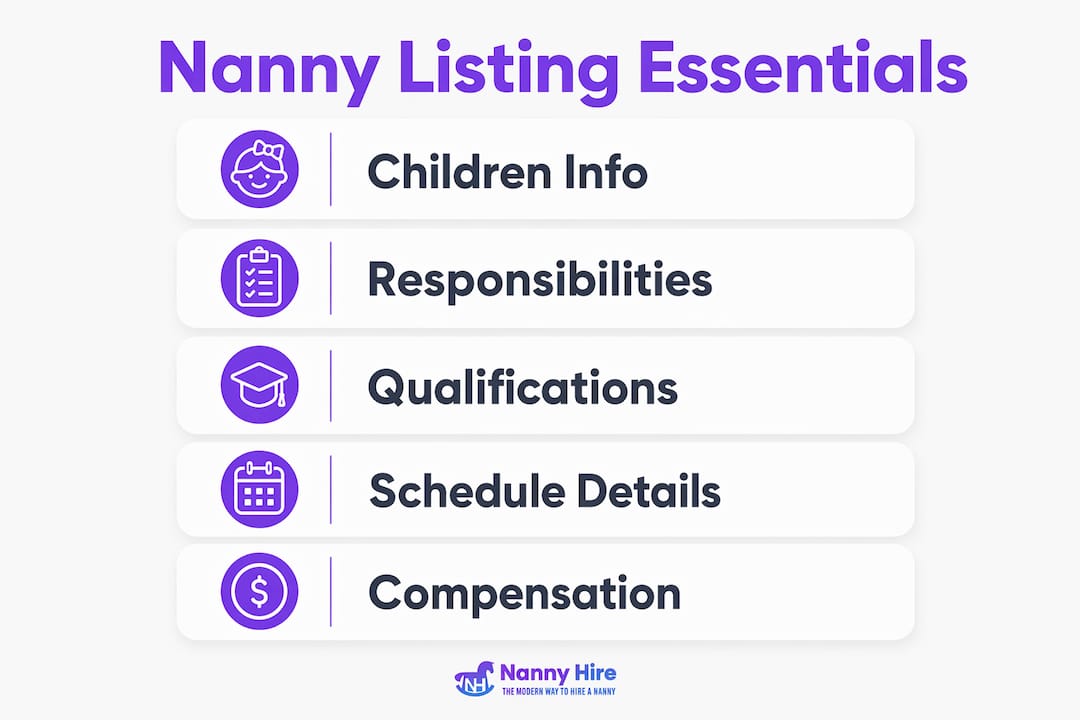
The core components of an effective nanny job listing fall into five categories:
- Children's details: Number of children, ages, and any special needs or developmental considerations
- Schedule: Full-time or part-time, live-in or live-out, specific days and hours, and whether overtime is possible
- Responsibilities: Daily childcare tasks, educational activities, and any household duties tied directly to the children
- Qualifications: Required certifications, experience level, and educational background in childcare
- Logistics: Transportation duties, driver's license requirements, and whether a personal vehicle is needed
Families that include all five categories see a measurable drop in misaligned applications. The US Nanny Association and childcare hiring specialists consistently point to specificity as the single biggest factor in hiring success.
Pro Tip: Write your listing as if you are describing a typical Tuesday in your home. That level of detail tells candidates exactly what they are signing up for.

How to describe nanny responsibilities clearly and realistically
The primary reason nanny hires fail is an unclear distinction between nanny duties and household helper roles. A nanny's core job is child-focused. A house manager's job is property-focused. Mixing the two without clarity creates resentment and turnover.
Concrete examples of childcare responsibilities to include:
- Bathing and dressing children in the morning
- Preparing age-appropriate meals and snacks
- Supervising outdoor play and managing playdates
- Reading, educational games, and homework help for school-age children
- Nap time routines for infants and toddlers
Household tasks are acceptable in a nanny listing, but only when tied directly to the children. Children's laundry, sanitizing toys, and tidying play areas are reasonable. Deep cleaning bathrooms or doing the family's grocery shopping is not a nanny duty. Listing specific examples of light housekeeping related to children reduces hiring friction significantly. That specificity tells a professional nanny you understand the boundaries of the role.
Pro Tip: Separate your listing into two clear sections: "Childcare Duties" and "Household Tasks Related to Children." That structure alone signals professionalism to experienced candidates.
Language matters too. Phrases like "help around the house" or "assist with household needs" are red flags for experienced nannies. They suggest the role will expand beyond childcare without extra pay. Use direct, task-level language instead. "Prepare children's lunches daily" is far clearer than "assist with meals."
What qualifications and skills should a nanny listing specify?
Qualifications filter your candidate pool before the first conversation. The US Nanny Association confirms that listing required certifications such as CPR and First Aid, plus childcare training hours, is a baseline expectation for professional nanny candidates. That standard protects your children and signals that you take the role seriously.
A structured qualifications section should include:
- CPR and First Aid certification: State whether current certification is required or whether you will support the candidate in obtaining it.
- Experience level: Specify years of experience, and whether you need someone with newborn care, multiple-child management, or special needs experience.
- Educational background: A degree in early childhood education or child development is a plus for many families, especially those with infants or children with learning differences.
- Language skills: If bilingual care is a priority, state the required language and proficiency level clearly.
- Background check consent: Note upfront that a background check is part of your hiring process. Candidates who object will self-select out immediately.
Families that include these details attract candidates who already meet the bar. Those who skip qualifications get a wide, unfiltered pool that takes far more time to sort. A well-crafted listing filters out unsuitable candidates early and saves families significant time. Think of qualifications as your first screening round, before you read a single resume.
For families hiring through Nannyhire, the platform's scoring tools help you evaluate candidates against your stated qualifications systematically. That removes the guesswork from comparing applicants side by side. You can also review nanny references best practices to build a complete screening process alongside your listing.
How to include scheduling, compensation, and logistical details
Schedule clarity is non-negotiable. Including detailed schedule information such as full-time or part-time status, live-in or live-out arrangement, and specific days and hours significantly filters candidates and sets clear expectations from the start. A candidate who needs weekends off will not apply for a Monday through Friday role. That is exactly the kind of self-selection you want.
The table below shows what scheduling and compensation details to include and why each one matters:
| Detail | Why it belongs in your listing |
|---|---|
| Days and hours | Prevents scheduling conflicts before the first interview |
| Full-time vs. part-time | Sets workload expectations immediately |
| Live-in vs. live-out | Affects candidate lifestyle and compensation expectations |
| Overtime expectations | Avoids disputes over extra hours later |
| Transportation duties | Filters candidates without a valid driver's license |
| Compensation range | Attracts serious applicants and builds trust |
Transparency about compensation, even if approximate, helps build trust and narrows the candidate pool to serious applicants. You do not need to post an exact salary. A range like "$20–$28 per hour depending on experience" communicates respect for the candidate's time and yours.
Transportation duties deserve their own line in your listing. Stating driver's license requirements and whether the nanny will use a family vehicle or their own helps avoid surprises after hiring. If school pickup, activity drop-off, or errand runs are part of the role, say so explicitly. A candidate without a license or a reliable car cannot fill that need, and finding out after an offer is made wastes everyone's time.
You can review a complete nanny job offer guide to understand how your listing connects to the formal offer stage, including how compensation discussions evolve through the process.
Key Takeaways
A nanny job listing works best when it functions as a filter, not a sales pitch, defining every key expectation before a single candidate applies.
| Point | Details |
|---|---|
| Lead with children's details | State the number, ages, and any special needs of your children at the top of every listing. |
| Separate duties clearly | Distinguish childcare responsibilities from household tasks to prevent role confusion and turnover. |
| Require certifications upfront | List CPR, First Aid, and experience requirements so unqualified candidates self-select out early. |
| Include schedule specifics | State days, hours, live-in or live-out status, and overtime expectations to filter by availability. |
| Be transparent about pay | Posting a compensation range attracts serious candidates and builds trust from the first impression. |
What I have learned from watching families write nanny listings
Working with families through the hiring process, I have seen the same mistake repeat itself. Parents write their listing the way they would write a want ad: short, vague, and optimistic. "Looking for a warm, experienced nanny for two kids." That description could describe a thousand different jobs. It attracts a thousand different candidates, most of them wrong.
The families who hire well treat their listing like a contract draft. They think through every Tuesday, every school pickup, every sick day, and they put it in writing before they post. That discipline pays off. Vague job descriptions that blend nanny and household assistant duties lead to hiring failures and turnover. I have seen that pattern play out repeatedly, and it is almost always preventable.
The other mistake I see is burying the hard stuff. Families mention the "occasional weekend" in the third paragraph, or leave out the fact that one child has sensory processing needs. Those details feel risky to share upfront, but they are exactly what the right candidate needs to say yes with confidence. Hiding them just delays the mismatch.
Write the listing you wish you had received if you were the candidate. That mindset produces listings that attract professionals who stay.
— Chantel
Nannyhire makes posting a clear listing simple
Posting a detailed, well-structured nanny listing does not have to take hours. Nannyhire gives families the tools to build listings that cover every key component, from childcare duties and schedule to qualifications and compensation, without starting from scratch.
Families using the Nannyhire job board reach pre-screened candidates who are actively looking for roles that match their skills and availability. The platform's scoring system helps you compare applicants against your stated requirements, so you spend less time sorting and more time interviewing people who are actually a fit. If you want to see how the full process works, how Nannyhire works walks you through every step from listing to final offer.
FAQ
What should a nanny job listing always include?
A nanny job listing should always include the number and ages of children, schedule details, required certifications like CPR and First Aid, transportation duties, and a compensation range. These elements help candidates self-filter before applying.
How specific should nanny duties be in a listing?
Duties should be task-level specific. Write "prepare children's lunches daily" rather than "assist with meals." Specific language attracts professional candidates and prevents role confusion after hiring.
Should I include pay in a nanny job listing?
Posting a compensation range, even an approximate one, builds trust and attracts serious applicants. Families that include pay information consistently receive higher quality leads than those who leave it out.
What certifications should I require in a nanny listing?
Current CPR and First Aid certification are the baseline requirements recommended by the US Nanny Association. Families with infants or children with special needs may also want to require documented childcare training hours.
How do I separate nanny duties from household tasks?
List childcare duties and household tasks in two separate sections. Household tasks should be limited to child-related work such as children's laundry, toy sanitizing, and tidying play areas. General housekeeping belongs in a separate role description.