
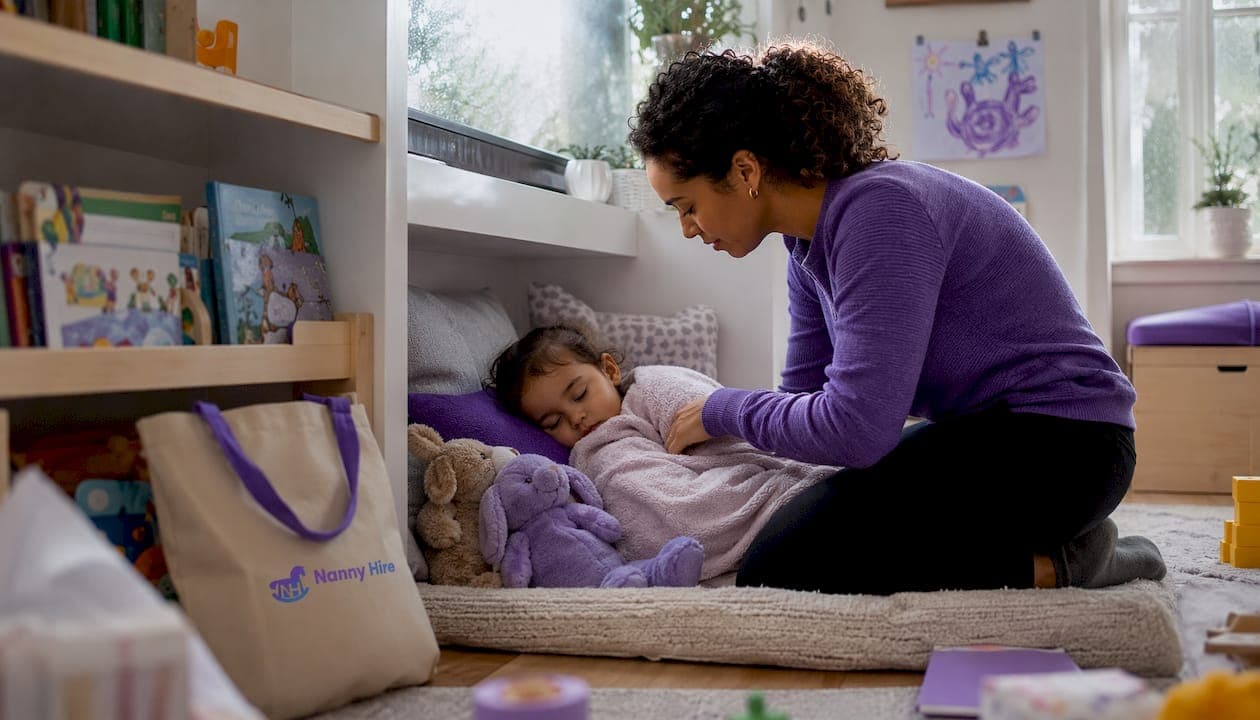
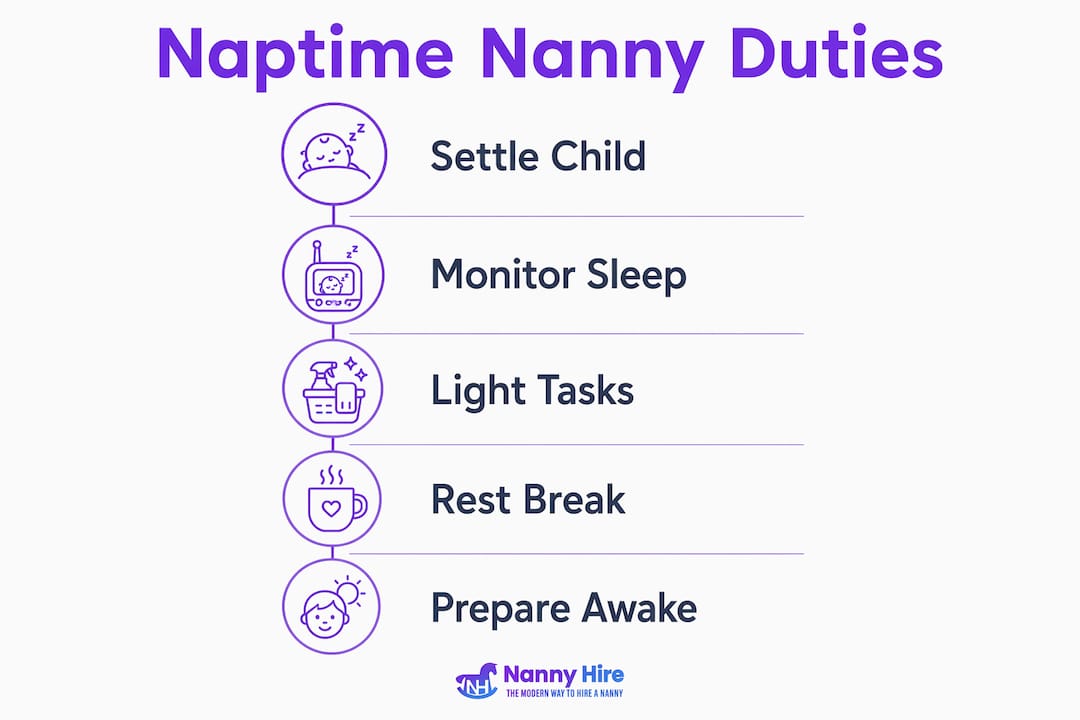
During naptime, a nanny's primary job is to settle the child safely, monitor them throughout the sleep window, and use remaining paid time for short, agreed-upon tasks or rest. That's the short answer. The fuller picture matters just as much, because what happens during those quiet hours shapes your child's safety, your nanny's wellbeing, and the overall health of your working relationship.
A professional nanny follows U.S. safe-sleep guidance from the American Academy of Pediatrics: back-to-sleep on a firm surface, no loose bedding for infants, and consistent monitoring throughout the nap. After settling the child, she might restock the first-aid kit, prep the afternoon snack, or simply eat lunch and recharge. Nannyhire's resources make it easy to spell out exactly which tasks you expect so there's no guesswork on either side.
Table of Contents
- What a nanny does during naptime, step by step
- What nannies can and can't do while children nap
- How breaks, paid time, and naptime duties belong in your nanny agreement
- Sample naptime schedules by age
- How to talk about naptime with candidates before you hire
- U.S. safe-sleep and monitoring standards your nanny should follow
- The naptime checklist every nanny agreement should include
- Key takeaways
- What parents often get wrong about naptime
- Nannyhire makes setting naptime expectations simple
- Useful sources and further reading
What a nanny does during naptime, step by step
A polished naptime routine isn't improvised. Professional nannies follow a consistent sequence that signals to the child that sleep is coming and keeps safety front and center.
Settling the child (0–10 minutes)
- Offer a small choice: diaper change or sleepsack first.
- Close the shade, turn on white noise, and lower the room temperature if needed.
- Give a brief rock or pat, then lay the child down while still drowsy.
- Do a final visual check before stepping out.
According to a day-in-the-life nanny account, Allie's settling routine is quick and consistent, which helps the child transition without a prolonged struggle.
Monitoring (10–30 minutes)
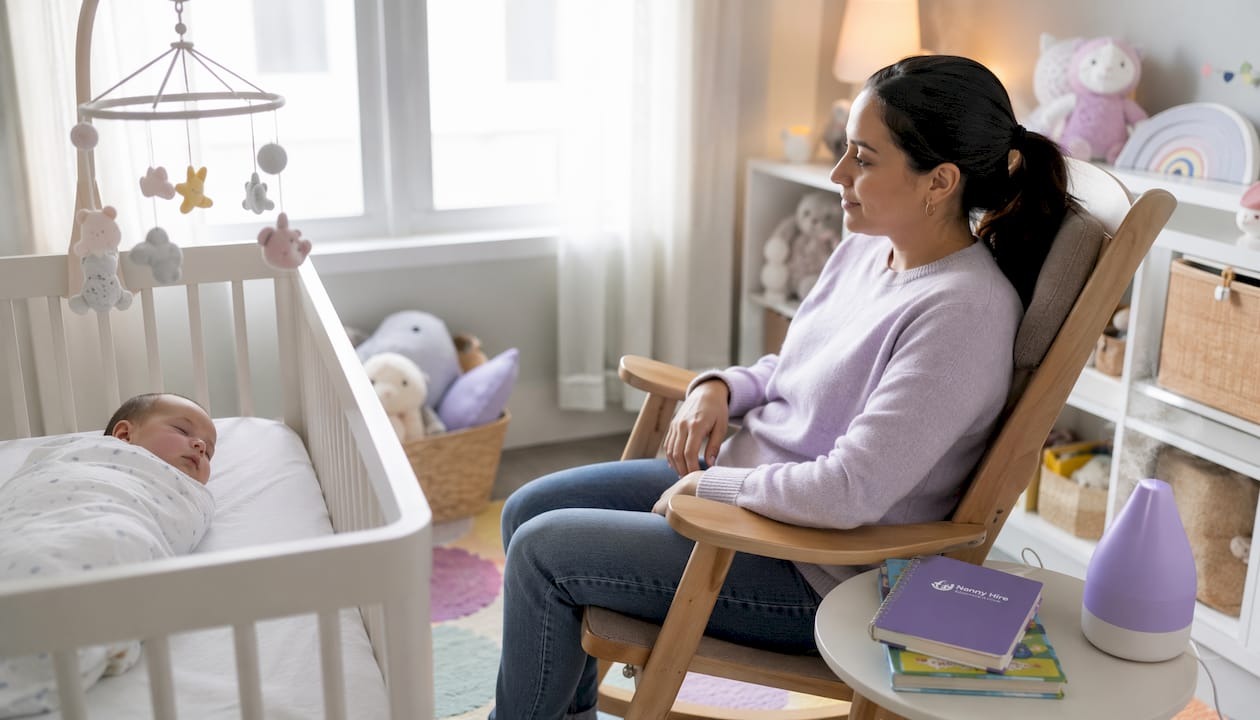
The nanny stays within earshot, checks the monitor, and does a quiet visual check if the child stirs. For infants, this window is non-negotiable. For toddlers, it's shorter but still required.
Remainder of the nap window
Once the child is soundly asleep, the nanny moves into light tasks or a rest break. Nap durations vary widely: toddlers can sleep 2.5–3.5 hours, and experienced nannies like Allie leave the child in bed for quiet time if they wake early.
Pro Tip: Build a 15-minute recharge window into the nap schedule before any chores begin. A rested nanny is more present and patient during active care hours, and most parents actively encourage it.
For infants, the monitoring window is longer and the task window is shorter. For preschoolers, naps may be replaced by quiet rest time, and the nanny's task window expands accordingly.
What nannies can and can't do while children nap
Not every task is appropriate during paid naptime. The table below draws a clear line.
| Allowed during naptime | Not appropriate without permission |
|---|---|
| Monitor child via visual checks and baby monitor | Leave the home to run errands |
| Eat lunch and take a rest break | Clean parents' private bedroom or bathroom |
| Prep the child's afternoon snack or dinner | Discard or reorganize adult medications |
| Restock the child's first-aid kit | Sort through parents' private closets |
| Wash stuffed animals or children's laundry | Perform heavy cleaning unrelated to the child |
| Organize children's bookshelves or toy bins | Accept personal visitors without prior approval |
| Read a childcare book or complete training | Take on paid side work for another family |
The BeTheBestNanny guidance is clear: small, visible household projects like cleaning a junk drawer, organizing children's books, or removing expired food from the refrigerator are sensible nap-time tasks because they're discrete and family-friendly.
Privacy matters. A nanny should always ask permission before reorganizing private spaces or handling adult medications. Well-intentioned acts can feel intrusive without explicit consent. Safety always overrides chores: if the child stirs, cries, or shows any sign of distress, the task stops immediately.
How breaks, paid time, and naptime duties belong in your nanny agreement
Nannies are paid for professional availability, not just active interaction. That means naptime is compensated time, and your agreement should say so plainly.
Three sample contract clauses you can adapt:
- "During the child's nap, the nanny will monitor via [baby monitor] and perform a visual check every 20 minutes. The nanny may use remaining nap time for light, child-related tasks or a rest break as agreed."
- "The nanny may complete the following tasks during nap windows: [list specific tasks]. Tasks involving parents' private spaces require prior written approval."
- "If the child does not nap, the nanny will provide quiet rest activities and the scheduled nap window will be treated as active care time."
Your nanny work agreement should also specify whether nap extensions count toward overtime and how the nanny should log and report unusual sleep events.
Pro Tip: If you work remotely, ask your nanny to send a quick text when the child goes down and when they wake. It takes 10 seconds and eliminates the mid-afternoon "is everything okay?" anxiety.
Nannies are paid for professional availability and on-call responsibility. Short rest periods during naps are consistent with professional caregiving so long as the child's safety and monitoring requirements are met.
Tools like CareTracker make it easy to log nap-period availability and break windows digitally, which is especially useful when parents are working remotely and want a clear record.
Sample naptime schedules by age
Every child is different, but these blocks give you a realistic starting point.
| Age group | Typical nap time | Duration | Nanny's activity during nap |
|---|---|---|---|
| Infant (0–12 months) | 1–2 PM | 2.5–3.5 hours each | Active monitoring, light infant-related prep |
| Young toddler (1–2.5 years) | 12:30–1 PM | 2.5–3.5 hours | Monitor, prep snack, rest break |
| Preschooler (3–5 years) | 1–1:30 PM (quiet time) | 2.5–3.5 hours | Quiet activity prep, light chores, rest |
A first-hand nanny schedule shows a typical midday flow:
- 12:00 PM: Lunch, then pre-nap diaper change and wind-down.
- 12:30 PM: Child down; nanny does a final visual check and places monitor.
- 12:30–1:00 PM: Monitoring window; nanny stays close.
- 1:00–2:30 PM: Child soundly asleep; nanny completes agreed tasks or rests.
- 2:30–3:00 PM: Child wakes; nanny does diaper change, snack, and logs wake time.
For nanny daily schedule examples by age group, Nannyhire's blog has ready-to-use templates you can share directly with your nanny. As children age out of naps, revisit the schedule together and adjust the quiet-time structure accordingly.
How to talk about naptime with candidates before you hire
The interview is your best chance to surface how a candidate actually handles naps, not just how they describe it in theory.
Pre-hire communication checklist:
- Confirm the child's current nap routine and whether the candidate has experience with that age group.
- Ask how they handle a child who resists sleep or wakes early.
- Clarify which tasks you expect during nap windows and which require your approval.
- Discuss how and when they'll report unusual sleep events.
Interview questions worth asking:
- "Walk me through how you settle a fussy infant at nap time."
- "What do you do if the child doesn't fall asleep after 30 minutes?"
- "How do you typically use the nap window once the child is asleep?"
- "Have you ever had a child wake unexpectedly? What did you do?"
- "How do you document nap times and report them to parents?"
Strong answers include specific settling techniques, a clear monitoring habit, and a willingness to log and communicate sleep details. A red flag: a candidate who says they "just put the child down and do their own thing." Documenting naptime details like sleep length, wake times, and unusual events helps parents track patterns and adapt schedules over time.
U.S. safe-sleep and monitoring standards your nanny should follow
The American Academy of Pediatrics sets the baseline for infant nap safety in the U.S., and your nanny should know it cold.
Core safe-sleep practices for naps:
- Always place infants on their back on a firm, flat surface.
- Remove loose bedding, pillows, bumpers, and soft toys from the sleep space.
- Keep room temperature between 68°F and 72°F.
- Never place an infant to sleep on a couch, armchair, or adult bed.
- Use a wearable blanket or sleepsack instead of loose blankets.
Monitoring expectations:
- Check the baby monitor every 10–15 minutes during an infant's nap.
- Do a quiet visual check if the child is unusually still or silent.
- Log the time the child went down and the time they woke.
Escalation flow:
- Child stirs or cries: check immediately.
- Unusual stillness or labored breathing: enter the room and assess.
- No response to gentle stimulation: call 911 immediately and then the parents.
For older toddlers and preschoolers, monitoring frequency can ease slightly, but the nanny should never be out of earshot or off the property.
The naptime checklist every nanny agreement should include
Copy these bullets directly into your agreement or daily instruction sheet.
- Nap routine: Written settling steps the nanny follows every time.
- Monitoring requirement: Visual check frequency and monitor placement.
- Permitted tasks: Specific list of approved nap-window activities.
- Break window: Confirmed rest time and how the nanny should log it.
- Reporting: How and when to notify you of sleep length, wake time, and any concerns.
- Permission items: Explicit list of spaces or tasks that require your approval first.
- Overtime rule: What happens if the nap extends past the scheduled shift end.
Sample sentence snippets:
Review these rules every few months. A 6-month-old's nap routine looks nothing like a 2-year-old's, and your agreement should keep pace.
Key takeaways
A nanny's naptime role is to settle the child safely, monitor consistently, and use remaining paid time for agreed tasks or rest — all of it documented and spelled out in your work agreement.
| Point | Details |
|---|---|
| Safety is always first | Monitoring and safe-sleep practices take priority over any household task. |
| Rest is legitimate | Taking a break during nap windows is acceptable and helps nannies stay effective. |
| Written agreements prevent conflict | Specify permitted tasks, monitoring frequency, and reporting expectations in writing. |
| Age shapes the schedule | Nap duration and nanny activity windows shift significantly from infant to preschool age. |
| Nannyhire simplifies the process | Nannyhire's platform and blog provide templates, screening tools, and schedule guides to set clear naptime expectations from day one. |
What parents often get wrong about naptime
Most parents assume naptime is downtime for the nanny. It's not, and treating it that way creates friction fast. The nanny is still on the clock, still responsible for a child's safety, and still expected to respond instantly if something changes. The rest break she takes isn't a perk; it's what makes her effective for the three active hours that follow.
The more useful frame: naptime is a window of reduced intensity, not zero responsibility. The tasks that fit inside it are short, reversible, and child-adjacent. Anything that takes the nanny's full attention away from monitoring, or off the property entirely, crosses a line.
What I'd tell every parent using Nannyhire: write the naptime expectations into the agreement before the first day, not after the first misunderstanding. A nanny who knows exactly what's expected during nap windows is a nanny who can do her best work, and that's the whole point.
Nannyhire makes setting naptime expectations simple
Finding a nanny who handles naptime the right way starts with knowing what to ask and where to look. Nannyhire gives you a job board with vetted candidates, plus a full library of contract templates and scheduling guides so you can spell out monitoring requirements, permitted tasks, and break windows before the first shift begins.

The platform was built by a working mom who knew exactly how much guesswork traditional agencies leave behind. With Nannyhire, you post your position, screen candidates with transparent scoring, and walk into the hire with a written agreement that covers naptime from settling routine to wake-time log. Get started today and find a nanny whose naptime approach matches your family's expectations from day one.
Useful sources and further reading
- A Day in the Life of a Professional Nanny — Nanny Counsel: First-hand nanny account (Allie) covering settling routines, nap durations, task examples, and documentation habits. Used throughout this guide for routine, schedule, and monitoring sections.
- What Nannies Can Do During the Baby's Naptime — BeTheBestNanny: Caregiver guidance listing appropriate nap-window tasks, privacy boundaries, and rest recommendations. Primary source for the allowed vs. off-limits task table.
- Nanny Work Agreement Guide — Nannyhire: Internal resource covering how to write naptime duties, monitoring expectations, and task permissions into a formal agreement.
- Nanny Daily Schedule Examples — Nannyhire: Age-specific schedule templates parents can share directly with their nanny.
- Household Rules for Nannies Checklist — Nannyhire: Supports the parent agreement checklist and defines allowed versus off-limits chores during nap windows.