

A household rules for nannies checklist is a written document that defines your nanny's responsibilities, boundaries, and conduct expectations before their first day. Think of it as the professional equivalent of an employee handbook, tailored to your home. Without one, even the most qualified caregiver operates on assumptions, and assumptions are where misunderstandings begin. LegalClarity identifies unclear non-childcare duties as the leading cause of resentment and turnover in nanny relationships. Getting this right from day one protects your children, your nanny, and your household.
1. What should a household rules for nannies checklist include as core duties?
Core childcare duties are the foundation of any nanny expectations list. Spell them out explicitly so there is no room for interpretation. A well-drafted nanny job description covers every routine task your nanny will handle daily.
Standard childcare duties to include:
- Preparing and serving age-appropriate meals and snacks
- Bathing, dressing, and grooming children according to your routine
- Supervising naps, rest periods, and bedtime routines
- Planning and leading educational or creative activities
- Helping with homework and reading practice
- Managing school drop-off and pickup, plus medical appointments
- Tidying play areas and cleaning up after meals
- Washing and folding children's laundry only
Light housekeeping tied directly to childcare is standard in most nanny contracts. Heavy cleaning, adult laundry, and grocery runs for the whole family are not. LegalClarity confirms that a nanny contract should define light housekeeping as standard while explicitly excluding adult errands and deep cleaning unless separately agreed and compensated.
Pro Tip: List each duty as a specific action, not a category. "Wash children's dishes after meals" is clearer than "kitchen duties" and prevents scope creep before it starts.

2. How to set clear boundaries and limits with your nanny
Boundaries are not about distrust. They are about clarity. Experts consistently flag scope creep as the single biggest turnover factor in long-term nanny relationships. Defining what your nanny will not do is just as important as listing what they will.
Personal conduct rules to include in your household guidelines for nannies:
- Phone use: No personal calls or texting while children are awake and active. Emergencies are the only exception.
- Social media: No photos or videos of your children posted online without written parental permission. Families widely request this as a standard boundary.
- Screen time: Define daily limits for children and whether the nanny may watch TV during nap times.
- Visitors: No personal guests in the home during working hours without prior approval.
- Family property: Clarify which items are off-limits, including streaming accounts, vehicles, and food.
- Discipline: State your approach clearly. Whether you use time-outs, redirection, or natural consequences, your nanny needs to follow your method.
- Food and allergies: List every allergy, dietary restriction, and food rule. Include what snacks require parental approval.
Clear house rules about visitors, discipline philosophy, and allergy management improve consistency and safety for children. These are not optional extras. They are the policies that keep your household running predictably.
Pro Tip: Write a short "not included" list alongside your duties list. Seeing both together removes any ambiguity about where the job ends.
3. What communication and scheduling protocols keep things running smoothly?
Good communication is the backbone of a successful nanny-family relationship. Without a system, small issues become big problems. Shared scheduling apps and communication protocols reduce last-minute miscommunications significantly.
Build these protocols into your family rules for caregivers from the start:
- Daily log: Ask your nanny to record meals eaten, nap times, mood, activities, and any notable moments. A simple notebook or shared app works well.
- Weekly check-in: Schedule a 10-minute conversation each week to address concerns, adjust schedules, and give feedback.
- Scheduling app: Use a shared calendar for school events, appointments, and schedule changes. Google Calendar or a similar tool keeps everyone aligned.
- Incident reporting: Define what counts as an incident and how quickly you expect to be notified. A fall, a fever, or a conflict with another child all warrant immediate contact.
- Time-off requests: Set a minimum notice period, such as two weeks for planned absences, and clarify how last-minute sick days are handled.
Consistency in communication prevents the slow drift that turns small frustrations into resignation letters. A daily log also gives you a record of your child's day, which is genuinely useful for tracking development and flagging health patterns early.
4. What emergency procedures and safety rules belong in every checklist?
Emergency preparedness is non-negotiable in any safe household practices for nannies. Your nanny needs to act fast and correctly when something goes wrong. Written parental authorization for medication administration is a critical safety measure that belongs in every household agreement.
Emergency contacts and medical protocols
- List your primary contact numbers and a backup contact in case you are unreachable.
- Name your preferred hospital or urgent care center.
- Provide your pediatrician's name, address, and phone number.
- Document every medication your child takes, including dosage and timing.
- Require written authorization before your nanny administers any medication, including over-the-counter products.
Home safety procedures
| Safety Area | What to Document |
|---|---|
| Fire safety | Evacuation route, meeting point, fire extinguisher location |
| Severe weather | Shelter location, weather alert app to use |
| Home security | Alarm codes, door lock procedures, key policy |
| Visitor screening | Who may enter, who must be turned away |
| First aid kit | Location, contents, when to use vs. call 911 |
Posting a printed emergency card on the refrigerator is a simple step that saves critical seconds. Your nanny should be able to find every key piece of information without searching through their phone.
5. How to customize household rules based on your family's unique needs
No two families are identical, and a generic checklist will leave gaps. Personalizing your nanny house policy is what turns a standard document into a genuinely useful tool.
Live-in and live-out nannies require different household rules and accommodations. A live-in arrangement needs additional sections covering shared spaces, meal arrangements, overnight guests, and privacy boundaries for both parties.
Customization areas to address:
- Special needs or medical conditions: Document therapies, sensory sensitivities, communication strategies, and any equipment your nanny must know how to use.
- Multiple children: Assign age-specific routines for each child. A toddler and a school-age child have very different schedules and needs.
- Parenting philosophy: If you follow a specific approach such as Montessori, RIE, or attachment parenting, explain the key principles and how they apply to daily decisions.
- Confidentiality: State that family information, home details, and children's images are private. Technology and confidentiality rules protect family privacy and uphold professional standards.
- Cultural or religious practices: Include any dietary laws, observances, or traditions your nanny should respect and participate in.
Reviewing your checklist every three to six months keeps it current as your children grow and your family's needs shift. A rule that made sense for an infant may not apply to a four-year-old.
Key takeaways
A household rules checklist prevents scope creep, protects children's safety, and builds the mutual respect that makes long-term nanny relationships work.
| Point | Details |
|---|---|
| Define duties precisely | List specific tasks, not categories, to prevent ambiguity from day one. |
| Write a "not included" list | Explicitly naming excluded tasks is the most effective way to prevent scope creep. |
| Build communication systems | Daily logs and weekly check-ins reduce misunderstandings before they become conflicts. |
| Document emergency protocols | Written authorization, emergency contacts, and safety procedures protect your child and your nanny. |
| Customize for your family | Adjust rules for live-in arrangements, special needs, and parenting philosophy to reflect your real household. |
Why I think most families skip the most important part of this checklist
I have talked with hundreds of parents going through the nanny hiring process, and the pattern is consistent. Families spend real time on the duties list. They cover feeding schedules, school pickups, and bedtime routines. Then they hand over the checklist and call it done.
The part they almost always skip is the exclusions list. What the nanny will not do. That omission is where most nanny relationships quietly fall apart. A nanny hired to care for two kids starts doing the family's grocery run because it seemed helpful. Then the dry cleaning. Then the dog. Six months later, they are doing a job they never agreed to, for pay that was set for a different job. Resentment builds, and the family is back to square one.
The fix is simple and takes ten minutes. Write down every task you would not want your nanny to feel obligated to do. Read it out loud during the interview. Ask if they have questions. That conversation alone filters out mismatched expectations before anyone signs anything.
The other thing I see families underestimate is the communication protocol. A daily log feels like extra work until the day your child has a reaction to a new food and you can trace exactly what they ate and when. Or until your nanny needs to explain to a substitute caregiver what the afternoon routine looks like. The log is not paperwork. It is your child's daily record.
Get both of these right, and you will have a nanny relationship that lasts.
— Chantel
How Nannyhire supports families in setting clear expectations
Finding the right nanny is only half the work. Setting up the relationship correctly is the other half, and that is where many families need the most support.
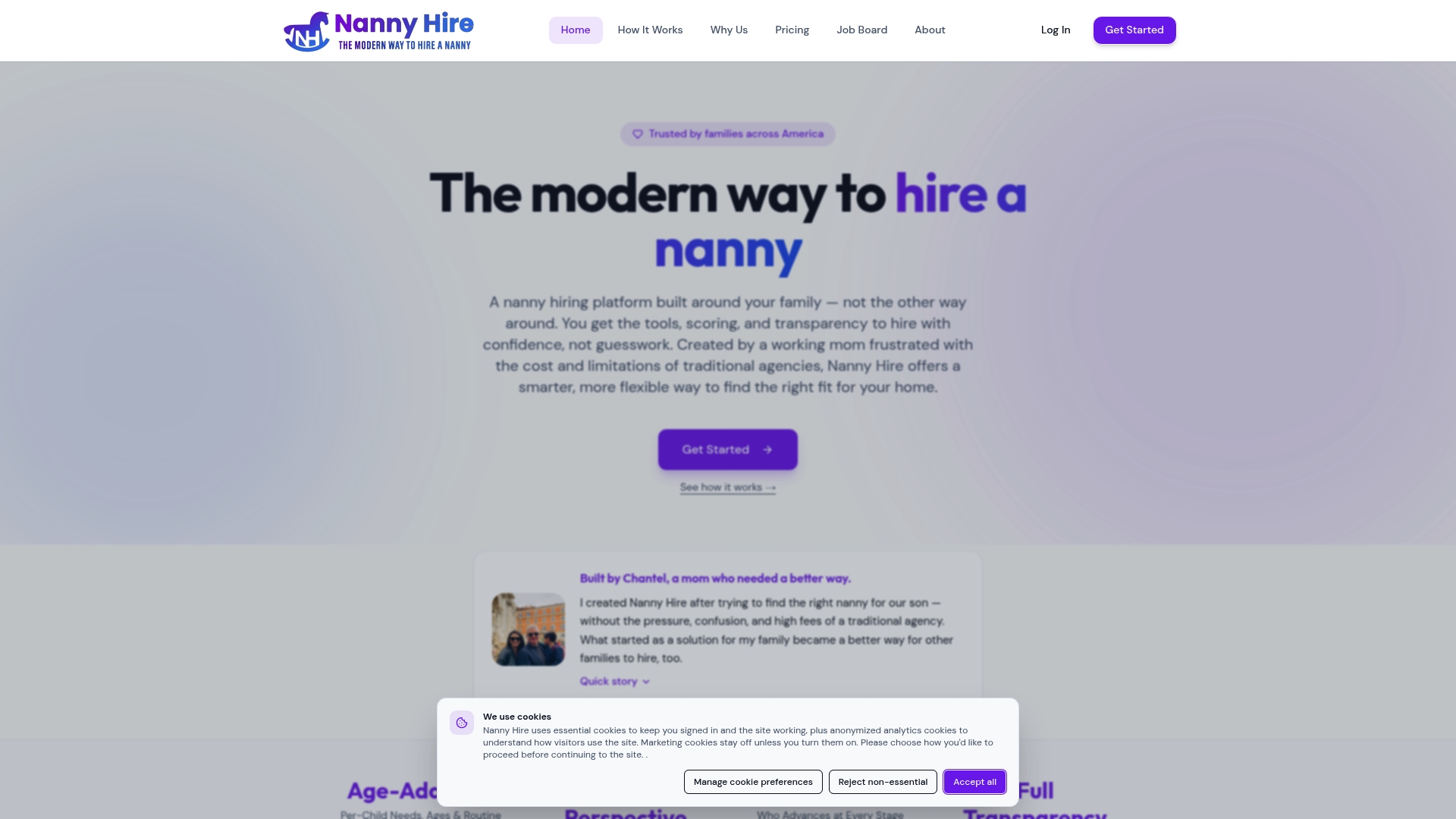
Nannyhire was built by a working mom who understood that families need more than a list of candidates. You need tools, guidance, and transparency to hire with confidence. The Nannyhire job board connects you with pre-screened candidates who understand professional household standards from day one. Nannyhire also provides resources on drafting contracts, setting expectations, and building the kind of nanny-family relationship that lasts. When your household rules are clear and your candidate is the right fit, everything runs better for your children and for you.
FAQ
What is a household rules checklist for nannies?
A household rules checklist for nannies is a written document outlining a nanny's duties, conduct expectations, boundaries, and emergency protocols. It sets clear expectations before the job begins to prevent misunderstandings.
How do I prevent scope creep with my nanny?
Write an explicit list of tasks your nanny will not perform, such as family laundry or adult errands. LegalClarity identifies unclear non-childcare duties as the leading cause of resentment and turnover in nanny relationships.
Should I include phone and social media rules in my nanny checklist?
Yes. Families should define limits on personal phone use during working hours and require written permission before any photos of children are posted online.
Do live-in nannies need different household rules?
Live-in nannies require additional rules covering shared spaces, meal arrangements, overnight guests, and privacy for both the nanny and the family. The core childcare duties remain the same.
How often should I update my household rules for my nanny?
Review your household guidelines every three to six months, or whenever your children's routines or needs change significantly. Regular updates keep expectations current and prevent outdated rules from causing confusion.