

A nanny is a professional childcare provider who delivers personalized, in-home care covering child supervision, educational support, emotional development, and household tasks tied directly to children's wellbeing. Understanding what does a nanny do goes far beyond basic babysitting. The role in 2026 is a career-level position requiring certifications, emotional intelligence, and a genuine partnership with your family. This guide breaks down every core responsibility, qualification, and practical consideration you need to make a confident hiring decision.
What does a nanny do on a daily basis?
A nanny's daily duties span child supervision, meal prep, educational activities, transportation, and home safety monitoring. That breadth is what separates a nanny from occasional childcare. Every task is tailored to the child's age and developmental stage, not a one-size-fits-all routine.
Here is what a typical nanny day looks like in practice:
- Child supervision and safety monitoring. A nanny watches for physical hazards, manages sibling dynamics, and responds to emergencies calmly and quickly.
- Meal preparation and nutrition. She plans and prepares age-appropriate meals and snacks, accounting for allergies, dietary preferences, and pediatric nutrition basics.
- Educational and play activities. She designs activities that build language, motor skills, and social development, from reading sessions with toddlers to science projects with school-age kids.
- Transportation. She drives children to school, pediatric appointments, sports practice, and playdates, keeping schedules on track.
- Laundry and play area management. Household tasks related to children include washing kids' clothes, organizing toys, and maintaining a clean, safe play space.
The scope of care extends well beyond supervision. A nanny tracks developmental milestones, communicates daily updates to parents, and adjusts routines as children grow. That level of attention is something a daily household chores list for a general housekeeper simply does not cover.
Pro Tip: Ask candidates to walk you through a full sample day during the interview. Their answer reveals how they prioritize safety, learning, and routine without prompting from you.

What qualifications does a professional nanny have in 2026?
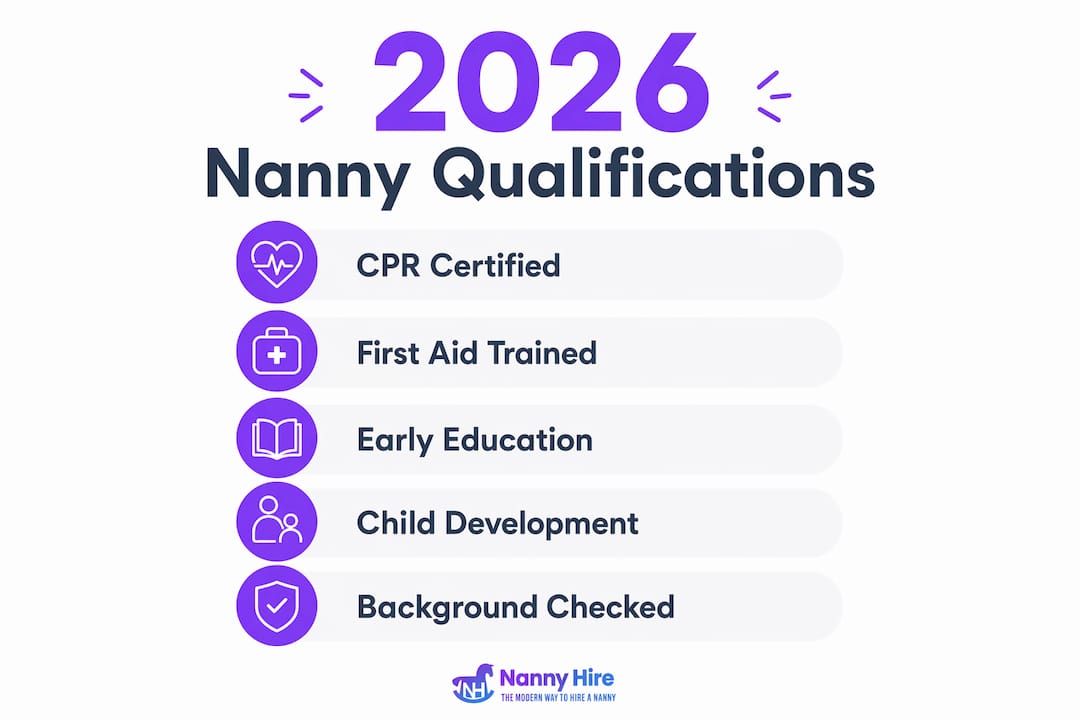
A professional nanny in 2026 holds more than good intentions. Professional nannies increasingly hold associate or bachelor's degrees in early childhood education or related fields, and pediatric CPR and First Aid certifications are now standard. That shift reflects how seriously families and the industry treat in-home childcare as a skilled profession.
Core qualifications to look for include:
- Formal education. Degrees or coursework in child development, early childhood education, or psychology signal a candidate who understands how children learn and grow at each stage.
- Pediatric CPR and First Aid certification. These are non-negotiable for anyone working alone with children. Review the child safety requirements for nannies before you screen candidates.
- Emotional intelligence. Emotional intelligence is now a core competency for professional nannies, involving co-regulating children's emotions and modeling healthy boundaries. This is not a soft skill anymore. It is a measurable, trainable capability.
- Time management and multitasking. A nanny manages overlapping schedules, competing needs across multiple children, and unexpected situations, all without losing composure.
- Ongoing professional development. Career nannies pursue ongoing education beyond experience, including child development training and updated certifications, to deepen their expertise over time.
The difference between a qualified nanny and an unqualified one shows up in moments of stress. A certified, trained professional knows how to handle a febrile seizure, a meltdown, or a conflict between siblings with skill and calm. That knowledge protects your child.
How does a nanny differ from babysitters and daycare workers?
Nannies differ from babysitters and daycare workers primarily in specialization, schedule regularity, household integration, and professional training. The distinction matters because each option carries different costs, commitments, and outcomes for your child.
| Feature | Nanny | Babysitter | Daycare worker |
|---|---|---|---|
| Schedule | Full-time, consistent | Occasional, as needed | Fixed center hours |
| Setting | Your home | Your home or theirs | Group facility |
| Child-to-caregiver ratio | 1:1 or small family | 1:1 | Often 4:1 or higher |
| Household duties | Yes, child-related tasks | Rarely | No |
| Educational support | Customized to your child | Minimal | Standardized curriculum |
| Professional training | Certifications, degrees | Varies widely | State-licensed, group-focused |
| Relationship length | Long-term partnership | Short-term | Varies by enrollment |
A babysitter fills gaps. A daycare center provides structured group care. A nanny builds a long-term, personalized relationship with your child and your family. That relationship is the core value. Children with consistent caregivers show stronger attachment, better emotional regulation, and more stable development over time. Understanding what nanny experience means helps you evaluate candidates beyond a resume.
What are live-in nanny arrangements, and are they right for your family?
A live-in nanny resides in your home full-time, providing maximum scheduling flexibility and deep family integration. Live-in nannies typically receive private rooms and benefits like utilities coverage. That arrangement works especially well for families with irregular work hours, frequent travel, or multiple young children.
Key features of live-in arrangements include:
- Private accommodations. A dedicated bedroom, bathroom access, and sometimes a separate living area are standard. Review the nanny benefits guide to understand what compensation packages typically include.
- Flexible scheduling. Live-in nannies can cover early mornings, late evenings, and last-minute changes more easily than live-out professionals.
- Deep trust and family integration. A live-in nanny becomes part of daily family life. That closeness builds strong bonds with children but requires mutual respect and clear communication.
- Boundary clarity. Clear off-duty times and respect for personal boundaries are critical for sustained nanny-family relationships. Without them, burnout follows quickly.
- Burnout prevention. Remote work has blurred professional lines in many homes. Structured work hours and defined off-duty periods protect both the nanny and the quality of care your children receive.
The live-in model is not for every family. It requires physical space, a high level of trust, and a written agreement that spells out hours, duties, and private time. For families who get it right, the payoff is a caregiver who is genuinely invested in your children's daily lives.
Pro Tip: Before a live-in nanny moves in, draft a written work agreement that specifies exact on-call hours, days off, and personal space boundaries. Verbal agreements break down under the pressure of a busy household.
For a full breakdown of how live-in roles work in practice, the step-by-step live-in nanny guide covers everything from room setup to contract terms.
What are practical tips for parents when hiring a nanny?
Hiring a nanny well requires more than posting a job and checking references. The families who build lasting, successful nanny relationships treat the process like a professional hire from day one. Here is how to do that:
- Write a specific job description. List the children's ages, daily schedule, required certifications, household duties, and any special needs. Vague postings attract mismatched candidates and waste everyone's time.
- Screen for qualifications and compatibility. Verify CPR certifications, check references directly, and assess whether the candidate's childcare philosophy aligns with yours. Compatibility matters as much as credentials.
- Establish professional boundaries from the start. Define work hours, on-call expectations, and household rules in writing before the first day. Modern families and nannies must set clear professional boundaries to avoid burnout and role confusion, especially with the rise of remote work.
- Prioritize emotional intelligence in interviews. Ask situational questions: "How would you handle a child who refuses to eat?" or "Describe a time you helped a child through a strong emotion." The answers reveal far more than a resume does.
- Build in regular check-ins. Schedule brief weekly conversations to address concerns before they become problems. Professional nannies treat positions as developmental opportunities, and they respond well to structured feedback.
- Prevent burnout proactively. Respect days off, honor the agreed schedule, and recognize the nanny's contributions. Turnover is expensive and disruptive for children who have formed attachments.
The families who treat nannies as career professionals, not household staff, retain them longer and see better outcomes for their children. That mindset shift is the single most impactful thing you can do before you even post the job.
Key takeaways
A nanny is a trained, career-level childcare professional who provides personalized in-home care covering safety, education, emotional development, and household support tied directly to children's needs.
| Point | Details |
|---|---|
| Daily duties are comprehensive | Nannies handle supervision, meals, educational activities, transportation, and child-related household tasks every day. |
| Qualifications matter in 2026 | Look for degrees in child development, pediatric CPR certification, and demonstrated emotional intelligence. |
| Nannies differ from babysitters | Nannies offer full-time, customized, long-term care that babysitters and daycare centers cannot replicate. |
| Live-in arrangements need clear boundaries | Written agreements on hours, off-duty time, and accommodations prevent burnout and protect the relationship. |
| Treat hiring as a professional process | Specific job descriptions, structured interviews, and regular check-ins reduce turnover and improve care quality. |
Why I think we undervalue nannies as career professionals
The framing of nannies as "extra help" has always bothered me. Professional nannies are not extra help but integral partners in a child's educational and nurturing goals, requiring a career mindset. That is not a feel-good statement. It is a practical reality that affects how well your children are cared for.
When families treat nannies as interchangeable, turnover rises. When turnover rises, children lose consistent caregivers. That loss has real developmental consequences. Attachment research consistently shows that stability in early caregiving relationships shapes emotional regulation and social skills for years.
The nannies I have seen thrive in their roles share two traits: they pursue ongoing training, and they work for families who respect their professional boundaries. Those two things are not separate. They reinforce each other. A nanny who feels respected invests more deeply. A nanny who is burned out cannot give your child what they need, no matter how qualified she is.
My honest advice: before you focus on salary negotiation or scheduling logistics, ask yourself whether you are prepared to treat this person as a professional partner. If the answer is yes, you are already ahead of most families in the hiring process.
— Chantel
Find a qualified nanny with Nannyhire
Knowing what a nanny does is the first step. Finding the right one for your family is where most parents get stuck. Nannyhire was built specifically to solve that problem. The platform gives you access to pre-screened candidates with verified certifications, clear experience profiles, and compatibility scoring so you are not guessing.
Whether you need a live-out professional for weekday coverage or a live-in nanny for full family integration, Nannyhire's job board connects you with qualified candidates who meet your specific requirements. You can also review a sample candidate profile to understand exactly what information you will have before making any decision. No agency markups, no guesswork, and no pressure.
FAQ
What is a nanny's primary job?
A nanny's primary job is to provide personalized, in-home childcare that covers supervision, safety, educational activities, meal preparation, and emotional support tailored to each child's developmental stage.
What qualifications should a professional nanny have?
A professional nanny should hold pediatric CPR and First Aid certifications, ideally alongside coursework or a degree in early childhood education, plus demonstrated emotional intelligence and time management skills.
How is a nanny different from a babysitter?
A nanny works full-time on a consistent schedule, takes on household duties related to children, and builds a long-term relationship with the family. A babysitter provides occasional, short-term care with minimal responsibilities beyond supervision.
What does a live-in nanny arrangement include?
A live-in nanny lives in the family home and typically receives a private room, utilities coverage, and flexible scheduling. Clear written agreements on work hours and off-duty time are required to make the arrangement sustainable.
How do I prevent nanny burnout?
Respect agreed-upon work hours, honor days off, and schedule regular check-ins to address concerns early. Families that set clear professional boundaries and treat nannies as career professionals retain them significantly longer.