

Nanny experience is defined as the combination of hands-on childcare skills, formal qualifications like CPR and First Aid certification, and a proven track record of consistent, professional employment. It is not simply the number of years on a resume. Understanding nanny experience explained in full means looking at what a candidate has actually done, how they've handled real situations, and whether their training matches your child's specific needs. For parents weighing childcare options in 2026, knowing what nanny experience means is the difference between a confident hire and a costly mistake.
What nanny experience means: skills and certifications that count
Nanny experience is built on two pillars: formal qualifications and applied real-world skills. Neither one alone tells the full story.
On the certification side, CPR and First Aid credentials are the baseline professional requirement. They signal that a nanny can respond calmly and correctly in a medical emergency, which is non-negotiable when you are trusting someone with your child's safety. Early childhood education credentials, such as a Child Development Associate (CDA) credential or coursework from programs like the National Association for the Education of Young Children (NAEYC), add another layer of credibility. Certificates paired with relevant experience are consistently preferred by families and elevate a nanny's professional standing.
Beyond paper qualifications, the skills that define strong nanny experience include:
- Child development knowledge: Understanding age-appropriate behavior, milestones, and how to adapt care to a toddler versus a school-age child
- Specialized care experience: Newborn care, twins, children with special needs, or managing sibling dynamics each require distinct skills that general babysitting does not build
- Behavior guidance: Knowing how to set consistent, calm limits without resorting to punishment or conflict
- Routine management: Building and maintaining daily schedules that support sleep, nutrition, and learning
- Communication skills: Keeping parents informed, flagging concerns early, and adapting to family preferences without being prompted
Soft skills are where many parents underestimate nanny experience. A nanny who has calm, grounded presence developed through formal training and real-world exposure across diverse settings brings something a certification alone cannot teach. That quality shows up in how they handle a toddler's meltdown, how they talk to a shy child, and how they respond when plans change unexpectedly.
Pro Tip: Ask candidates to describe a specific situation where a child was upset and how they handled it. The detail and empathy in their answer tells you more than any certificate.

How do you evaluate nanny experience beyond the resume?
Employment history quality matters more than total years worked. A nanny with eight years of experience spread across twelve short-term jobs is a different candidate from one with eight years across two or three long-term placements. Longevity in individual roles of two or more years signals professional stability and a trusted caregiver relationship. Frequent short-term roles, by contrast, can indicate difficulty managing household expectations or recurring conflicts with families.
Use this process to evaluate experience thoroughly during hiring:
- Review the timeline first. Map out each role by start date, end date, and reason for leaving. Gaps or a pattern of roles under six months deserve a direct, non-judgmental question.
- Ask for specific accomplishments. Nannies who can articulate specific contributions, like establishing a sleep routine for a newborn or supporting a child with sensory processing challenges, demonstrate professional-level experience. Vague answers like "I just loved the kids" are a warning sign.
- Listen for childcare philosophy. Ask how they handle discipline, screen time, or a child who refuses to eat. Their answer reveals whether their values align with yours.
- Check references with targeted questions. Ask previous employers whether the nanny communicated proactively, how they handled conflict, and whether they would rehire. Vague or overly brief references are a red flag. The reference check process is one of the most reliable tools you have.
- Watch behavior during a trial period. A paid trial day or week lets you observe how a nanny interacts with your child in real time. Experience shows up in small moments: how they redirect a child, how they manage transitions, and how they handle the unexpected.
Soft skills like reliability and communication are crucial but less visible on resumes. That is exactly why the interview and trial period carry so much weight.
Pro Tip: Trust your read on temperament. A nanny whose personality and energy feel like a natural fit with your family will often outperform a more credentialed candidate who feels misaligned.
Nanny vs. babysitter vs. daycare: how does experience compare?
Understanding nanny qualifications requires knowing how the role differs from other childcare options. The scope of work, training expectations, and employment structure are meaningfully different across these three settings.
| Category | Nanny | Babysitter | Daycare Provider |
|---|---|---|---|
| Employment type | Year-round, often full-time with salary and benefits | Ad hoc, hourly, no benefits | Facility-based, licensed staff |
| Responsibilities | Child care, routine planning, learning activities, household integration | Basic supervision and safety | Group care, structured curriculum |
| Training expected | CPR, First Aid, child development credentials, specialty experience | Varies widely, often minimal | State-licensed, regulated training |
| Pay structure | Salary with paid taxes, sometimes benefits | Hourly cash or app-based payment | Per-child rate, facility-set |
| Experience depth | Broad: developmental, behavioral, household management | Narrow: supervision focused | Structured but group-oriented |
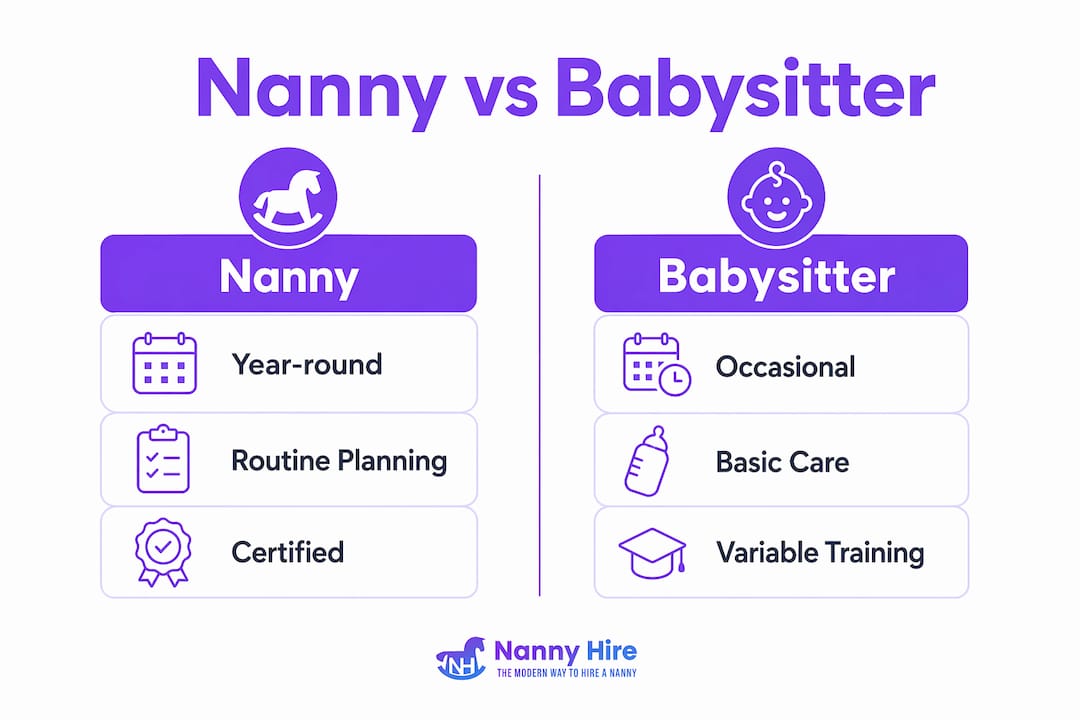
Nannies carry broader responsibilities than babysitters, including planning learning activities, managing routines, and integrating with household culture. That breadth is reflected in their experience level and their pay. A nanny with newborn care or special needs experience commands a higher rate because that specialty is genuinely harder to find and more valuable to families who need it.
The impact of experience on salary is direct and measurable. A nanny with ten years of experience plus active certifications commands higher pay than one with only years or only credentials. That combination signals both knowledge and the ability to apply it under pressure.
How to verify and assess nanny experience when hiring
Knowing the importance of nanny experience is one thing. Confirming it during the hiring process is another. Here is a practical checklist for parents:
- Verify certifications directly. Ask for physical or digital copies of CPR, First Aid, and any early childhood education credentials. Check expiration dates. Certifications that lapsed two years ago are not current qualifications.
- Cross-reference employment history. Confirm dates and roles with at least two references. Ask each reference to describe the nanny's specific duties, not just their general impression.
- Prepare interview questions around real scenarios. "Tell me about a time a child in your care was injured" or "How did you handle a family whose parenting style differed from your instincts?" reveal judgment and professionalism. Review nanny interview preparation guidance before you sit down with candidates.
- Match experience to your child's age and needs. A nanny with five years of newborn experience is not automatically the right fit for a seven-year-old. Relevant experience matters more than total experience.
- Document what you learn. After each interview, write down specific examples the candidate shared. This makes comparing finalists far easier and more objective.
- Use a structured job description. A clear nanny job description that lists required experience, certifications, and responsibilities filters out underqualified candidates before the interview stage.
The goal is not to build a perfect paper case. The goal is to gather enough concrete evidence that you feel confident, not just hopeful, about your hire.
Key takeaways
Nanny experience is a combination of certifications, applied childcare skills, and stable employment history, and all three must be evaluated together for a confident hiring decision.
| Point | Details |
|---|---|
| Experience is multi-dimensional | Years worked, certifications, and soft skills each contribute to a nanny's true qualifications. |
| Certifications are the baseline | CPR, First Aid, and child development credentials are minimum professional standards, not bonus features. |
| Employment stability signals reliability | Roles lasting two or more years indicate a trusted, professional caregiver relationship. |
| Soft skills require active evaluation | Communication, judgment, and temperament do not appear on resumes and must be assessed through interviews and trial periods. |
| Match experience to your child's needs | Relevant experience for your child's age and situation matters more than total years in the field. |
What i've learned about valuing nanny experience in 2026
I built Nannyhire because I was a working mom who kept running into the same wall: agencies handed me resumes with impressive year counts, and I still had no idea whether the person in front of me was actually good with kids. That gap between credentials on paper and real-world capability is the core problem with how most parents evaluate nanny experience.
Here is what I have come to believe after years of working in this space. The parents who hire best are not the ones who demand the most certifications. They are the ones who ask the most specific questions. When a candidate can tell you exactly how they helped a three-year-old transition off a pacifier, or how they managed a child's anxiety about starting school, that specificity is the evidence of real experience. Vague answers, no matter how many years they are attached to, are a warning.
The other thing I have seen consistently is that temperament and fit predict long-term success more reliably than credentials. A nanny whose energy, patience, and communication style align with your family will stay longer, perform better, and build the kind of trust that makes your household run smoothly. The best nanny is not only experienced but someone whose childcare philosophy creates genuine consistency for your child.
My honest advice: treat the resume as a starting point, not a verdict. The real evaluation happens in the conversation, the reference call, and the trial day. That is where experience either proves itself or falls apart.
— Chantel
Find experienced nannies through Nannyhire
Knowing what to look for is only half the work. Finding candidates who actually meet that standard is where most parents get stuck.
Nannyhire was built to close that gap. Every candidate profile on the platform includes verified certifications, detailed experience histories, and transparent work backgrounds so you can assess qualifications before you ever schedule an interview. The platform's age-adaptive screening and three-perspective scoring system match nanny experience to your child's specific age and needs, not just a generic checklist. Browse the Nannyhire job board to explore current candidates with verified experience, or get started to begin building your family's ideal match today.
FAQ
What does nanny experience include?
Nanny experience includes hands-on childcare skills, formal certifications like CPR and First Aid, child development knowledge, and a consistent employment history. Soft skills like communication, reliability, and judgment are also part of meaningful experience.
How many years of experience should a nanny have?
There is no universal minimum, but roles lasting two or more years with individual families signal professional stability. Relevant experience for your child's age and needs matters more than total years worked.
Is CPR certification required for nannies?
CPR and First Aid certification are considered baseline professional requirements for nannies in 2026. Families consistently prefer candidates whose certifications are current and paired with relevant childcare experience.
How is a nanny different from a babysitter in terms of experience?
Nannies typically have broader training, year-round employment, and responsibilities that include routine planning, learning activities, and household integration. Babysitters generally provide basic supervision on an ad hoc basis with minimal formal training requirements.
How do i verify a nanny's experience before hiring?
Ask for copies of certifications, conduct reference checks with targeted questions about specific duties and challenges, and use a paid trial period to observe real-world performance. Nannies who clearly articulate accomplishments from past roles demonstrate professional-level experience.