

A great nanny is defined by a combination of certified safety skills, proven childcare experience, and emotional intelligence that helps children thrive. These qualities of a great nanny go beyond a good first impression. They reflect the professional standards, personality traits, and interpersonal skills that create a stable, nurturing environment for your child every single day. Knowing what to look for before you hire protects your family and gives you real confidence in your choice.
1. What are the most important qualities of a great nanny?
The best nanny candidates bring three things together: verified credentials, relevant experience, and the right personality for your family. No single trait is enough on its own. A nanny with years of experience but poor communication will create friction. One with warmth but no safety training is a liability. The strongest candidates score well across all three areas, and that combination is what separates a good hire from a great one.

2. Which certifications does a professional nanny need?
CPR and First Aid certification are the industry-standard minimums for professional nannies in 2026. These certifications must come from recognized bodies like the American Red Cross and must be updated every two years to meet current standards. An expired certification is not a minor oversight. It signals that a candidate is not actively maintaining their professional readiness.
Beyond CPR, credentials in early childhood education (ECE) show a deeper commitment to the profession. An ECE certificate or associate degree tells you the nanny understands child development stages, not just how to keep a child occupied. That knowledge directly shapes how they respond to a toddler's meltdown or a school-age child's learning frustration.
- Current CPR certification from the American Red Cross or equivalent
- First Aid certification updated within the last two years
- Early childhood education coursework or degree (preferred)
- Any specialized training for children with disabilities or medical needs
Pro Tip: Ask candidates to bring physical copies of their certifications to the interview. Verify the issue date and the certifying body before moving forward.
3. How does childcare experience affect care quality?
A minimum of 2–3 years of relevant childcare experience is the recommended baseline for quality nanny candidates. Experience with the specific age group you need matters most. A nanny who has only cared for infants may struggle with the behavioral complexity of a five-year-old. Match the experience to your child's current stage.
Here is what strong experience looks like in practice:
- Age-matched roles. The candidate has worked with children in the same age range as yours, whether infant, toddler, or school-age.
- Long-term placements. Roles lasting over a year per family show the nanny can build trust and maintain consistency over time.
- Developmental awareness. The candidate can describe how they handled specific challenges, such as sleep training, potty training, or homework routines.
- Complex situations. Experience managing sibling dynamics, special needs, or behavioral challenges shows real competence beyond basic supervision.
You can learn more about evaluating different types of experience in this parent's hiring guide from Nannyhire.
4. What personality traits make a nanny exceptional?
Technical skills matter, but the nanny personality traits that shape daily life are just as critical. Patience and calm under pressure are non-negotiable. A nanny who escalates during a tantrum or shuts down during sibling conflict creates stress rather than resolving it. Emotional maturity means staying warm and firm at the same time.
The best attributes of a nanny also include strong communication. Clear verbal interaction, detailed daily updates to parents, and comfort discussing challenges openly all build the trust your family needs. A nanny who avoids hard conversations is a nanny who lets small problems grow.
- Patience. Stays calm during tantrums, refusals, and difficult transitions without raising their voice or withdrawing.
- Flexibility. Adjusts to schedule changes, sick days, and shifting family needs without resentment.
- Warmth with boundaries. Shows genuine affection for children while maintaining consistent, age-appropriate limits.
- Proactive communication. Shares updates without being asked and flags concerns before they become problems.
- Curiosity about child development. Asks questions about your child's interests, fears, and routines rather than assuming.
Pro Tip: During the interview, describe a specific challenging scenario, such as a child refusing to eat or a sibling fight, and ask the candidate to walk you through exactly what they would do. Their answer reveals more than any resume.
5. How to evaluate reliability and professionalism when hiring a nanny
Reliability is one of the hardest traits to assess on paper, but the signals are clear when you know where to look. Consistent employment history with roles lasting over a year per family is the strongest indicator of stability. Short stints at multiple families can signal poor fit, conflict, or lack of commitment.
Detailed references from at least two previous families give you direct insight into how a candidate actually performs. References reveal trustworthiness, childcare skill, and personality fit in ways an interview cannot. Use Nannyhire's guide to the reference check process to ask the right questions and read between the lines.
Trial periods allow you to observe real behavior before making a long-term commitment. A paid trial of one to two weeks confirms whether the candidate's temperament, reliability, and communication match what they presented in the interview.
| Reliability signal | What it tells you |
|---|---|
| Roles lasting 1+ year per family | Stability and ability to build lasting trust |
| Two or more detailed references | Verified professionalism and childcare skill |
| On-time arrival during trial period | Respect for your schedule and household |
| Proactive updates during trial | Communication style matches your expectations |
| No unexplained employment gaps | Consistent work history and professional focus |
6. How does family fit shape a nanny's effectiveness?
Compatibility between a nanny and your family goes beyond liking each other. Shared values around discipline, nutrition, screen time, and education philosophy reduce daily friction and keep your household running consistently. A nanny who disagrees with your approach to boundaries will either undermine your rules or create tension by enforcing their own.
Family fit also includes how well the nanny reads your child's emotional cues. A nanny who notices when a child is anxious before school, or tired before they say so, responds in ways that prevent bigger problems. That kind of attunement comes from genuine interest in the child, not just professional duty.
- Alignment on discipline style, whether firm, gentle, or somewhere in between
- Shared approach to nutrition and mealtime routines
- Comfort with your family's cultural practices and household expectations
- Mutual respect and transparency in day-to-day communication
- Ability to adapt to your child's personality rather than applying a one-size approach
Writing a clear nanny job description before you start interviewing helps you attract candidates who already align with your values. It also gives candidates the information they need to self-select out if the fit is not right.
Key takeaways
A great nanny combines current safety certifications, age-matched experience, strong communication, and genuine compatibility with your family's values and routines.
| Point | Details |
|---|---|
| Certifications are non-negotiable | CPR and First Aid from the American Red Cross must be current and renewed every two years. |
| Experience must match your child's age | Two to three years with the relevant age group is the recommended minimum for quality care. |
| Personality traits drive daily quality | Patience, flexibility, and proactive communication shape every interaction your child has with their nanny. |
| Reliability shows in the history | Long-term placements and detailed references from previous families confirm stability and professionalism. |
| Family fit reduces long-term conflict | Shared values on discipline and communication create a consistent, low-friction home environment. |
What I've learned about trusting the right nanny
Credentials matter. References matter. But the moment I watched a candidate get down on the floor with a child during a meet-and-greet, without being asked, I understood something no checklist captures. Genuine warmth is visible. You see it in how they make eye contact with the child, not just with you.
My honest advice is to trust what you observe over what you hear. A polished interview answer is easy to prepare. A natural, patient response to a child who is acting out during your meeting is not. That moment tells you more than an hour of questions.
Open communication with your candidate before you hire also matters more than most parents realize. Ask them how they prefer to give you updates. Ask what they would do if they disagreed with one of your rules. Their comfort with those conversations predicts how your working relationship will actually feel. Hiring a nanny is a partnership, and the best ones treat it that way from the very first conversation.
— Chantel
Find your ideal nanny with Nannyhire
Knowing what traits to look for is only half the work. Finding candidates who actually have them is where most parents get stuck.
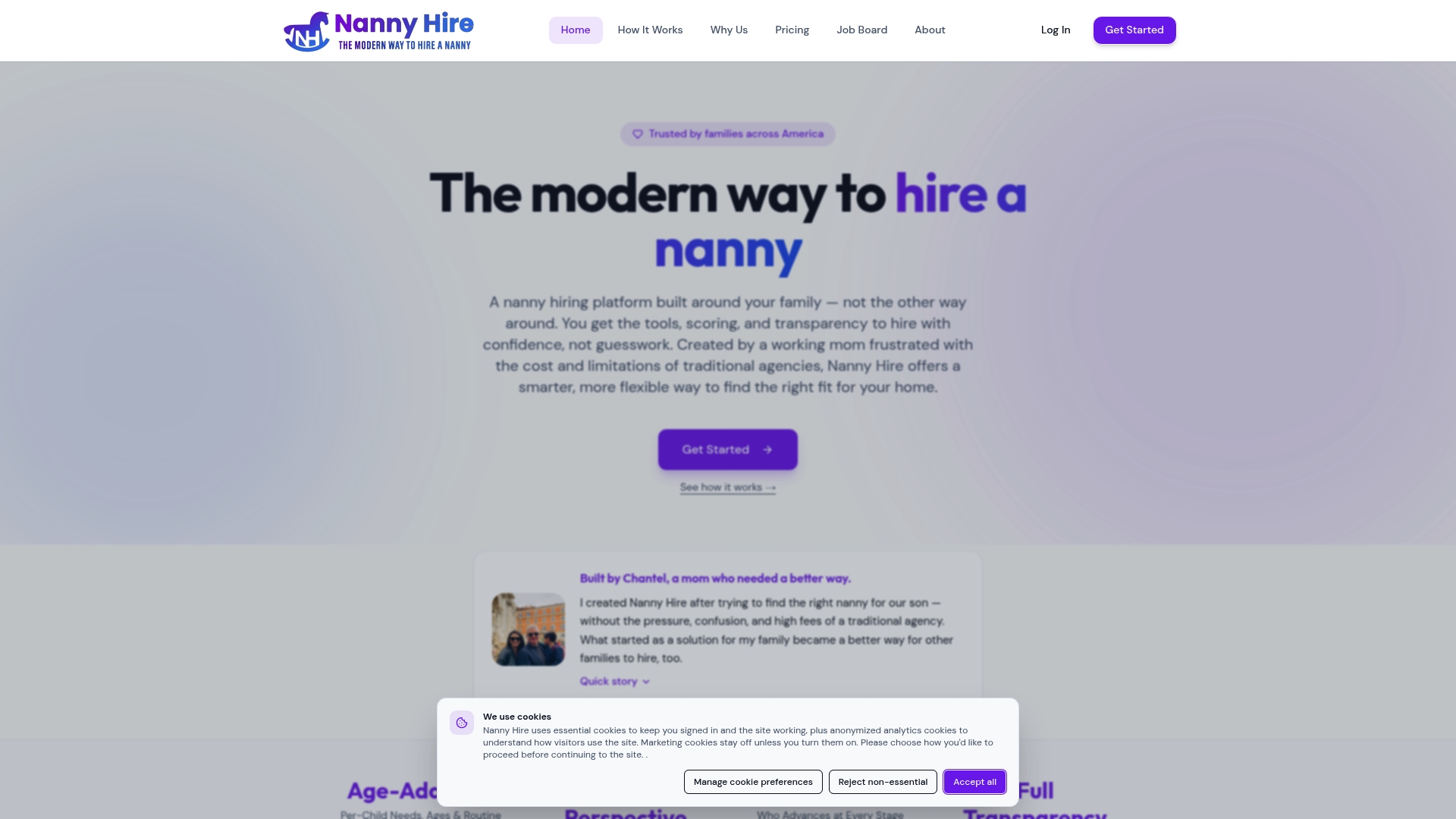
Nannyhire gives you access to vetted nanny profiles with verified certifications, detailed experience records, and reference information built into the process. The platform was created by a working mom who was frustrated with the guesswork of traditional agencies, so every tool is designed to give you transparency and control. Browse the Nannyhire job board to connect with qualified candidates who match your family's specific needs, and use the built-in screening tools to evaluate fit before you ever schedule an interview.
FAQ
What certifications should a nanny have in 2026?
A professional nanny should hold current CPR and First Aid certifications from a recognized body like the American Red Cross. These must be renewed every two years to meet current professional standards.
How much experience should a nanny have?
A minimum of 2–3 years of relevant childcare experience is recommended. Experience with your child's specific age group matters more than total years in the field.
How do I verify a nanny's reliability before hiring?
Request detailed references from at least two previous families and conduct a paid trial period of one to two weeks. Consistent employment history with long-term placements is the strongest indicator of reliability.
What personality traits should I look for in a nanny?
Patience, calm under pressure, flexibility, and proactive communication are the core traits that define an exceptional nanny. Look for warmth balanced with appropriate, consistent boundaries.
How important is family fit when choosing a nanny?
Family fit is critical to long-term success. Shared values around discipline, nutrition, and communication style reduce daily conflict and create a stable, consistent environment for your child.