

Ending a nanny job professionally means leaving on good terms through respectful communication, appropriate notice, and thoughtful transition planning. The industry term for this process is a "professional nanny exit," and it carries real weight. Most nanny arrangements last between 2 and 7 years, making your departure a significant life event for the children and family you serve. How you leave shapes your professional reputation, your references, and your next opportunity. Nannyhire supports nannies through every stage of their career, including the moments that feel hardest to navigate.
How to end your nanny job professionally: the core framework
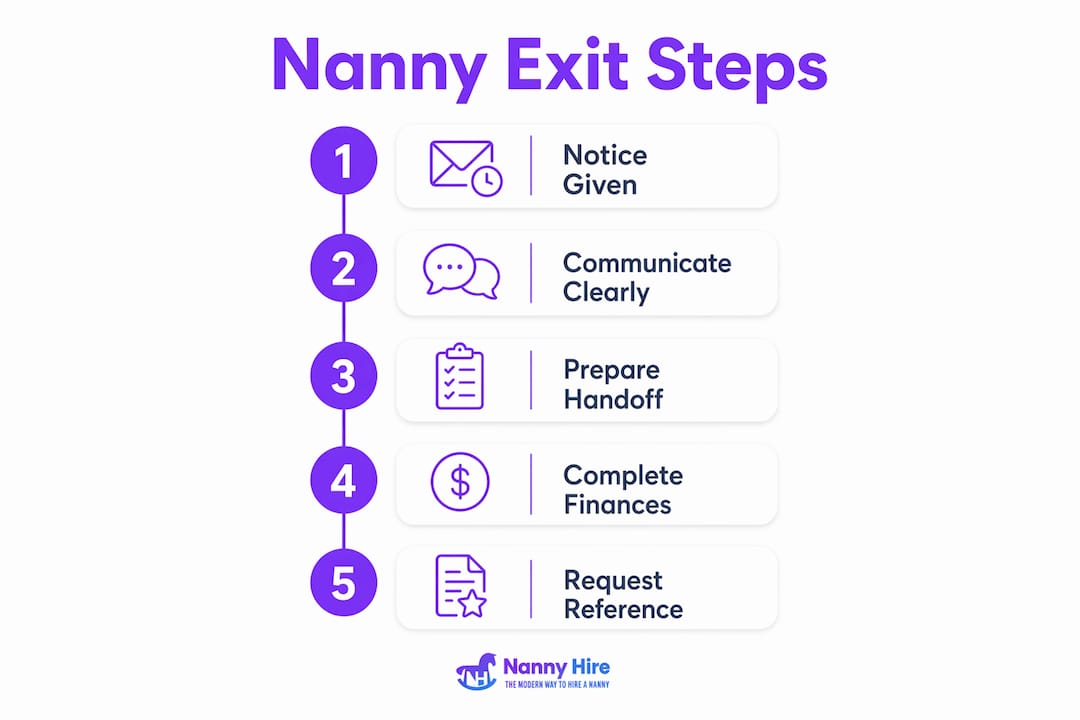
A professional nanny exit rests on three pillars: adequate notice, clear communication, and a well-prepared handoff. Skip any one of these and the transition becomes harder for everyone, including you. Families rely on continuity of care, and children feel disruption deeply. Your goal is to make the change as smooth as possible while protecting your own professional standing.
The notice period is the first decision you make. Professional nannies give 30 days' notice rather than the standard two weeks common in other industries. Thirty days gives the family time to search for a replacement, conduct interviews, and prepare the children emotionally. It also signals that you take your role seriously. If your work agreement specifies a different notice period, that contract term takes priority.

Your employment contract is the first document to review. Check for any clause that defines notice requirements, severance, or conditions for early termination. Legal requirements around notice, pay in lieu, and severance vary by state and by the terms of your individual agreement. Understanding your rights before you give notice protects you from disputes later.
Pro Tip: Review your work agreement and note your agreed notice period before you say a word to the family. Knowing your contractual position gives you confidence and prevents misunderstandings.
Key factors that determine your ideal notice timeline:
- Contract terms: Your written agreement is the legal baseline.
- Children's ages: Younger children need more time to adjust to a new caregiver.
- Family circumstances: A family with a newborn or a child with special needs may need extra time.
- Your start date at a new job: Balance your obligations to both parties honestly.
- Relationship depth: A longer tenure warrants a longer notice period out of respect.
How do you communicate your resignation to the family?
Written resignation paired with a face-to-face conversation is the gold standard for ending childcare employment gracefully. A phone call or text message alone signals that you do not take the relationship seriously. Request a private meeting with the parents, away from the children, and deliver your news calmly and directly.
Parents often react with mixed emotions including sadness, anger, or denial when a nanny resigns. That reaction is not a personal attack. It reflects how much they trusted you. Your job in that moment is to stay calm, listen, and hold your professional position without becoming defensive or apologetic to the point of reversing your decision.
Follow the conversation with a formal resignation letter. The letter creates a clear record and removes ambiguity about your last day. A strong resignation letter includes:
- Your last working day: State the exact date. Do not leave it open-ended.
- A brief, neutral reason for leaving: "I am pursuing a new opportunity" or "I am relocating" works well. You do not owe a detailed explanation.
- Genuine appreciation: Name one or two specific things you valued about the role or the family.
- An offer to help with the transition: Keep this realistic. Offer what you can actually deliver.
- Your contact information: Make it easy for them to reach you during the notice period.
Avoid blaming the family, criticizing their parenting, or listing grievances. Even if the relationship was difficult, a neutral and warm letter protects your reputation. Future employers often ask for references from previous families, and your letter sets the tone for that conversation.
Pro Tip: Write your resignation letter before the face-to-face meeting. Having it ready to hand over immediately after the conversation reinforces your seriousness and prevents the discussion from dragging on without resolution.
How do you prepare a smooth handoff to the next caregiver?
Practical preparation is what separates a professional exit from a graceful one. Providing detailed care notes and helping introduce a successor is one of the most valued things a departing nanny can do. Families remember this kind of generosity, and it directly affects the quality of the reference they give you.
Start building your transition documents in the first week after giving notice. Do not wait until your final days.
- Daily schedule: Write out the children's full routine, including nap times, meal preferences, and after-school activities.
- Medical contacts: List the pediatrician, any specialists, and the pharmacy the family uses.
- Behavioral notes: Document each child's triggers, comfort strategies, and current developmental stage.
- Emergency procedures: Confirm where the family keeps emergency contacts, insurance cards, and first aid supplies.
- Household logistics: Note where supplies are stored, how appliances work, and any recurring tasks the new caregiver will inherit.
A clear scope of work document is especially useful here. It gives the incoming caregiver a complete picture of the role from day one.
| Transition task | Recommended timing |
|---|---|
| Write care notes and daily schedule | Week 1 of notice period |
| Organize children's belongings and contacts | Week 2 of notice period |
| Offer to meet successor nanny | Week 3 if family has hired one |
| Focus final days on quality time with children | Final 3–5 days |
Your last days should focus on quality time with the children, not chores or administrative tasks. Plan activities the children love. Create positive memories. A calm, warm farewell helps children process the change without anxiety.
What financial and legal steps should you take before leaving?
Closing out your employment responsibly requires attention to money, paperwork, and physical handoffs. These steps protect you legally and financially, and they signal that you are a trustworthy professional.
Key administrative steps to complete before your last day:
- Confirm your final paycheck: Verify the exact amount owed, including any accrued vacation pay. State laws govern when final pay must be delivered, so know your state's rules.
- Clarify severance: Some families offer severance pay, especially after a long tenure. Review your contract and have a direct conversation if this applies to you.
- Resolve tax and payroll records: If you were paid legally as a household employee, confirm that your W-2 or final pay stub reflects accurate earnings. The legal payroll process matters for your tax filing and any future unemployment claims.
- Return all property: Hand back keys, access cards, garage openers, and any equipment the family provided. Get verbal or written confirmation that the return is complete.
- Secure your reference: Ask the parents directly whether they are willing to serve as a reference. Confirm the best contact method for future employers. Understanding the reference check process helps you set expectations on both sides.
- Understand your rights: Nannies are household employees with legal protections. Reviewing your household employee rights before your last day prevents you from leaving money or protections on the table.
Avoid leaving without completing these steps. An abrupt exit, even from a difficult situation, can create legal disputes and damage the professional reputation you have built.
Key takeaways
Ending a nanny job professionally requires adequate notice, respectful communication, and a thorough handoff that protects both your reputation and the children's wellbeing.
| Point | Details |
|---|---|
| Give 30 days' notice | Thirty days is the professional standard and gives families time to find a replacement. |
| Communicate in person and in writing | A face-to-face conversation followed by a formal letter creates clarity and professionalism. |
| Prepare detailed transition documents | Care notes, schedules, and medical contacts make the handoff smooth for the incoming caregiver. |
| Resolve all financial and legal matters | Confirm final pay, return property, and secure your reference before your last day. |
| Prioritize the children's emotional experience | Spend your final days on quality time, not tasks, to give children a positive farewell. |
Leaving well is a career skill, not just a courtesy
I have seen nannies walk out of positions without a word of notice, convinced the family did not deserve better. I understand that impulse. Some situations are genuinely hard. But every time I have watched a nanny leave that way, the cost showed up later in a missing reference, a gap in their professional story, or a reputation that quietly followed them into the next interview.
The truth is that how you leave a job says more about your professionalism than how you performed in it. Families talk to each other. The childcare community in most cities is smaller than you think. A warm, organized exit leaves people saying, "She was incredible right up to the last day." That sentence is worth more than any grievance you might have wanted to air.
Taking a short break between positions is advice I give every nanny I know. Even two or three days off before starting a new role helps you reset emotionally. Nanny work is intimate. You carry those children with you when you leave. Give yourself space to feel that before you walk into a new family's home.
The families who receive a professional exit also tend to become your strongest advocates. I have seen families write glowing references, refer nannies to their networks, and even send holiday cards years later, all because the nanny left with grace. That goodwill is real, and it compounds over a career.
— Chantel
Ready for your next nanny role? Nannyhire can help
Ending one chapter well sets you up to start the next one strong. Once you have given your notice and prepared your transition documents, the practical next step is finding a position that fits your skills and schedule.
Nannyhire's open nanny job board lists current positions across the country, with transparent details on pay, hours, and family expectations. You can browse listings, build your candidate profile, and connect with families who are actively hiring. Nannyhire was built by a working mom who understood that good nannies deserve a better way to find the right fit. Whether you are looking for your next long-term role or a shorter placement while you plan your next move, the platform gives you real tools and real options.
FAQ
How much notice should a nanny give when resigning?
The professional standard is 30 days' notice, which gives families adequate time to find and hire a replacement caregiver. Two weeks is the minimum, but longer tenure typically warrants a longer notice period.
Should a nanny give a written resignation letter?
Yes. A written resignation letter with a clear final date is a core part of resigning from a nanny role professionally. It creates a record, prevents misunderstandings, and reinforces your commitment to a respectful exit.
What should a nanny do on her last day?
Nannies' final days are best spent on quality time with the children rather than chores or administrative tasks. Focus on activities the children enjoy and create positive, calm memories to ease the transition.
Can a nanny ask for a reference when leaving?
Absolutely. Asking for a reference is a standard and professional step when ending childcare employment. Confirm the parents' willingness and preferred contact method before your last day so future employers can reach them easily.
What financial steps should a nanny complete before leaving?
Confirm your final paycheck amount, clarify any accrued vacation pay, resolve payroll records, and return all family property. Reviewing your nanny employment rights before your last day protects you from leaving compensation or legal protections unclaimed.