

Registering with a nanny agency or structured hiring platform is worth it for most families who need a full-time caregiver, value thorough vetting, and want a replacement guarantee if the first hire doesn't work out. Using an agency can save parents a significant amount of time compared with managing the full process themselves. That time savings alone makes registration compelling for dual-career households. Add in criminal background checks, verified references, and built-in trial management, and the value compounds quickly.
Who benefits most:
- Dual-career parents with limited time to post, screen, and interview candidates
- Families hiring a full-time nanny for the first time and unfamiliar with employer obligations
- Households with specific safety requirements (infant care, children with medical needs)
- Parents who want a replacement guarantee if the placement doesn't last
Table of Contents
- What registering with a nanny agency actually involves
- 8 key benefits families gain from registering
- What families typically pay and how long the process takes
- How to evaluate an agency or hiring platform
- Alternatives to agency registration and when they make sense
- What to expect after you register: trials, paperwork, and U.S. employer basics
- Why structured placement reduces the real cost of a failed hire
- Key Takeaways
- The case for transparency over convenience
- Nannyhire gives you agency-level benefits at a flat fee
- Helpful sources and government resources
What registering with a nanny agency actually involves
"Registration" isn't just creating an account. It's a structured intake process that shapes every step that follows. Here's what it typically looks like:
- Profile and needs assessment — You describe your household, children's ages, schedule, and care requirements. Better platforms use age-adaptive assessments to match candidates to your children's developmental stage.
- Job post creation — The agency or platform drafts or guides you through a detailed job description that attracts qualified candidates and filters out poor fits before the first application arrives.
- Candidate sourcing and vetting — The platform screens applicants against your criteria. At minimum, basic screening covers criminal background, identity, and work eligibility verification. Optional add-ons typically include driving-record checks and CPR certification confirmation.
- Shortlist and scoring — You receive a curated list of pre-screened candidates, often with structured scoring across safety, child development, and caregiving competencies.
- Interview scheduling — The platform coordinates availability and manages calendar logistics so you're not chasing candidates directly.
- Trial management — A paid trial period is arranged and documented before a final agreement is signed.
- Paperwork templates — Work agreements, offer letters, and onboarding documents are provided or built through the platform.
One important distinction: when an agency employs the nanny directly, the agency handles payroll, tax withholding, and workers' compensation. When you hire through a platform as the employer of record, those responsibilities shift to your household. Know which model you're signing up for before you register.
8 key benefits families gain from registering
1. Structured vetting you can't easily replicate on your own Agencies verify identity, run criminal checks, and confirm certifications. A platform with three-perspective scoring — safety, child development, and caregiving — gives you a more complete picture than a resume ever could.

2. Time savings of 40+ hours Posting, screening, scheduling, and reference-checking a nanny from scratch is a part-time job. Structured platforms compress that timeline dramatically, handling the labor-intensive steps so you don't have to.
3. Verified reference checks Calling references without a framework produces vague answers. A structured reference check process asks the right questions and documents responses, giving you real signal rather than polite endorsements.
4. Replacement guarantees Traditional agencies typically offer a replacement if a placement doesn't work out within a defined window. That guarantee reduces the financial and emotional cost of starting over.
5. Trial period management A paid trial of 1–2 weeks is widely regarded by practitioners as the most effective way to assess real-world fit before committing to a long-term agreement. Platforms that build this into the process make it easy to structure and document.
6. Employment compliance support Agencies and platforms often provide agreement templates, payroll guidance, and pointers to employer obligations like EIN setup and Form I-9 completion. That support is especially valuable for first-time household employers.
7. Privacy and data security Reputable platforms handle candidate data under defined privacy policies, reducing your exposure compared with managing applicant information across personal email threads and spreadsheets.
8. Dispute resolution and ongoing support If a conflict arises during employment, having a platform or agency as an intermediary gives you a structured path to resolution rather than navigating it alone.
Structured placement processes reduce the frequency and cost of repeated short-term hires by addressing fit through vetting, trials, and guarantees — rather than treating each hire as a fresh start.
Pro Tip: Use the trial period to test specific scenarios, not just daily routines. Ask the nanny to handle a sick-day morning, a schedule change, or an unexpected situation. Those moments reveal judgment and communication style far better than a normal week.
What families typically pay and how long the process takes
Agency placement fees typically run 10–20% of the nanny’s first-year salary or a flat fee often between $2,000 and $5,000+. Flat-fee platforms tend to be more predictable for families budgeting in advance.
| Fee type | What it covers | Sample range | When billed |
|---|---|---|---|
| Flat platform fee | Full hiring process, screening, tools | $2,000–$5,000+ | At registration or checkout |
| Percentage placement fee | Sourcing, vetting, guarantee | 10–20% of first-year salary | On placement |
| Background check add-on | Criminal, identity, driving record | — | At request |
| Reference verification package | Structured calls, documented results | — | At request |
Typical timeline milestones:
- Day 1–3: Registration, needs assessment, job post live
- Week 1–2: Candidate sourcing and initial screening
- Week 2–3: Shortlist delivered, interviews scheduled
- Week 3–4: Interviews completed, paid trial arranged
- Week 4–6: Trial period (1–2 weeks), offer extended
- Week 6–8: Work agreement signed, start date confirmed
Specialized requirements (infant care, children with disabilities, live-in arrangements) and limited local candidate pools can add one to three weeks. Moving quickly through interviews on your end is the single biggest factor you control.
How to evaluate an agency or hiring platform
Not every platform delivers what it promises. Use this checklist before you register:
Verification items:
- Screening steps are described in writing, not just mentioned verbally
- Background check provider is named and consent process is documented
- Reference checks follow a structured format (not just "we call references")
- Trial period management is included, not an afterthought
- Replacement guarantee terms are spelled out with a clear window and conditions
Key questions to ask:
- Who employs the nanny — the agency or our household?
- What happens if the placement doesn't work out in the first 90 days?
- How is candidate data stored and who has access to it?
- Who conducts background checks, and which databases do they search?
- What does the agreement template cover, and is it customizable?
Red flags to watch for:
- Fees are vague or only disclosed after you've committed
- Screening is described as "thorough" with no specifics
- No replacement guarantee or a guarantee with so many conditions it's effectively unusable
- No published process, timeline, or sample documentation
For interview preparation and deeper vetting questions, published guides from the platform itself are a good trust signal. If the platform can't point you to documented processes, that tells you something.
Alternatives to agency registration and when they make sense
Registration isn't the right path for every family. Here's an honest look at the options:
- DIY hiring — You post on job boards, screen applicants, and manage the full process yourself. Lower cost, full control, but significantly more time and admin burden. Best for families with flexible schedules, strong local networks, or occasional/part-time care needs.
- Personal or network referrals — A trusted recommendation from another family can shortcut the search. The trade-off is limited candidate pool and no formal vetting unless you run checks yourself.
- Self-serve online platforms — Subscription-based sites let you browse profiles and filter by certifications and availability. Lower cost than a full agency, but screening depth and replacement support vary widely. For a detailed comparison, the independent nanny vs. agency breakdown covers the trade-offs clearly.
| Factor | DIY | Self-serve platform | Agency/structured platform |
|---|---|---|---|
| Cost | Lowest | Medium | 10–20% of first-year salary or $2,000–$5,000+ |
| Time investment | Highest | Medium | Lowest |
| Vetting depth | You control | Varies | Structured |
| Replacement guarantee | None | Rarely | Usually included |
| Compliance support | None | Minimal | Often included |
Registration makes the most sense when you're hiring full-time, need deep vetting, or simply don't have 40+ hours to spare.
What to expect after you register: trials, paperwork, and U.S. employer basics
Once you register and receive a shortlist, the process moves quickly. Here's what comes next:
- Candidate interviews — Use a structured format. Prepare scenario-based questions in advance.
- Paid trial period — Arrange 1–2 weeks before signing a long-term agreement. Document observations daily.
- Work agreement — Cover hourly rate, schedule, overtime, PTO, sick leave, and termination notice. Both parties sign.
- U.S. employer setup — You'll need to obtain an EIN from the IRS, complete Form I-9 for work eligibility, collect a signed W-4, and register for state unemployment insurance. Most states also require workers' compensation coverage for household employees.
The IRS treats your home as a place of business once you hire household staff. Getting your EIN before your nanny's first day keeps you compliant from day one and avoids penalties on payroll tax filings. Apply at IRS.gov — it takes about 15 minutes online.
Reputable platforms protect applicant data under defined privacy policies and provide a clear escalation path if a dispute arises during employment. Ask specifically how the platform handles mediation before you need it.
Why structured placement reduces the real cost of a failed hire
Experts consistently note that families underestimate the long-term cost of a failed hire. It's not just the replacement fee. It's the disruption to your children's routine, the weeks of re-screening, and the productivity loss while you manage the gap. Structured placement processes address fit through vetting, trials, and guarantees — reducing the likelihood of cycling through short-term placements.
The Nannyhire platform was built on exactly this principle. Chantel, the founder and author of the Nanny Hire blog, created the platform after experiencing firsthand how traditional agency models left families with high fees, limited transparency, and no real tools to evaluate fit. The platform's scoring framework, trial management tools, and agreement builder are direct responses to the gaps that cause failed hires.
Key Takeaways
Registering with a structured nanny agency or platform gives families faster hires, deeper vetting, and meaningful protection against the cost of a failed placement.
| Point | Details |
|---|---|
| Time savings are substantial | Using a structured platform can save families upward of 40 hours versus a full DIY process. |
| Vetting depth matters | Minimum checks should cover criminal background, identity, and work eligibility; add driving records and CPR as needed. |
| Paid trials reduce risk | A 1–2 week paid trial is the most effective way to confirm fit before signing a long-term agreement. |
| Fees vary by model | Flat-fee platforms charge $2,000–$5,000+; percentage-based agencies charge 10–20% of nanny’s first-year salary. |
| Nannyhire delivers agency-level benefits | Nannyhire offers structured screening, trial management, and a transparent flat fee without the traditional agency markup. |
The case for transparency over convenience
There's a version of this conversation that makes agency registration sound like a luxury. I'd push back on that. The families I hear from most often aren't looking for someone to do everything for them. They want to make a good decision without spending weeks in a process they weren't trained for. That's a different thing entirely.
What I've seen change hiring outcomes isn't the fee structure or the candidate pool size. It's whether the family had a real framework to evaluate what they were seeing. A structured scoring system, a documented reference call, a trial week with clear criteria. Those things turn a gut-feeling hire into a defensible one. And when something goes wrong with a gut-feeling hire, there's no safety net. When something goes wrong with a structured placement, there's a replacement guarantee and a paper trail.
The families who benefit least from registration are the ones who already have a trusted candidate in mind and just need help with paperwork. For everyone else, especially first-time household employers, the structure is the point.
Nannyhire gives you agency-level benefits at a flat fee
Hiring a nanny through a traditional agency often means paying a percentage of your nanny's first-year salary, working with a limited candidate pool, and getting little visibility into how candidates were actually evaluated. Nannyhire was built to change that.
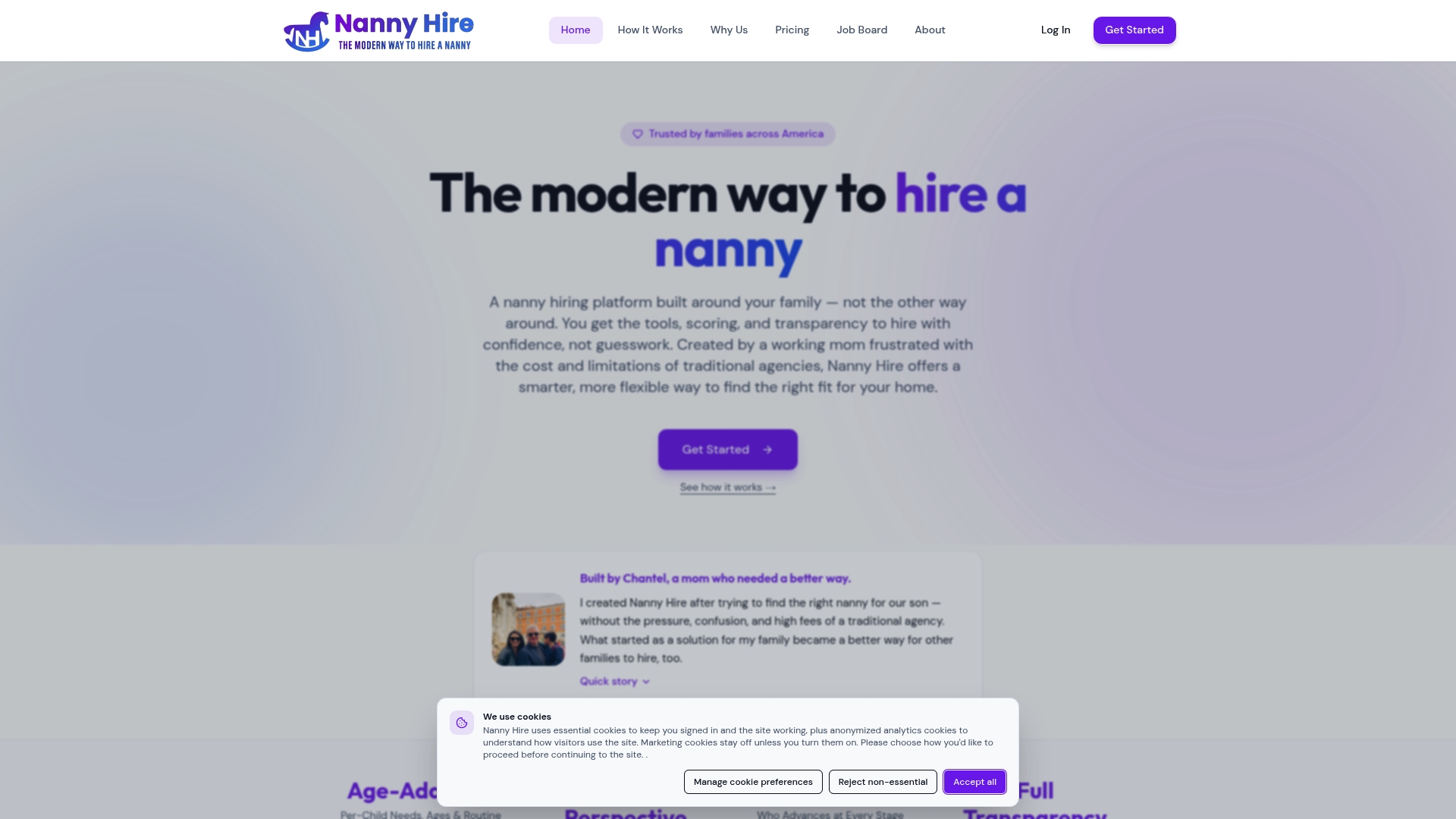
For a transparent flat fee, you get age-adaptive family assessments, a custom job post, structured candidate screening scored across safety, child development, and caregiving competencies, side-by-side candidate comparison, verified reference checks, a built-in agreement builder, and integrated trial management. Background checks are available as add-ons when you need them. No percentage fees. No opaque processes.
Ready to hire with confidence? Start your search on Nannyhire and see matched candidates without the traditional agency markup.
Helpful sources and government resources
Use these to verify agency claims and handle your employer obligations:
- Nanny Institute — How to Hire a Nanny — Practitioner guidance on screening standards, trial periods, and placement best practices.
- Fit Small Business — Agency vs. Private Hire — Clear breakdown of employer responsibilities depending on hiring model.
- LegalClarity — Nanny Taxes and Forms — Practical walkthrough of household employer obligations, state unemployment registration, and workers' compensation requirements.
- IRS — Apply for an EIN — Apply online in about 15 minutes before your nanny's first day.
- IRS Schedule H — The form household employers use to report Social Security, Medicare, and federal unemployment taxes annually.
When evaluating any agency or platform, match their described screening steps against published standards from sources like the Nanny Institute. If an agency claims "thorough vetting" but can't point to a documented process, treat that as a gap, not a given.