

A nanny professional network is an organization dedicated to elevating in-home childcare through training, credentialing, codes of ethics, and community support for childcare providers. These networks are the backbone of professional standards in the nanny industry. For parents, understanding what a nanny professional network offers is the fastest way to find reliable, vetted childcare. Two of the most recognized bodies in the United States are the International Nanny Association (INA) and the US Nanny Association (USNA). Both set the bar for what qualified, trustworthy in-home care looks like in 2026.
What does a nanny professional network provide?
A nanny professional network is an association or organization dedicated to elevating in-home childcare by providing training, codes of ethics, and credentialing programs. That definition matters to you as a parent because it means these organizations do the vetting work before a nanny ever walks through your door.
The services these networks offer go well beyond a simple membership card. Here is what reputable nanny professional associations typically provide:
- Professional training programs: Structured courses covering child development, safety protocols, and age-specific care techniques.
- Credentialing pathways: Formal processes that verify a nanny's experience, background, and skills through exams and documentation.
- Codes of ethics: Written standards that hold members accountable for professional behavior and care quality.
- Community and peer support: Forums, local chapters, and online groups where nannies share knowledge and support each other.
- Legal and regulatory guidance: Resources on employment law, contracts, and tax obligations relevant to in-home childcare.
- Events and continuing education: The International Nanny Association offers members conferences, webinars, and networking opportunities to improve and standardize care quality.
Pro Tip: When interviewing a nanny, ask which professional association they belong to and whether they have attended any network events in the past year. Active participation signals genuine commitment to the profession.
Professional nanny networks are more than social clubs. They provide essential infrastructure like safeguarding updates, legal resources, and peer support that enhance care quality and reduce professional burnout. A nanny who feels supported professionally is more likely to stay engaged, consistent, and attentive in your home.

What are the key nanny credentials and why do they matter?
Credentials and certifications are not the same thing. A certification confirms that a nanny completed a training program. A credential, issued by a professional association, goes further. It requires a separate application process verifying training completion, work experience, background checks, and passing an exam. That distinction is critical for parents who want proof of both knowledge and real-world competence.
The US Nanny Association issues three primary professional credentials:
| Credential | Full Name | Key Requirements |
|---|---|---|
| NCP | Nanny Credential Program | Entry-level; verified training and basic experience |
| NICP | Nanny in Childcare Professional | Intermediate level; additional experience and education hours |
| PNCP | Professional Nanny Credential Program | Senior level; 50 hours collegiate training, 3 years experience, background check, CPR/First Aid, national exam |
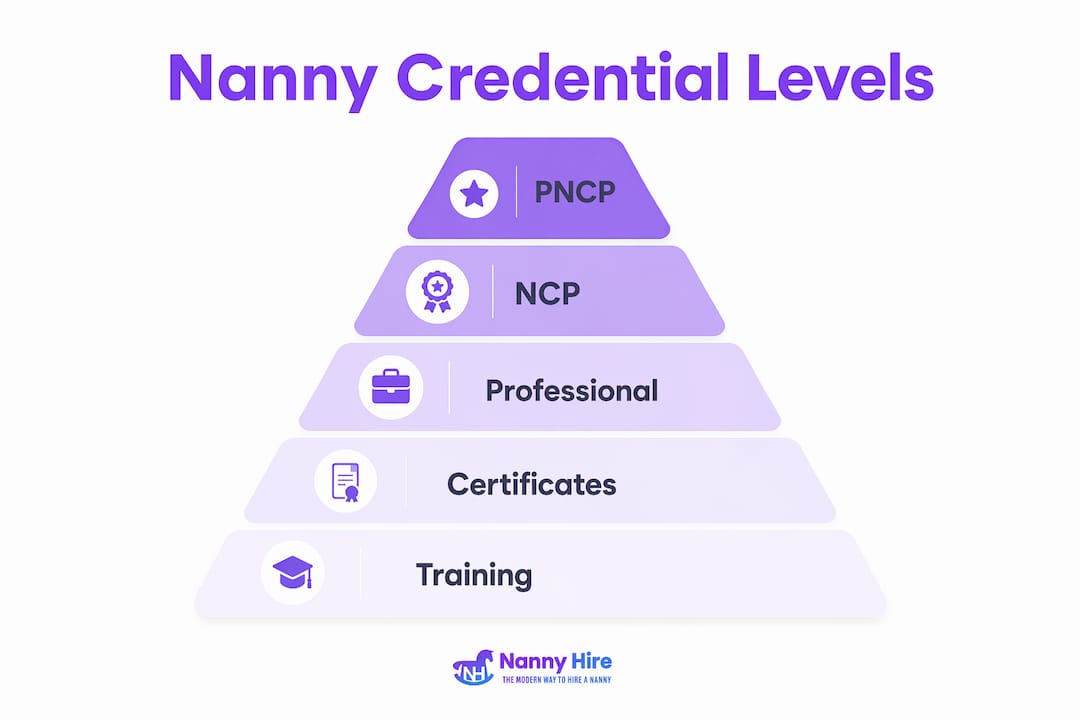
The USNA's PNCP credential represents the highest professional standard in the field. A nanny holding a PNCP has cleared multiple verification layers, not just a single test. For parents hiring for complex situations, such as infants, multiples, or children with special needs, the PNCP is the credential to look for first.
The Nanny Institute's Professional program is worth noting here. It uniquely combines multiple certifications and satisfies the USNA's training requirement for the senior PNCP credential. That makes it an efficient pathway for career nannies who want to reach the highest credential level without duplicating coursework.
Pro Tip: Ask any nanny candidate to show you their credential certificate and the issuing organization's name. You can then verify the credential directly on the association's website before your final hiring decision.
Parents can verify a nanny's professional standing by checking credentials like the PNCP from the US Nanny Association, which requires verified experience, a background check, and passing a national exam. That verification step takes less than five minutes and removes a significant layer of hiring risk.
How do nanny professional networks benefit families?
The clearest benefit for families is access to nannies who have been held to a documented standard. Networks do not just train nannies. They filter out those who cannot meet the bar. That filtering happens before you ever post a job listing or conduct an interview.
Here is how professional networks directly benefit you as a parent:
- Reduced hiring risk: Vetted, credentialed professionals come with verified experience and ethical commitments, which lowers the chance of a poor hire.
- Clearer screening criteria: Credential levels give you a concrete benchmark. A nanny with a PNCP has met requirements that a nanny without any credential has not.
- Better reference quality: Nannies active in professional networks often have references from other network members, not just former employers. Those peer references carry real weight.
- Ongoing accountability: Network members must maintain their standing. That means continuing education, ethical compliance, and sometimes periodic recredentialing.
- Post-placement support: Some networks offer resources to both families and nannies after placement, helping resolve conflicts and maintain professional relationships.
- Access to nanny references best practices: Networks educate nannies on professional conduct, which makes your reference-checking conversations more structured and informative.
The practical result is a shorter path from "I need a nanny" to "I trust the person in my home." That matters enormously when you are leaving your child with someone for eight or more hours a day.
How can parents and nannies join and use these networks?
Finding and using a reputable nanny professional association is straightforward when you know the steps. Parents and nannies approach these networks differently, but the process is accessible for both.
-
Identify reputable networks. Start with the International Nanny Association and the US Nanny Association. Both have public websites where you can search for credentialed members, review their standards, and access parent resources.
-
Verify credentials before hiring. Once a nanny provides their credential number or certificate, go directly to the issuing association's website and confirm it is current. This step takes minutes and confirms the credential is not fabricated.
-
For nannies: apply for membership. Most associations require proof of employment history, training certificates, a background check, and professional references. The USNA credential application also requires passing a national exam.
-
Attend or encourage attendance at network events. The INA hosts annual conferences and regular webinars. Nannies who attend stay current on child development research, safety updates, and legal changes. You benefit directly from that knowledge.
-
Use network resources for ongoing education. Many associations publish guides on topics like child safety requirements, contract templates, and age-specific care strategies. These resources help you set clear expectations from day one.
-
Avoid networks without published standards. A legitimate professional association publishes its code of ethics, credentialing requirements, and membership criteria publicly. If you cannot find those documents, treat the network with caution.
Pro Tip: When you post a nanny job listing, include a line stating that preference will be given to candidates with active membership in a recognized professional association. This filters your applicant pool before the first interview.
A common pitfall is confusing a nanny agency with a professional network. Agencies place nannies for a fee. Professional networks set and enforce standards for the profession. The two can work together, but they serve different functions. Knowing the difference helps you ask better questions and make smarter hiring decisions.
Key Takeaways
A nanny professional network is the most reliable way for parents to access childcare providers who meet documented standards of training, experience, and ethics.
| Point | Details |
|---|---|
| Definition of nanny networks | Professional associations like the INA and USNA set training, ethics, and credentialing standards for in-home childcare. |
| Credentials vs. certifications | Credentials require verified experience, background checks, and exams; certifications confirm training completion only. |
| PNCP is the top credential | The USNA's PNCP requires 50 hours of collegiate training, 3 years of experience, CPR/First Aid, and a national exam. |
| Family benefits | Credentialed nannies reduce hiring risk and give parents a concrete, verifiable benchmark for professional quality. |
| How to use networks | Verify credentials directly on association websites and prioritize candidates with active network membership. |
Why I think credential verification changes everything for parents
I have spoken with hundreds of parents who describe the nanny hiring process as one of the most stressful decisions they have ever made. The anxiety is not about finding someone. It is about trusting someone. That distinction is where professional networks do their most important work.
What I have observed is that parents who prioritize credential-verified nannies report a noticeably different hiring experience. They ask sharper questions. They feel less pressure to take the first available candidate. They have a framework for comparison that goes beyond gut instinct. That framework comes directly from understanding what credentials like the PNCP actually require.
The other thing I believe strongly is that professional networks reduce burnout in nannies, and that benefits families more than most parents realize. A nanny who has peer support and community resources is less likely to leave a placement abruptly. Stability in your childcare arrangement is not a luxury. It is a foundation for your child's sense of security.
My honest recommendation: treat a nanny's professional network membership the same way you would treat a professional license in any other field. It is not a bonus. It is a baseline. Parents who set that standard from the start of their search consistently end up with better outcomes. And if you want to understand what nanny experience really means beyond credentials, that context makes the whole picture clearer.
— Chantel
How Nannyhire connects you with credentialed nannies
Finding a nanny who meets professional network standards should not require hours of manual research.
Nannyhire was built by a working mom who understood exactly how broken the traditional hiring process felt. The platform uses age-adaptive screening and three-perspective scoring to match families with nannies whose experience, background, and values align with your specific needs. Every candidate on the Nannyhire job board goes through a structured screening process that reflects the same standards professional associations promote. You get transparency, verified information, and the confidence to make a hiring decision without second-guessing yourself. See how Nannyhire works and find the right fit for your family today.
FAQ
What is a nanny professional network?
A nanny professional network is an association that supports in-home childcare providers through training, credentialing, codes of ethics, and community resources. The International Nanny Association and the US Nanny Association are the two most recognized examples in the United States.
How do I verify a nanny's professional credentials?
Go directly to the issuing association's website, such as the US Nanny Association, and search for the nanny's credential by name or certificate number. The PNCP, NCP, and NICP credentials from the USNA are all verifiable through their official registry.
What is the difference between a nanny certification and a nanny credential?
A certification confirms that a nanny completed a training program. A credential, issued by a professional association, additionally requires verified work experience, a background check, and passing a national exam.
Do professional network memberships benefit families or just nannies?
Both benefit. Families gain access to vetted professionals with documented standards, while nannies receive ongoing education and peer support that reduces burnout and improves care quality.
How do I find nannies who belong to professional associations?
Ask directly during the interview process, or use a hiring platform like Nannyhire that screens candidates against professional standards. You can also search member directories on the INA and USNA websites to find credentialed nannies in your area.