

Special needs nanny qualifications are the certifications, training, and verified competencies that confirm a caregiver can safely and compassionately support children with developmental, medical, and behavioral needs. Finding the right person is one of the most important decisions you will make for your child. This guide breaks down exactly what to look for, from pediatric CPR certification and SEND training to background checks and practical caregiving skills, so you can hire with confidence rather than guesswork.
1. Which certifications are essential for special needs nannies?
Pediatric CPR and First Aid certification is the non-negotiable starting point for any special needs caregiver. Pediatric CPR/First Aid is typically valid for about two years and requires renewal. That renewal cycle matters because guidelines update, and a lapsed certificate signals a gap in professional commitment.
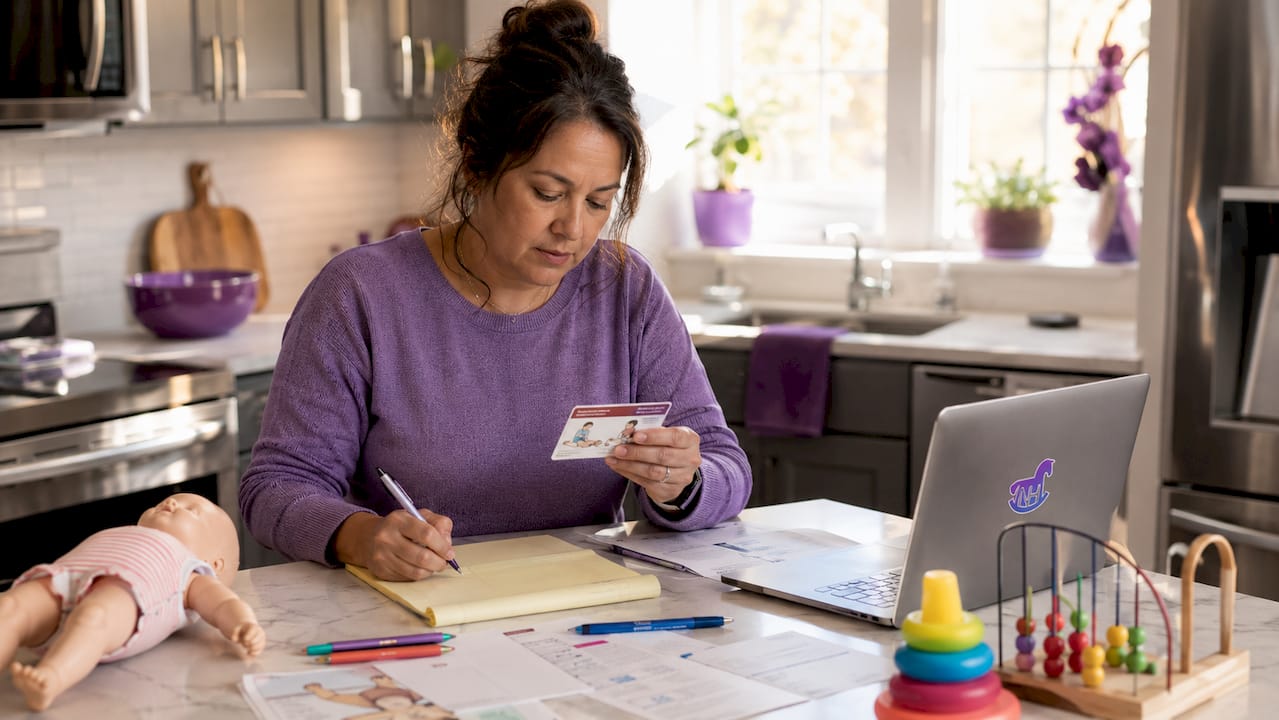
Beyond emergency readiness, look for specialized SEND training. The Level 2 Certificate in SEND covers communication, inclusion, sensory needs, and behavior support. It provides a structured foundation that general childcare courses simply do not offer.
When reviewing certificates, verify the format. Some providers offer blended learning with in-person assessments, while others are fully online. Certain employers and families require in-person components for emergency skills like CPR. Ask the nanny to show the certificate and confirm the issuing body.
- Pediatric CPR and First Aid (infant and child coverage, not adult-only)
- Level 2 Certificate in SEND or equivalent specialized training
- Any condition-specific training relevant to your child (autism, epilepsy, cerebral palsy)
- Proof of renewal dates and issuing organization
Pro Tip: Ask the nanny to confirm whether their CPR certificate covers infant, child, and adult scenarios. An adult-only certificate does not meet the standard for special needs childcare.
2. How do background checks and safeguarding impact nanny qualification?
A background check is a baseline requirement, not a complete safety guarantee. Enhanced DBS checks are required in the UK for roles involving regular contact with children, and self-employed nannies must apply through an umbrella body themselves. In the US, parents should request a comprehensive criminal background check that covers federal, state, and county records.
The critical distinction most parents miss is this: a background check confirms history, not skill. A DBS check does not guarantee that a nanny understands safeguarding or knows how to respond correctly when a child is at risk. Safeguarding training is a separate requirement, and you need to verify both.
A thorough safer recruitment process includes the following steps:
- Verify the nanny's identity with government-issued photo ID.
- Confirm right-to-work status and employment eligibility.
- Request an enhanced background check at the appropriate level for the role.
- Ask for at least two references from previous caregiving positions.
- Confirm completion of safeguarding training and ask for the certificate.
- Review child safety requirements relevant to your state or country.
"A background check improves recruiting safety but does not guarantee understanding of safeguarding or correct response. Specific safeguarding training is still essential." — What a DBS Check Covers
Continuous safeguarding education is equally important. Safeguarding standards evolve, and a nanny who completed training five years ago may not be current. Ask when they last updated their safeguarding knowledge and whether they can provide documentation.
3. What specialized skills and training should parents look for?
Formal certificates tell you what a nanny has studied. Practical skills tell you what they can actually do. The most effective special needs childcare training produces nannies who can follow a child's individual support plan, manage sensory regulation, and use communication aids without needing constant direction from parents.
DSP training in the US typically includes 40–100 hours of preparation covering background checks, CPR and First Aid, abuse reporting, and HIPAA compliance. That training standard gives you a useful benchmark when evaluating a nanny's preparation level. Ask candidates directly how many hours of specialized training they have completed and what topics were covered.
Specialized SEND training enables nannies to provide daily home competencies like communication aids, sensory regulation, and behavior support aligned to a child's plan. General childcare experience does not produce these skills automatically. A nanny who has worked with neurotypical children for ten years may still lack the specific tools your child needs.
Key practical skills to assess during the hiring process:
- Person-centered communication, including the use of AAC devices or PECS systems
- Sensory regulation techniques tailored to the child's profile
- Behavior support strategies aligned to the child's existing therapy plan
- Ability to document observations and report changes accurately
- Experience coordinating with speech, occupational, or physical therapists
Pro Tip: During the interview, describe a specific scenario your child experiences, such as a meltdown triggered by sensory overload, and ask the candidate to walk you through exactly how they would respond. The specificity of their answer reveals their real experience level.
4. How to compare and evaluate special needs nanny qualifications effectively
Not all qualification packages are equal. A nanny with a pediatric CPR certificate and five years of general childcare experience is very different from one with SEND training, DSP-level preparation, and documented experience following therapy plans. The table below helps you compare what to look for across key qualification areas.
| Qualification area | Minimum standard | Strong standard |
|---|---|---|
| Emergency readiness | Pediatric CPR and First Aid, current | Pediatric CPR renewed within 12 months, infant and child coverage confirmed |
| SEND training | General awareness course | Level 2 SEND certificate or equivalent with content mapped to child's needs |
| Background screening | Basic criminal check | Enhanced check plus identity verification and references |
| Safeguarding | Self-reported awareness | Documented training with renewal date |
| Practical experience | General childcare | Documented experience with child's specific diagnosis or support needs |
| Ethics and documentation | Not assessed | Training in confidentiality, reporting, and person-centered care |
Parents should evaluate nanny experience by asking for concrete examples, not just job titles. A candidate who can describe how they adapted a communication strategy for a non-verbal child demonstrates real competency. One who lists years of experience without specifics may not have the depth you need.
Proof of SEND training, pediatric emergency readiness, and enhanced background screening are the three core pillars of a qualified special needs nanny. Treat any gap in these three areas as a red flag, not a minor concern.
5. Which additional credentials can strengthen a nanny's qualifications?
Beyond the core requirements, several additional credentials signal a nanny who takes professional development seriously. These are not mandatory, but they meaningfully increase a candidate's capability and your confidence as a parent.
- Therapy familiarization training: Courses that introduce nannies to speech therapy, occupational therapy, or ABA principles help them reinforce what therapists are working on during home sessions.
- Ethics and confidentiality training: The NADSP Code of Ethics outlines standards for person-centered, confidential, and responsible care in disability caregiving. A nanny familiar with these principles handles sensitive information and documentation correctly.
- Health-specific preparedness: Training in seizure response, tube feeding, or medication administration may be required depending on your child's medical profile. Verify that any health-related training comes from a recognized provider.
- Professional memberships: Membership in organizations like the International Nanny Association signals ongoing engagement with professional standards and continuing education.
- CPR recertification history: A nanny who has renewed their CPR certificate multiple times demonstrates consistent commitment to readiness, not just a one-time checkbox.
Ongoing education matters as much as initial training. DSP training pathways emphasize continuing education and ongoing reassessment to maintain competency. Apply that same standard when evaluating a nanny. Ask what training they have completed in the past 12 months and what they plan to pursue next.
Key takeaways
A qualified special needs nanny holds pediatric CPR certification, verified SEND training, a thorough background check, and documented safeguarding knowledge, with practical skills that match your child's specific support plan.
| Point | Details |
|---|---|
| Certifications are time-sensitive | Pediatric CPR expires in about two years; always verify the renewal date and coverage scope. |
| Background checks are not enough | Safeguarding training is a separate requirement that must be verified independently. |
| SEND training must match your child | Verify that course content maps to your child's specific diagnosis and support needs. |
| Practical skills outweigh certificates | Ask scenario-based questions to confirm real competency beyond what certificates show. |
| Ongoing education signals commitment | A nanny who pursues continuing training is better prepared for your child's changing needs. |
What I've learned about hiring a truly qualified special needs nanny
Certificates matter. They set a baseline and confirm that a nanny has invested in learning. But after years of working with families navigating this process, I can tell you that the certificate is rarely what makes or breaks the placement.
The families who find the best fit are the ones who go beyond the paperwork. They ask the nanny to describe a time a child refused to follow a routine and what they did next. They ask how the nanny would handle a sensory meltdown in a public space. They ask whether the nanny has ever had to advocate for a child during a therapy session. Those answers reveal something no certificate can: whether this person genuinely understands your child's world.
The other thing I see parents underestimate is the importance of ongoing learning. A nanny who completed SEND training three years ago and has done nothing since is not the same as one who actively updates their skills. Children with special needs grow and change. Their support plans evolve. The nanny who keeps pace with that change is the one who provides consistent, high-quality care over time.
Trust your instincts, but ground them in evidence. Ask for specifics. Verify everything. And look for a candidate who treats your child's care as a professional practice, not just a job.
— Chantel
Nannyhire makes finding a qualified special needs nanny easier
Finding a nanny with the right combination of certifications, training, and hands-on experience takes time and a clear process. Nannyhire was built to give you exactly that.
The Nannyhire job board features candidates with verified qualifications, including special needs experience, so you spend less time sorting through unqualified applicants and more time evaluating real fits. You can filter by experience type, review candidate profiles with documented credentials, and use Nannyhire's scoring tools to compare candidates side by side. If you want to see what a strong candidate profile looks like before you start, the sample candidate profile gives you a clear picture of what verified qualifications look like in practice.
FAQ
What certifications does a special needs nanny need?
A special needs nanny needs current pediatric CPR and First Aid certification, specialized SEND training relevant to the child's diagnosis, and documented safeguarding knowledge. Additional health-specific training may be required depending on the child's medical needs.
Is a background check enough to verify a special needs nanny?
A background check is a required baseline but is not sufficient on its own. Safeguarding training must be verified separately, along with identity, references, and relevant caregiving qualifications.
How many hours of training should a special needs nanny have?
DSP training standards in the US typically require 40–100 hours of preparation. Use that range as a benchmark when asking candidates about their total training hours and content areas.
What questions should I ask a special needs nanny in an interview?
Ask scenario-based questions tied to your child's specific needs, such as how they would respond to a sensory meltdown or support a non-verbal child's communication. Concrete scenario examples reveal practical competency far better than certificates alone.
How often should a special needs nanny renew their certifications?
Pediatric CPR and First Aid certification requires renewal approximately every two years. Safeguarding training and SEND knowledge should be updated regularly, and parents should ask candidates what continuing education they have completed in the past year.