
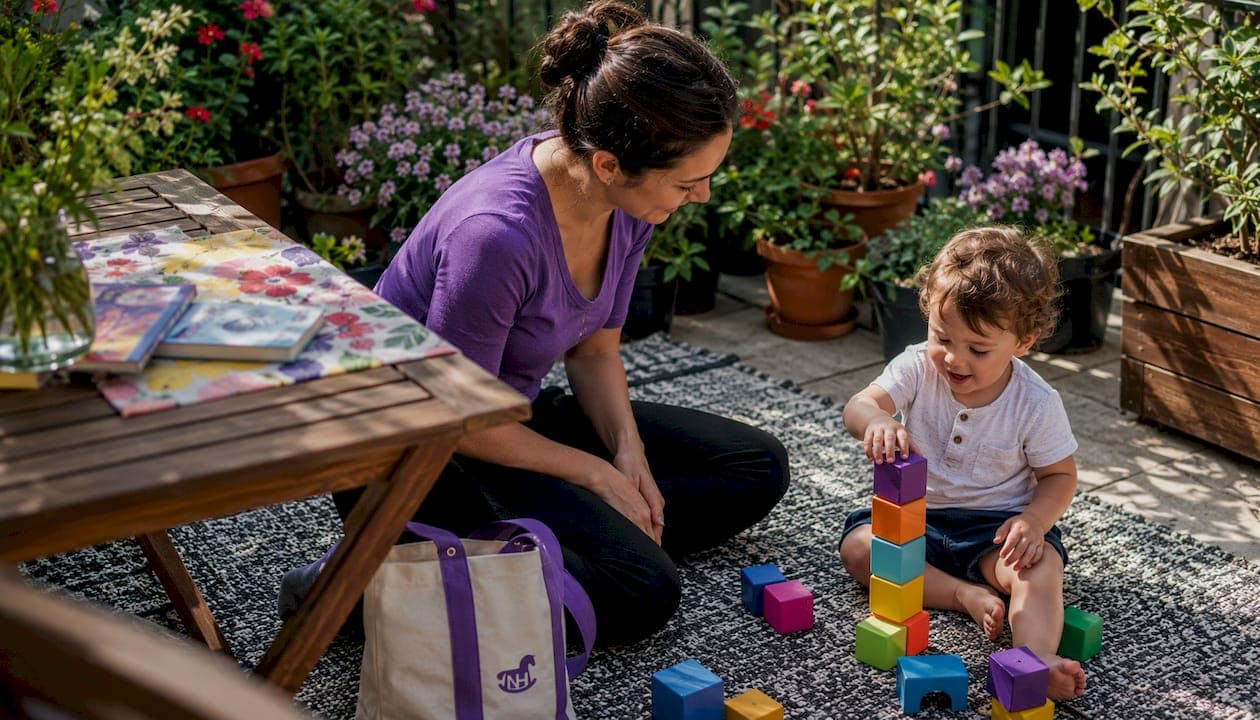
What skills does a qualified toddler care nanny actually need?
The short answer: a skilled toddler nanny brings professional credentials, certified safety training, solid knowledge of developmental milestones, and the soft skills to turn every interaction into a growth opportunity. These aren't nice extras. They're the baseline for safe, nurturing care that actually supports your child's development.
Here's what to look for at a glance:
- Professional credentials: US Nanny Association Certified Nanny status requires at least 2,000 hours of documented paid childcare experience and 20 clock hours of verified training.
- Safety certifications: Current pediatric CPR and First Aid from a recognized body like the American Red Cross, plus safe sleep and hazard prevention knowledge.
- Developmental knowledge: Familiarity with toddler milestones across physical, language, cognitive, and social-emotional domains.
- Purposeful play: The ability to design activities, from block building to playdough, that build motor skills, problem-solving, and language.
- Soft skills: Patience, emotional intelligence, and clear communication with both toddlers and parents.
Pro Tip: When interviewing candidates, ask for a specific example of how they handled a toddler's tantrum or supported a language milestone. Concrete stories reveal real competency far better than general claims.
Table of Contents
- 1. Professional qualifications and safety certifications you should verify
- 2. How developmental milestone knowledge shapes better toddler care
- 3. Nutrition, behavior management, and emotional support skills
- 4. How to assess a nanny's toddler caregiving skills before you hire
- 5. How Nannyhire helps you find nannies with the right toddler skills
- Nannyhire gives you a smarter path to the right toddler nanny
- Key Takeaways
1. Professional qualifications and safety certifications you should verify
Credentials separate professional nannies from casual sitters. The US Nanny Association's Certified Nanny standard is one of the most rigorous benchmarks in the industry: candidates must log at least 2,000 hours of paid childcare experience, complete 20 clock hours of verified training from a reputable organization, pass a background check, and clear a 100-question proficiency exam with a score of 80% or higher. That exam is based on the published National Nanny Standards, and candidates get two attempts.
Beyond the credential itself, safety training is non-negotiable. Federal guidelines mandate that caregivers hold current pediatric CPR and First Aid certification, understand safe sleep practices, recognize signs of child abuse, and know how to prevent indoor and outdoor hazards including water and traffic risks.
When reviewing candidates, ask to see:
- CPR and First Aid certificates with current renewal dates
- Training certificates from accredited organizations
- Pay stubs or employer verification forms documenting work hours
- Background check clearance and tuberculosis screening results
- References from previous childcare employers
Additional certifications in medication administration or allergy management are worth noting, especially if your toddler has specific health needs. A nanny who can show you appropriate documentation, not just describe it, is already demonstrating the transparency you want in your home.
2. How developmental milestone knowledge shapes better toddler care
A nanny who understands toddler developmental milestones doesn't just keep your child safe. She actively supports the growth happening in front of her every day. Between ages one and three, toddlers are building motor control, expanding vocabulary rapidly, learning to regulate emotions, and beginning to reason through simple problems. A nanny who recognizes these stages can respond in real time rather than just react.
Purposeful play is the practical application of that knowledge. Building and knocking down block towers isn't random fun. It teaches cause and effect, spatial reasoning, and persistence. Playdough strengthens fine motor skills and encourages creative decision-making. Sensory bins and simple STEM-inspired activities build concentration and confidence. The difference between a nanny who fills time and one who plans with purpose is visible in how your toddler develops over months.
Key areas where developmental awareness shows up in daily care:
- Adjusting language complexity to match your toddler's current vocabulary stage
- Recognizing when a meltdown signals frustration versus fatigue versus hunger
- Choosing activities that challenge without overwhelming
- Noticing when a child's development seems to lag behind typical milestones
That last point matters more than many parents realize. A nanny with genuine training will flag concerns about developmental delays early, giving you time to consult your pediatrician. For toddlers with diagnosed special needs, look for candidates with experience in inclusive care strategies. Active routines and structured activity planning can make a meaningful difference for children who need additional support.
3. Nutrition, behavior management, and emotional support skills
Feeding a toddler well requires more than heating up a meal. Professional nannies understand how to prepare nutritionally balanced meals suited to toddlers' developmental stage, maintain food safety standards, and model healthy eating habits without turning mealtimes into a battle. Offering a toddler choices within limits ("Do you want peas or carrots?") is both a nutrition strategy and a behavior tool.

Behavior management is where many nannies either shine or struggle. Positive discipline, the approach most child development experts recommend, focuses on redirecting behavior rather than punishing it. A skilled nanny uses consistent routines, clear and simple language, and natural consequences to guide toddlers. She praises specific behaviors ("I love how you put the toys back") rather than vague encouragement, which research in early childhood education consistently links to stronger self-regulation.
Emotional support is equally concrete. Toddlers don't yet have the vocabulary to name what they feel, so a good nanny narrates emotions for them: "You're frustrated because the block fell. That's okay. Let's try again." This kind of language scaffolding builds emotional intelligence over time. Attachment matters too. A nanny who is warm, consistent, and responsive helps your toddler feel secure, which is the foundation for healthy social development. Effective parent-nanny communication, including daily updates on meals, moods, and milestones, keeps you connected to that progress even when you're at work.
4. How to assess a nanny's toddler caregiving skills before you hire
Resumes tell you what a nanny has done. Observation tells you who she is with your child. A structured assessment process combines both.
Start with targeted interview questions that ask for real experiences, not hypothetical answers. "Tell me about a time a toddler in your care had a meltdown in public. What did you do?" reveals instincts and training far more than "What would you do if..." A candidate who can walk you through a specific scenario, including what she tried, what worked, and what she learned, is showing you genuine competency.
Pro Tip: Ask candidates to describe an age-appropriate activity they planned for a toddler and explain why they chose it. A professional will connect the activity to a specific developmental goal, not just say it was "fun."
During the interview, also probe for:
- Experience with toddler-specific behaviors: tantrums, separation anxiety, sleep resistance
- Familiarity with positive discipline techniques
- How they communicate with parents about daily activities and concerns
- Whether they've worked with children who have developmental delays or special needs
Then schedule a trial period. Watch how the nanny enters your child's space. Does she get down to the toddler's level? Does she follow the child's lead in play, or does she direct everything? Does she respond to cues, like a child reaching for comfort, or miss them? These details are the real interview. Reference checks should go beyond "Was she reliable?" Ask previous employers directly: "Did you notice growth in your child's language or social skills while she was caring for them?"
5. How Nannyhire helps you find nannies with the right toddler skills
Nannyhire was built by a working mom who experienced firsthand how opaque and expensive traditional nanny agencies can be. The platform gives parents transparent candidate profiles, scoring tools, and verified documentation so you're evaluating real qualifications, not polished self-descriptions.
Nannyhire's job board spans multiple US cities, including toddler nanny roles in Nashville, TN and specialized positions in Seattle, WA, reflecting the depth of the platform's reach across the market. Candidate profiles include certification details, documented experience hours, and reference verification, the exact documentation standards aligned with US Nanny Association requirements.
The platform also offers educational resources for parents, including checklists for evaluating nanny skills and certifications, so you walk into every interview knowing exactly what to look for. For parents of toddlers specifically, that means assessing developmental knowledge, safety training, and behavior management philosophy before a single trial day begins.
Nannyhire gives you a smarter path to the right toddler nanny
Finding a nanny with genuine toddler caregiving skills shouldn't mean paying agency markups or sorting through unverified profiles.
Nannyhire puts verified candidate profiles, transparent scoring, and a curated nanny job board directly in your hands. Every listing includes documented experience, certification status, and reference verification, so you're comparing real qualifications, not guesswork. The platform was designed specifically for parents who want confidence in their hire without the cost and rigidity of a traditional agency. Browse open positions and start building your shortlist at nannyhire.com today.
Key Takeaways
A qualified toddler care nanny combines US Nanny Association credentials, certified safety training, developmental milestone knowledge, and positive discipline skills to deliver care that actively supports your child's growth.
| Point | Details |
|---|---|
| Credential baseline | US Nanny Association Certified Nanny status requires documented paid experience and verified training. |
| Safety training scope | Federal guidelines mandate pediatric CPR, First Aid, safe sleep, abuse recognition, and hazard prevention for all caregivers. |
| Purposeful play matters | Activities like block building and playdough directly build motor skills, problem-solving, and language when planned with developmental intent. |
| Trial periods reveal the most | Observing real nanny-child interaction, especially responsiveness and engagement, outperforms any interview answer. |
| Nannyhire simplifies the search | Nannyhire's verified profiles and scoring tools let parents assess real qualifications before committing to a hire. |