

A daily nanny log is a structured record used to document your child's key care activities throughout the day, including feeding, sleep, diaper changes, and mood. Also called a daily childcare log or caregiver report, it creates a clear, shared picture of your child's routine. Parents who use one consistently report fewer miscommunications and stronger trust with their nanny. This guide covers what to include, how to use a nanny log effectively, and how to choose the right format for your family.
What does a daily nanny log explained actually include?
A daily nanny log tracks eating, diaper, and sleeping schedules plus overall activity, painting a clear picture of a baby's daily routine. That clarity matters most in the early months, when routines shift frequently and parents often miss the day's details entirely.

The most useful logs focus on a short list of essential categories. Pediatricians prioritize the longest night sleep stretch and wet and dirty diaper counts above almost everything else. Excessive detail adds noise without adding value.
Here are the core items every nanny log template should include:
- Feeding: Time, type (breast milk, formula, solids), and amount consumed
- Sleep: Nap start and end times, total duration, and quality notes
- Diaper changes: Time, type (wet or dirty), and any unusual observations
- Mood and behavior: General temperament, fussiness, or notable reactions
- Activities: Outdoor time, play, reading, or structured learning
- Milestones: New words, physical achievements, or social interactions
- Medications or special care: Dosage, time given, and any reactions
| Category | What to record | Why it matters |
|---|---|---|
| Feeding | Time, type, amount | Tracks intake and flags appetite changes |
| Sleep | Nap times, duration | Identifies sleep pattern shifts |
| Diapers | Frequency, type | Key pediatric health indicator |
| Mood | Temperament notes | Flags behavioral or health changes early |
| Milestones | New skills or firsts | Supports developmental tracking |
| Medications | Dose, time, reaction | Prevents double dosing and errors |
Pro Tip: Only log what you would actually act on. If a data point never changes a decision, drop it from the template. Shorter logs get filled out consistently. Longer ones get abandoned.
How to use a daily nanny log to build communication and trust
Structured notes reduce misinterpretation and enhance relationship trust between nannies and families. The log works best when both parties treat it as a shared communication space rather than a one-way report.
Think of the log as a neutral "third space" between you and your nanny. Storing it in a shared, accessible location keeps it integrated into daily routines and promotes consistent entries. A kitchen counter or a shared digital folder both work well. The key is that neither party has to search for it.
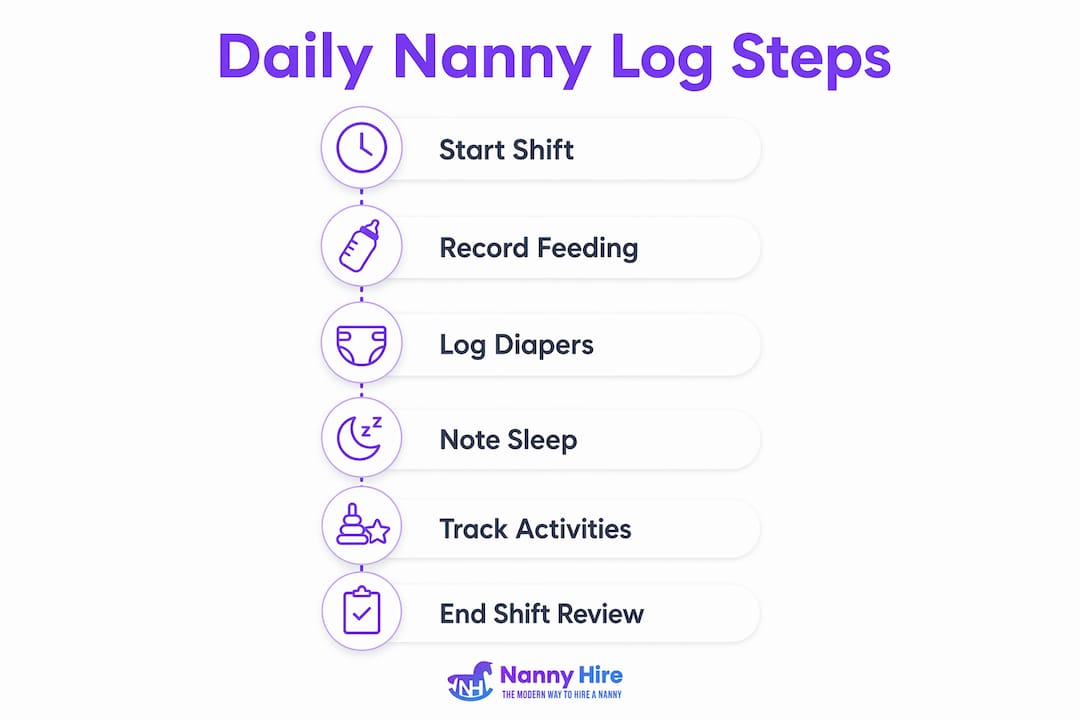
Effective entries are short and specific. Instead of "baby was fussy," write "fussy from 2:00 PM to 2:45 PM, settled after feeding." That level of detail gives you something concrete to respond to without requiring a paragraph.
A few practices that make the log genuinely useful:
- Write entries in real time, not at the end of the shift
- Leave space for parent responses or follow-up questions
- Keep a consistent format so entries are easy to scan
- Avoid emotional language that could feel critical or defensive
- Review the log together weekly to spot patterns
Pro Tip: Set aside five minutes at the end of each week to read through the log with your nanny. Regularly reviewing notes helps you identify behavior patterns or health signals that single entries miss entirely.
A well-maintained log also gives your nanny professional documentation of their contributions. That recognition matters. Nanny logs, used correctly, enhance trust and reduce the guessing game common in early childcare by creating transparency for both sides.
What nanny log formats work best for different families?
Printable logs, apps, and notebooks each have strengths and weaknesses. The best choice balances ease, accessibility, and your family's actual habits. A format your nanny finds cumbersome will not get used consistently, no matter how well designed it is.
Printable templates
Printable nanny log templates are free, require no setup, and work without Wi-Fi or a charged device. They suit families who prefer a physical record or whose nanny is not comfortable with apps. The downside is that paper logs can get lost, are hard to search, and require manual handoff. A simple printed nanny daily schedule paired with a log sheet covers most families' needs.
Digital apps
Digital nanny activity tracker apps allow real-time updates, photo sharing, and instant parent notifications. Parents can check entries from work without waiting until pickup. The tradeoff is a learning curve and the need for both parties to stay logged in. Look for apps with a simple interface and offline capability.
Notebooks
A dedicated notebook is the lowest-friction option. No setup, no login, and easy to customize. Many experienced nannies prefer notebooks because they allow free-form notes alongside structured entries. The limitation is that notebooks do not send alerts and require physical access to review.
| Format | Ease of use | Sharing | Effort required |
|---|---|---|---|
| Printable template | High | In-person only | Low |
| Digital app | Medium | Real-time remote | Medium |
| Notebook | High | In-person only | Low |
The right format is the one both you and your nanny will actually use every day. Start simple. You can always add detail or switch formats as your child grows and routines change.
How does a daily nanny log support your child's health and development?
Consistent documentation supports informed care decisions and helps detect subtle changes in feeding, sleep, and behavior that indicate health issues or developmental concerns early on. A single off day looks like nothing. Three consecutive days of reduced feeding or disrupted sleep looks like a pattern worth discussing with your pediatrician.
The log also supports adherence to medical or dietary instructions. If your child has a food allergy or takes daily medication, the log creates a written record that prevents errors and confirms compliance. That documentation matters especially when multiple caregivers are involved or when routines change due to illness.
Developmental tracking is another underused benefit. When your nanny notes the first time your child stacks two blocks or uses a new word, that entry becomes part of a timeline you can share at well-child visits. Pediatricians ask about milestones at every checkup. Having a written record removes the pressure of trying to recall details from memory.
The nanny communication log also supports better conversations with your child's care team. You arrive at appointments with specific dates, frequencies, and observations rather than vague impressions. That specificity leads to faster, more accurate guidance from your doctor.
Key Takeaways
A daily nanny log works best when it tracks only essential information, lives in a shared accessible location, and functions as a two-way communication tool rather than a one-sided report.
| Point | Details |
|---|---|
| Track only what matters | Focus on feeding, sleep, diapers, mood, and milestones to keep the log usable. |
| Make it a shared space | Both nanny and parents should contribute notes to build trust and two-way communication. |
| Choose the right format | Pick printable, digital, or notebook based on what both parties will actually use daily. |
| Review entries regularly | Weekly reviews help identify health patterns and behavioral changes that single entries miss. |
| Use it at pediatric visits | Specific log data gives doctors accurate timelines and supports faster, better guidance. |
Why I think most families overcomplicate the nanny log
Most parents I talk to start with a log that has twelve categories, color coding, and a separate sheet for each day of the week. By week three, it sits blank on the counter. The nanny feels like she is filing a report instead of caring for a child, and the parents stop reading it because there is too much to process.
The log that actually works is almost embarrassingly simple. Four or five fields, filled in honestly, reviewed together once a week. That version builds the relationship. The elaborate version creates distance.
The other mistake I see is treating the log as a performance review. Avoid treating the nanny log as a report card. When a nanny feels evaluated rather than supported, entries become guarded and generic. You lose the honest observations that make the log valuable in the first place.
One thing I have found genuinely useful: adapt the log as your child ages. An infant log should center on feeding and sleep. A toddler log should shift toward activities, language, and social behavior. A school-age log might focus on homework, mood after school, and after-school snacks. The categories that mattered at three months are irrelevant at three years. Letting the log evolve keeps it relevant and keeps both parties engaged.
The families who get the most from a household rules and communication system are the ones who treat it as a living document, not a fixed form. Start light, stay consistent, and adjust when something stops being useful.
— Chantel
How Nannyhire helps families build better childcare from day one
Finding a nanny who communicates well and keeps reliable records starts with hiring the right person.
Nannyhire is a nanny hiring platform built around your family's specific needs. You get transparent candidate profiles, structured screening tools, and a job board that connects you with nannies who match your care expectations from the start. When you hire through Nannyhire, you set the communication standards upfront, including whether you want daily logs, digital updates, or structured check-ins. That clarity prevents the mismatched expectations that make childcare feel stressful. Get started with Nannyhire and find a caregiver who fits your family's routine.
FAQ
What is a daily nanny log?
A daily nanny log is a written or digital record of a child's key care activities during the day, including feeding, sleep, diaper changes, mood, and milestones. It serves as a communication tool between parents and caregivers.
What should I include in a nanny log template?
A nanny log template should include feeding times and amounts, nap times and duration, diaper changes, mood notes, activities, and any medications given. Focus on categories you will actually act on to keep the log manageable.
How often should a nanny fill out the daily log?
Entries should be recorded in real time throughout the shift rather than all at once at the end of the day. Real-time entries are more accurate and more useful for spotting patterns.
Can a nanny log help at pediatric appointments?
A consistent daily childcare log gives you specific dates, frequencies, and observations to share with your child's doctor. That detail supports faster and more accurate guidance during well-child visits.
What is the best format for a nanny activity tracker?
The best format is the one both you and your nanny will use consistently. Printable templates work well for low-tech households, digital apps suit parents who want real-time updates, and notebooks offer the most flexibility for free-form notes.