

Clear expectation-setting is the single most effective way to prevent conflict in a nanny relationship. When you communicate expectations to your nanny from day one, you create a shared understanding of childcare duties, household rules, and professional boundaries. Industry best practices, including written nanny agreements and scheduled check-ins, treat this communication as an ongoing process rather than a one-time conversation. Nannyhire is built on this principle: transparency and structure produce better outcomes for families and caregivers alike.
What key expectations should you communicate to your nanny from day one?
The most common source of nanny-family conflict is not personality. It is ambiguity. When a nanny does not know whether she is expected to prep dinner, fold laundry, or supervise homework, she guesses. Those guesses rarely match what you had in mind.
Cover these core areas before your nanny's first day:
- Childcare duties: Specify daily routines, nap schedules, feeding times, and age-appropriate activities. If your three-year-old has a speech therapy session every Tuesday, your nanny needs to know the location, the drop-off protocol, and how to handle a meltdown in the parking lot.
- Developmental activities: State your philosophy clearly. Do you want screen time limited to 30 minutes? Do you expect outdoor play every afternoon? Spell it out.
- Household responsibilities: Define which tasks connect directly to childcare, such as washing the children's dishes, tidying the playroom, or doing the kids' laundry. Be specific about what falls outside the role.
- Schedule and availability: Confirm start and end times, overtime expectations, and how much notice you need for schedule changes. A clear nanny schedule policy prevents last-minute confusion on both sides.
- Discipline philosophy: If you use positive reinforcement and do not allow time-outs, say so directly. Your nanny should not have to infer your parenting values.
- Communication preferences: Decide how you want updates. Some parents prefer a daily text with a photo. Others want a brief handoff conversation at pickup. Neither is wrong, but both parties need to agree upfront.
Pro Tip: Write a one-page "Day One" summary covering your child's routine, emergency contacts, and your top three household rules. Hand it to your nanny on the first morning. It signals professionalism and gives her a reference when she has a question but does not want to interrupt.
Why does a written nanny contract matter for setting clear expectations?
A nanny contract creates clarity, a professional framework, and accountability for both parties. It reduces awkward conversations because the terms are already agreed upon in writing. Think of it as a reference document, not a legal threat.
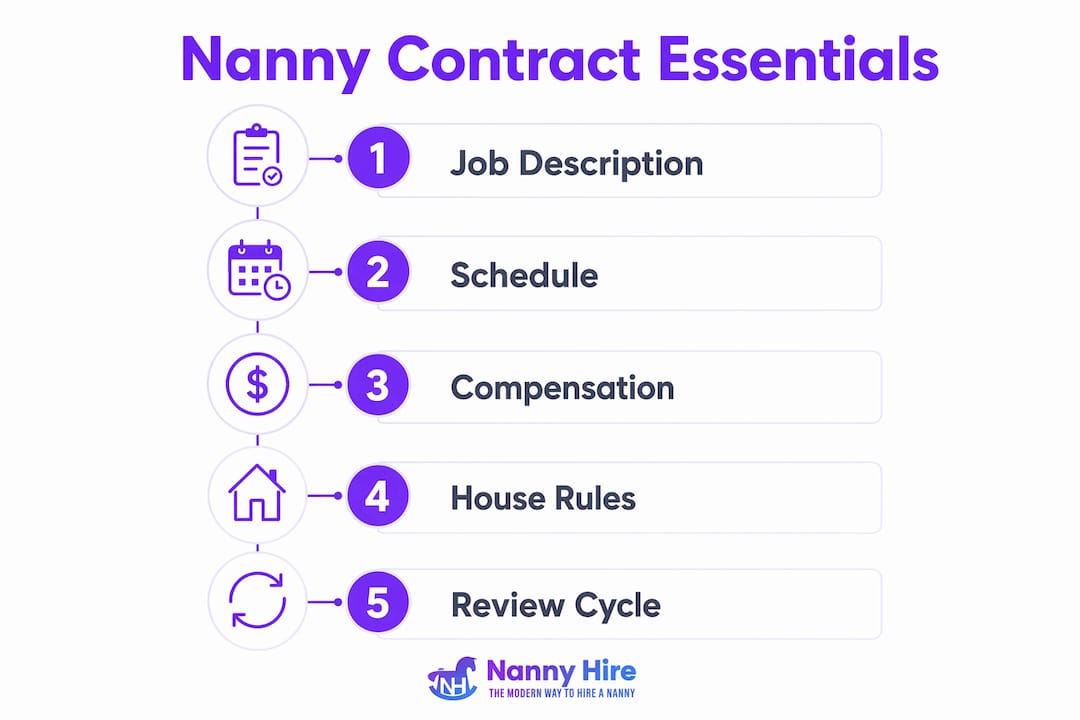
A strong nanny contract covers these components:
- Job description: List every duty in plain language. "Light housekeeping" means nothing. "Wipe kitchen counters, load the dishwasher after meals, and tidy the playroom before leaving" means something.
- Schedule: Include start time, end time, days of the week, and any recurring exceptions such as early pickups or late stays.
- Compensation: State the hourly or weekly rate, overtime policy, and pay schedule. Review nanny employment laws to confirm you are meeting legal minimums.
- Benefits and time off: Specify paid vacation days, sick leave, and holidays. Ambiguity here causes more resentment than almost any other issue.
- Household policies: Cover phone use during work hours, visitor rules, kitchen access, and use of family vehicles.
- Emergency procedures: Include your preferred hospital, pediatrician contact, and a clear protocol for medical situations.
| Contract component | Why it matters |
|---|---|
| Job description | Prevents task creep and role confusion |
| Schedule and overtime | Protects both parties from boundary violations |
| Compensation and benefits | Reduces financial misunderstandings |
| Household policies | Sets behavioral expectations from day one |
| Emergency procedures | Keeps children safe when parents are unreachable |
Contracts should function as living documents. When a new baby arrives or your schedule shifts, update the agreement. Parents who fail to revise nanny agreements as family needs change create misaligned expectations over time. A quick annual review, or one triggered by any major change, keeps the contract accurate and the relationship stable.
Pro Tip: Schedule a 30-minute contract review every six months. Put it on the calendar the same way you would a performance review. It normalizes the conversation and prevents small misalignments from becoming big problems.
How do you keep communication with your nanny effective over time?
Open, honest communication reduces conflict and builds trust between parents and nannies. The key is making feedback a regular habit rather than a reaction to a problem.

Experienced employers schedule monthly 15-minute check-ins to discuss evolving tasks and prevent job creep into personal assistant duties. That small investment of time stops resentment from building on either side.
Practical nanny communication tips for ongoing dialogue:
- Set a communication cadence: Decide whether you will check in weekly, biweekly, or monthly. Stick to it. Consistency signals that you value the relationship.
- Choose your mode and stick to it: Agreeing on communication modes like texting, phone calls, or a shared app prevents messages from falling through the cracks. A group thread works well for quick daily updates. A phone call works better for sensitive topics.
- Give feedback promptly: Feedback should be constructive, timely, and framed positively to maintain trust and work quality. If your nanny left the kitchen messy three days in a row, address it on day four, not after three weeks of frustration.
- Separate praise from correction: Do not bury a concern inside a compliment sandwich every time. Your nanny will start dreading the praise because she knows a complaint follows. Be direct and warm at the same time.
- Handle difficult conversations with empathy: Start with the behavior, not the character. "I noticed the kids skipped their outdoor time this week" lands better than "You're not following the routine."
The goal of ongoing communication is not to monitor your nanny. It is to keep the relationship aligned as your family's needs change.
How do you set and enforce household rules with your nanny?
Household rules for nannies cover the non-childcare behaviors that affect your home environment. Specifying household policies prevents role confusion and maintains professional boundaries in the nanny relationship. These rules belong in the contract and in your verbal onboarding.
Key areas to address:
- Phone use: Specify when personal phone use is acceptable. Many families allow it during nap time but not during active supervision. Write it down.
- Visitors: Decide whether your nanny can have friends or family visit during work hours. Most families say no. If that is your policy, state it clearly before the job starts.
- Kitchen access: Clarify what your nanny can eat and drink, whether she can use the coffee maker, and whether she should clean up after herself.
- Family property: Address car use, streaming accounts, and home Wi-Fi. If she drives your car for school pickup, confirm insurance coverage and your expectations around fuel.
- Personal errands: Define the boundary between childcare and personal assistant tasks. Running to the dry cleaner is not in a nanny's job description unless you have agreed to it and adjusted compensation accordingly. A clear nanny role definition prevents this kind of scope creep.
Pro Tip: Use a household rules checklist during onboarding. Walk through it together rather than handing it over silently. A conversation about the rules builds mutual respect in a way that a printed list alone does not.
Enforcing rules requires consistency. If you allow a rule to slide for three weeks and then correct it, your nanny will reasonably feel blindsided. Address deviations quickly and calmly, and refer back to the written agreement when needed.
Key Takeaways
Clear, written, and consistent communication is the foundation of every successful nanny relationship, and it requires active maintenance, not just a strong start.
| Point | Details |
|---|---|
| Start with specifics | Cover childcare duties, schedule, discipline, and communication preferences before day one. |
| Use a written contract | Document every expectation in plain language to prevent misunderstandings and role confusion. |
| Treat the contract as living | Review and update the agreement whenever your family's needs or schedule changes. |
| Schedule regular check-ins | Monthly 15-minute meetings prevent job creep and keep both parties aligned. |
| Enforce rules consistently | Address deviations promptly and refer back to the written agreement to avoid confusion. |
What I have learned from watching nanny relationships succeed and fail
The families who struggle most with nannies are rarely the ones who hired the wrong person. They are the ones who hired the right person and then never told her what they actually needed.
I have seen this pattern repeat itself: a parent assumes the nanny will "just figure it out," the nanny does her best with incomplete information, and six months later there is a tense conversation that could have been avoided with a single clear conversation on day one. The discomfort of being direct upfront is always smaller than the discomfort of addressing a problem that has been simmering for months.
The living document approach to nanny contracts changed how I think about this entirely. A contract is not a sign of distrust. It is a sign of respect. It tells your nanny: "I value this relationship enough to be clear about what I need." That framing shifts the whole dynamic. Nannies who work under clear agreements report higher job satisfaction and stay longer. That matters for your children, who benefit from consistency.
Proactive communication also protects you. When expectations are documented and reviewed regularly, you have a reference point for any difficult conversation. You are not relying on memory or interpretation. You are both looking at the same piece of paper.
My honest advice: do not wait until something goes wrong to have the conversation. Set the standard early, revisit it often, and treat your nanny as the professional she is.
— Chantel
Nannyhire gives you the tools to hire and communicate with confidence
Finding the right nanny is only half the work. Setting her up for success is the other half.
Nannyhire was built by a working mom who understood that most hiring platforms hand you a list of names and leave the rest to you. Nannyhire gives you structured tools to define the role clearly from the start, including job listing templates that prompt you to specify duties, schedule, and household expectations before you post. When you browse open nanny positions on the Nannyhire job board, you see candidates who have already been scored and vetted, so you spend less time guessing and more time deciding. The platform also supports you through the offer and agreement stage, so your expectations are documented before your nanny's first day. Get started with Nannyhire and build the kind of childcare relationship that actually works.
FAQ
What should I communicate to my nanny first?
Start with the daily childcare routine, your discipline philosophy, and your communication preferences. These three areas prevent the most common early misunderstandings.
How do I discuss nanny duties without sounding demanding?
Frame the conversation as a shared agreement rather than a list of orders. Use language like "Here is what a typical day looks like" and invite questions to make it collaborative.
Does a nanny contract need to be legally formal?
A nanny contract does not need to be drafted by a lawyer to be effective. A clear, written document that both parties sign and date creates accountability and reduces conflict.
How often should I update my nanny's expectations?
Review the agreement at least once a year, and immediately after any major change such as a new baby, a school schedule shift, or a change in work hours.
What is "nanny drift" and how do I prevent it?
Nanny drift occurs when a nanny's responsibilities gradually expand beyond her original role without a formal agreement. Monthly check-ins and a regularly updated contract are the most reliable ways to prevent it.