

A nanny raise is a formal increase in a caregiver's hourly or annual pay, given to reflect rising living costs, stronger performance, or expanded job duties. Most families treat it as a standard part of the employment relationship, not a favor. The standard annual raise runs 3–5% for cost-of-living adjustments and satisfactory performance, with 5–10% reserved for exceptional work or significant new responsibilities. Getting this right matters because fair pay keeps great caregivers in place and prevents the costly process of finding someone new.
What is a nanny raise, and how much should it be?
A nanny salary increase is typically calculated as a percentage of current hourly or annual pay. The two most common types are cost-of-living adjustments and merit-based increases, and they serve different purposes.

A cost-of-living adjustment, often called a COLA, keeps your nanny's purchasing power steady as prices rise. A merit-based raise rewards performance, loyalty, or a meaningful change in job scope. Raises should reflect both factors when possible, because paying only for inflation without recognizing growth leads to quiet dissatisfaction.
Here is how the math works in practice:
- 3% COLA on $20/hour: New rate is $20.60/hour, or roughly $1,248 more per year at 40 hours per week.
- 5% merit raise on $25/hour: New rate is $26.25/hour, adding about $2,600 annually.
- 10% raise for expanded duties on $22/hour: New rate is $24.20/hour, adding over $4,500 per year.
These numbers feel manageable in isolation. They feel different when you factor in employer taxes, which is why budgeting for the full cost matters before you commit.
Pro Tip: Never announce a raise percentage without first calculating the new dollar amount. Telling your nanny "I'm giving you a 4% raise" lands very differently than saying "Your pay goes from $22 to $22.88 an hour."
When should you give your nanny a raise?
Timing a nanny pay adjustment correctly prevents awkward conversations and sets clear expectations for both sides. The most widely used approach ties raises to the nanny's employment anniversary date.
- Set the anniversary date as your default review date. Most families schedule raises on the nanny's anniversary date to maintain consistency and fairness. This gives both parties a predictable timeline.
- Schedule a formal performance review two weeks before the date. A dedicated meeting signals that you take the conversation seriously. It also gives your nanny time to prepare her own thoughts.
- Identify triggers for off-cycle raises. A new baby, a move to full-time hours, or the addition of tutoring or driving duties all justify a pay adjustment outside the normal schedule.
- Document every decision in writing. After each review, send a brief written summary confirming the new rate, the effective date, and the reason for the change.
Pro Tip: Add a line to your nanny contract that commits you to an annual performance review. A formal review clause protects both parties and removes the discomfort of asking for a raise from scratch each year.
How do financial and legal factors affect a nanny raise?
A nanny wage suggestion that looks affordable on paper can cost more than you expect once you account for employer obligations. The IRS requires household employers to withhold and pay payroll taxes including Social Security, Medicare, and unemployment taxes, and those amounts rise proportionally with every raise.
Employers typically pay 20–25% more than the base wage after adding payroll taxes, workers' compensation, and unemployment insurance. That means a $2,000 annual raise effectively costs closer to $2,400–$2,500 when all employer expenses are included.
"Parents should budget for raises by considering the true cost of nanny compensation, including employer taxes and insurance, which rises with each raise. Failing to plan for these costs leads families to offer raises they cannot sustain." — Nanny Cost Calculator 2026, DaycareCalc
The table below shows how employer costs scale with different raise scenarios for a nanny earning $50,000 per year.
| Raise % | New Base Salary | Estimated Employer Tax Add-On (22%) | True Annual Cost |
|---|---|---|---|
| 3% | $51,500 | $11,330 | $62,830 |
| 5% | $52,500 | $11,550 | $64,050 |
| 10% | $55,000 | $12,100 | $67,100 |
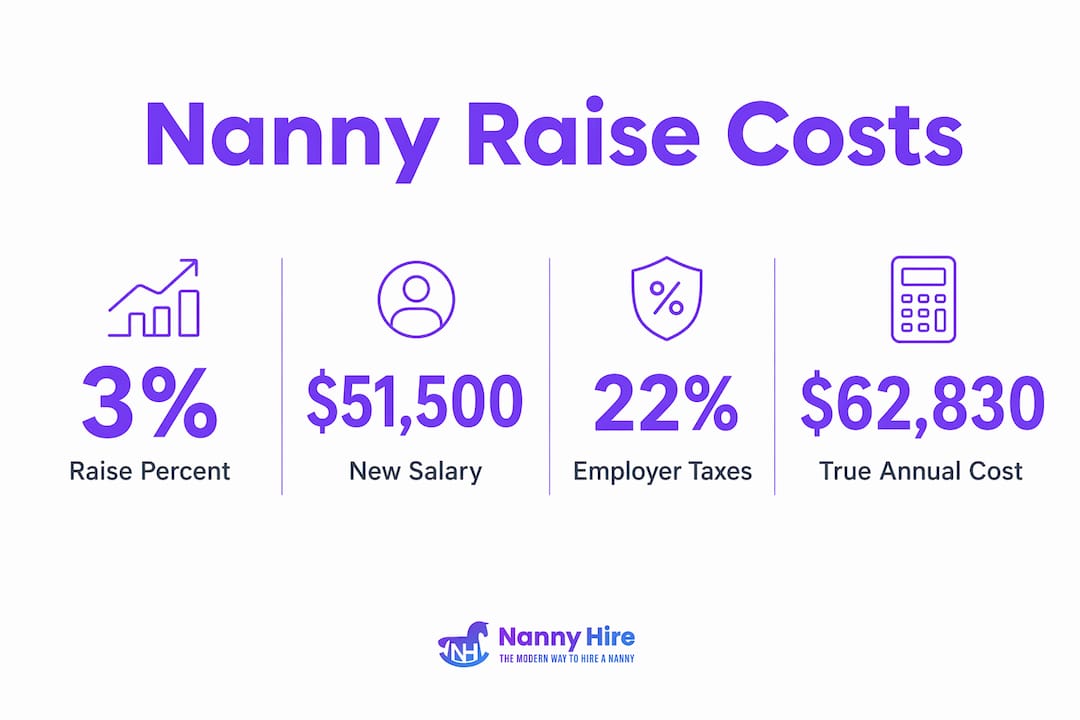
Planning for the true cost before the conversation protects you from making a promise you later need to walk back. Review your nanny employment laws obligations annually, especially if your nanny's hours or duties change significantly.
How to talk to your nanny about a raise
The conversation itself is where many families stumble. A raise discussion handled poorly can damage a relationship that took months to build. Handled well, it reinforces trust and signals that you value your caregiver as a professional.
Effective communication about raises includes scheduling formal meetings, giving clear explanations, and following up with written agreements. Here is how to structure that conversation:
- Open with appreciation. Name two or three specific things your nanny has done well. This is not flattery. It shows you have been paying attention.
- State the raise clearly and directly. Give the new rate, the effective date, and the reason. Avoid vague language like "we're thinking about adjusting your pay."
- Explain the rationale. Whether it is a COLA, a merit increase, or recognition of new duties, say so. Transparency prevents the nanny from wondering if the number was arbitrary.
- Invite a response. Ask if she has questions or concerns. A one-sided announcement is not a conversation.
- Confirm everything in writing. A brief email or an addendum to the existing contract works. Both parties should keep a copy.
A nanny contract clause mandating an annual performance review removes the guesswork from timing and framing. You do not need to specify a fixed raise percentage in the contract. A scheduled review date with a commitment to discuss compensation is enough to keep things fair and structured.
Pro Tip: If your nanny asks for a raise before your scheduled review, treat it as a signal, not a demand. It usually means she feels her contributions are not fully recognized. Listen first, then respond with a timeline.
How nanny raises translate into total compensation packages
Salary is only part of what you offer a nanny. Understanding how raises interact with benefits and living arrangements gives you a clearer picture of total compensation.
Nannies in the US earn between $45,000 and $120,000 annually in 2026, depending on experience and market. That range reflects real differences in skill level, location, and job complexity. A raise that keeps a senior nanny at $90,000 in a high-cost city is a very different decision than a COLA for an entry-level caregiver at $48,000.
Live-in nannies present a separate calculation. They generally accept lower base wages in exchange for housing, meals, and utilities, benefits that typically add $15,000–$30,000 per year in value. When raising a live-in nanny's pay, factor in whether the in-kind benefits have also changed. If housing costs in your area have risen, her effective compensation may have increased even without a cash raise.
| Scenario | Base Pay Before Raise | Raise % | New Base Pay | Key Benefit Consideration |
|---|---|---|---|---|
| Entry-level, live-out | $48,000/year | 3% | $49,440/year | Paid time off, health stipend |
| Experienced, live-out | $72,000/year | 5% | $75,600/year | Mileage reimbursement, bonus |
| Senior, live-in | $60,000/year | 5% | $63,000/year | Housing + meals ($20k value) |
Families who also offer nanny benefits like paid vacation, health stipends, or professional development reimbursements should review those alongside any salary increase. A smaller cash raise paired with an improved benefits package can be just as meaningful as a larger pay bump alone.
Key Takeaways
A fair nanny raise combines a cost-of-living adjustment with merit recognition, budgets for the true employer cost including taxes, and is communicated clearly in writing on a scheduled annual basis.
| Point | Details |
|---|---|
| Standard raise range | Give 3–5% for cost-of-living and 5–10% for merit or expanded duties. |
| True employer cost | Budget 20–25% above base pay to cover taxes, insurance, and workers' comp. |
| Best timing practice | Tie raises to the anniversary date and schedule a formal review two weeks prior. |
| Contract protection | Include an annual review clause so raise discussions are expected, not awkward. |
| Total compensation view | Factor in benefits and live-in perks alongside cash pay when calculating raise impact. |
Why I think most families underestimate what a raise actually signals
I have worked with hundreds of families navigating nanny compensation, and the pattern I see most often is this: parents focus entirely on the dollar amount and miss the message the raise sends.
A raise is not just a pay adjustment. It is a statement that you see your nanny's growth, that you planned for her future with your family, and that you take the employment relationship seriously. Families who give thoughtful, timely raises almost never face sudden resignations. Families who skip raises or give them reluctantly after being asked tend to cycle through caregivers every one to two years.
The contractual performance review is the single most underused tool in household employment. I have seen it prevent more disputes than any other clause in a nanny agreement. When both parties know a review is coming, the conversation shifts from confrontational to collaborative.
My honest advice: treat the raise conversation as a relationship check-in, not a transaction. Ask your nanny what is working, what is hard, and what would make her job better. The answer will tell you more than any salary survey. And when you do give the raise, say it plainly. "We value you, and this is how we're showing it." That sentence costs nothing and means everything.
— Chantel
How Nannyhire helps families get compensation right from the start
Figuring out fair pay is one of the hardest parts of hiring a caregiver. Nannyhire was built by a working mom who knew there had to be a better way than guessing or overpaying an agency for basic information.

The platform gives you transparent tools to assess candidates, understand market rates, and hire with real confidence. Whether you are posting a position or reviewing what you currently pay, Nannyhire puts the right information in your hands. Browse current openings on the Nannyhire job board to see how families across the country are structuring competitive compensation packages right now. Ready to find your next caregiver? Get started with Nannyhire and build a compensation plan that works for your family from day one.
FAQ
What is a nanny raise, exactly?
A nanny raise is a formal increase in a caregiver's hourly or annual pay, typically given once a year. It reflects cost-of-living changes, performance, or expanded job responsibilities.
How much of a raise should I give my nanny?
The standard range is 3–5% for satisfactory performance and cost-of-living, and 5–10% for exceptional work or significant new duties.
How often should nanny pay be reviewed?
Most families review nanny pay annually, tied to the employment anniversary date. Off-cycle reviews are appropriate when duties change substantially, such as adding a new child to the household.
Do employer taxes increase when I raise my nanny's pay?
Yes. The IRS requires payroll taxes to be paid on all wages, so every raise increases your employer tax obligation proportionally. Total employer costs typically run 20–25% above base pay.
Should I put the raise agreement in writing?
Always. A written confirmation of the new rate, effective date, and reason protects both you and your nanny. An addendum to the existing contract or a signed email both work.