

Clear nanny work boundaries are defined as the written, mutually agreed limits that govern a nanny's duties, schedule, communication, and role inside your home. Without them, misunderstandings multiply fast. Parents add tasks gradually, nannies absorb extra work silently, and resentment builds on both sides before anyone names the problem. The good news is that written boundaries are twice as effective at preventing burnout compared to implied expectations. That single fact should motivate every family to set nanny work boundaries before day one, not after the first conflict.
What are professional nanny boundaries and work-life balance examples?
Professional nanny boundaries are the agreed limits that define what a nanny does, when she works, how she communicates, and how she relates emotionally to your household. The industry term for the full framework is a "scope of services agreement," though most families simply call it a nanny contract. Both terms describe the same thing: a written document that protects everyone.
Boundaries fall into four clear categories:
- Scope of duties. Childcare tasks include feeding, bathing, school pickup, and age-appropriate activities. Non-childcare tasks, such as cooking for the whole family, running personal errands, or cleaning rooms the children never use, belong outside the nanny's role unless explicitly agreed and compensated.
- Work hours and overtime. A nanny's schedule should state start time, end time, guaranteed weekly hours, and the rate for any hours outside that window. Nanny benefits like paid overtime, PTO, and sick leave are standard contract elements, not optional perks.
- Communication limits. Texting a nanny at 10:00 PM about tomorrow's schedule is a boundary violation. Agreed communication channels and response windows should be written down. After-hours contact should be minimized and respected as a professional standard.
- Emotional role clarity. A nanny is a caregiver, not a family member, therapist, or household manager. Blurring that line creates emotional dependency that is hard to undo.
Pro Tip: Write one concrete example next to each boundary category in your contract. "No texting after 7:00 PM except for emergencies" is far clearer than "respect off-hours."
How to set nanny work boundaries before employment starts
The most effective time to establish professional limits is before your nanny's first day. Families that wait until a problem surfaces are already managing conflict rather than preventing it.

Start with a written service agreement
A written nanny job description is the foundation of every boundary conversation. It forces you to think through expectations before you communicate them. The job description becomes the first draft of your contract.
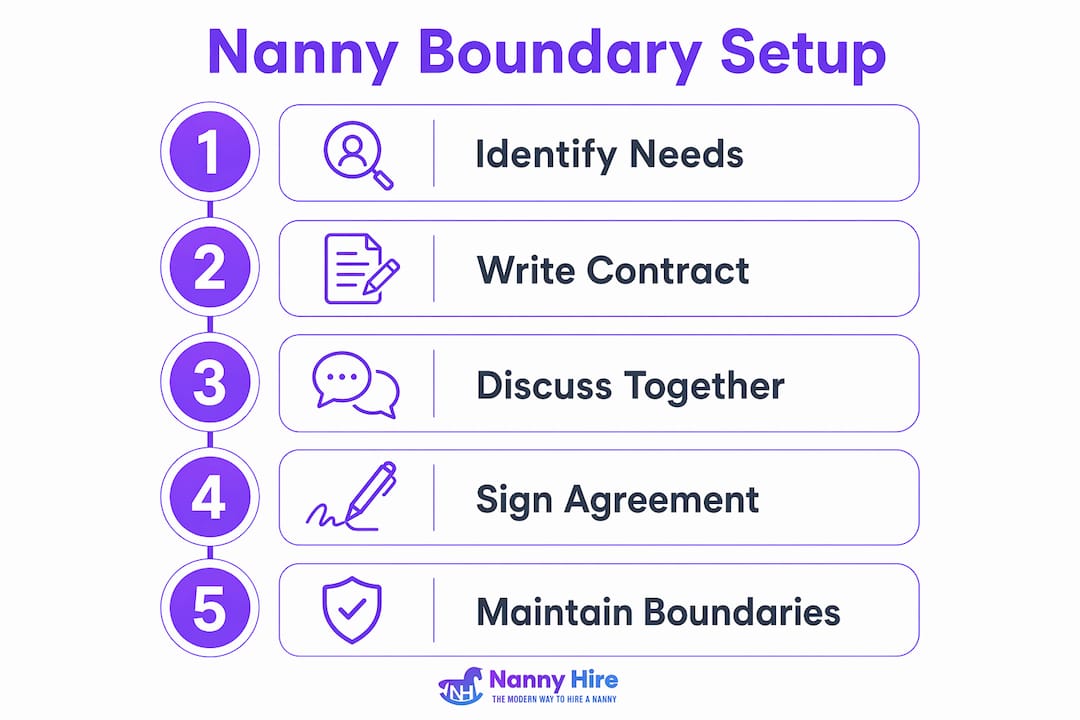
Your service agreement should cover at minimum:
| Contract Element | What to Specify |
|---|---|
| Work schedule | Days, hours, start and end times, guaranteed weekly minimum |
| Scope of duties | Childcare tasks included; non-childcare tasks excluded |
| Overtime policy | Rate per hour, approval process, maximum weekly hours |
| PTO and sick leave | Number of days, accrual method, notice required |
| Communication protocol | Preferred channel, response window, after-hours rules |
| Termination terms | Notice period for both parties, severance if applicable |
Define expectations in writing, not conversation
Verbal agreements fade. Written agreements hold. Scope creep is the most common boundary problem in nanny arrangements, and it almost always starts with a casual verbal request that never gets documented. When you ask your nanny to "just grab a few groceries" once, and then twice, and then weekly, you have created an unpaid duty without a contract revision.
Discuss your household rules, discipline approach, screen time limits, and meal preferences in writing before employment starts. Nannyhire's household rules checklist gives parents a ready-made framework for capturing these details clearly.
Pro Tip: Schedule a 30-minute pre-employment meeting with your nanny to walk through the contract together. Ask her to flag anything unclear. Her questions will reveal gaps you did not know existed.
How to maintain nanny boundaries during employment
Setting limits once is not enough. Boundaries require active maintenance, especially as your family's needs change over time.
-
Hold monthly check-ins. A 15-minute conversation at the end of each month gives both parties a low-pressure space to raise concerns before they become grievances. Ask directly: "Is anything outside your agreed duties being asked of you regularly?"
-
Document actual hours. Use a simple shared log, a paper timesheet, or a phone app to track start times, end times, and any overtime. Documenting hours and addressing scope drift immediately prevents disputes over pay and workload.
-
Address scope requests in real time. When you need to ask your nanny to do something outside her contract, say so explicitly. "I know this isn't in your job description. Are you open to adding it, and if so, what would fair compensation look like?" That one sentence keeps the relationship honest.
-
Conduct quarterly agreement reviews. Family needs shift. A new baby, a school schedule change, or a parent returning to the office all affect the nanny's role. Quarterly reviews of duties and agreements prevent role creep and keep both parties aligned.
-
Enforce boundaries calmly and consistently. Consistency matters more than firmness. A parent who enforces the "no texting after 7:00 PM" rule 80% of the time teaches the nanny that the boundary is negotiable. Steady consistency builds the psychological safety that makes a nanny feel secure enough to do her best work.
Pro Tip: Keep a shared digital folder with the signed contract, any agreed amendments, and the monthly hour logs. Both you and your nanny should have access. Transparency removes the temptation to dispute what was agreed.
Common challenges when setting limits as a nanny employer
Even well-prepared families run into friction. Knowing the most common pitfalls in advance makes them easier to handle without damaging the relationship.
-
Remote-working parents blur the line. When you work from home, your nanny sees you all day. Parents working remotely often add non-childcare tasks and expect instant communication outside agreed hours without realizing they are doing it. The fix is a physical or verbal signal that marks when you are "at work" and unavailable to redirect the nanny's duties.
-
Assumptions create unpaid work. Scope creep rarely starts with bad intent. It starts with an assumption. You assume the nanny will tidy the playroom. She assumes that is not her job. Neither of you said anything. Simple service agreements with explicit inclusions and exclusions eliminate assumption-based conflict.
-
Emotional dependency develops gradually. Children bond deeply with their nannies, which is healthy. Problems arise when parents start treating the nanny as a confidant, therapist, or co-parent. That dynamic puts unfair emotional labor on the caregiver and blurs the professional relationship.
-
Digital communication expectations creep after hours. A nanny who receives a text at 9:00 PM and responds feels obligated to keep responding. Respecting a nanny's offline time reduces burnout risk and supports a sustainable working relationship.
"Clarity is kindness. When parents are steady and consistent rather than rigid, they create a psychologically safe environment where nannies can thrive and children can flourish."
Building a respectful relationship takes time, but it starts with honesty. Tell your nanny what you need, ask what she needs, and put both in writing. That exchange is the foundation of every successful long-term placement.
Key takeaways
Clear, written nanny work boundaries established before employment starts are the single most effective way to prevent burnout, scope creep, and household conflict.
| Point | Details |
|---|---|
| Write it before day one | A signed contract before employment starts prevents scope creep and verbal misunderstandings. |
| Cover all four boundary types | Address duties, hours, communication, and emotional role clarity in every agreement. |
| Review agreements quarterly | Family needs change; update the contract after any significant schedule or household shift. |
| Enforce limits consistently | Steady, calm consistency builds trust and signals that boundaries are real, not suggestions. |
| Respect digital downtime | No after-hours texts unless there is a genuine emergency; document this rule in the contract. |
Why I think most families set boundaries too late
I have talked with hundreds of parents who came to Nannyhire after a nanny relationship fell apart. The story is almost always the same. Things started well, small requests crept in, nobody said anything, and then one day the nanny gave notice and the parents were blindsided.
The uncomfortable truth is that most families treat boundary setting as a conflict-resolution tool rather than a hiring tool. They wait for a problem before they name the rules. By then, the nanny already feels undervalued, and the parents feel frustrated. Both feelings are valid. Both were preventable.
What I have found actually works is treating the pre-employment conversation as the most important meeting you will have with your nanny. Not the interview. Not the first day. The contract walkthrough. When you sit down together and say, "Here is exactly what I need, here is what I cannot ask of you, and here is how we will handle changes," you signal that you take her professionalism seriously. That signal pays dividends for years.
Firmness and warmth are not opposites. You can hold a clear boundary and still be a kind, generous employer. The families I see thrive long-term are the ones who figured that out early.
— Chantel
Nannyhire makes it easier to start on the right foot
Finding a nanny who understands professional expectations from day one changes everything. Nannyhire was built by a working mom who knew there had to be a better way than guesswork and expensive agencies.
On the Nannyhire job board, you can post a detailed listing that reflects your household rules, schedule, and scope of duties from the start. That transparency attracts candidates who already value clear expectations. You can also use Nannyhire's job listing guide to make sure your posting covers every element that matters. When both sides know the terms before the first interview, the relationship starts from a position of mutual respect, not assumption.
FAQ
What should a nanny work boundary contract include?
A nanny contract should cover work hours, guaranteed weekly minimums, overtime rates, scope of duties, PTO, sick leave, communication protocols, and termination terms. Written agreements that specify both included and excluded tasks prevent the most common boundary disputes.
How do I handle a nanny who keeps crossing boundaries?
Address the issue directly and calmly in a scheduled check-in, not in the moment. Reference the written contract, document the specific instance, and agree on a revised expectation in writing. Consistent follow-through matters more than the conversation itself.
Can I add duties to my nanny's role after hiring?
Yes, but only with her agreement and a contract amendment. Adding duties without discussion or compensation is scope creep. A simple written amendment that names the new task, the compensation adjustment, and the start date keeps the relationship fair and documented.
How do I set digital communication boundaries with my nanny?
State the preferred communication channel, the expected response window during work hours, and a clear rule about after-hours contact in the contract. A rule like "no non-emergency texts after 7:00 PM" is specific enough to enforce and easy for both parties to follow.
Why do nanny work-life boundaries matter for my family?
Psychological safety created by clear boundaries allows a nanny to focus fully on your children rather than managing anxiety about her role. A nanny who feels respected and protected from burnout stays longer, performs better, and builds a stronger bond with your kids.